Senior Dog Portrait Tattoos: Keeping the Gray Muzzle
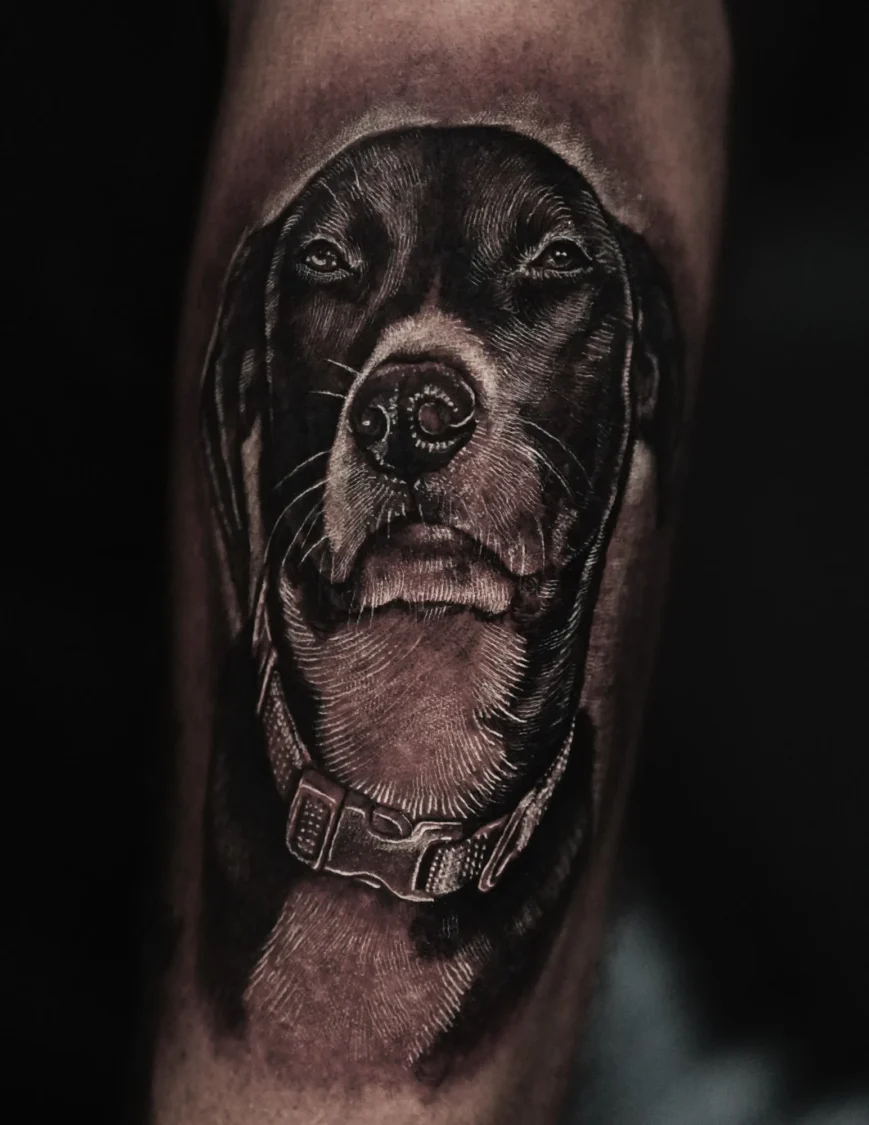
A senior dog portrait does not have to turn back the clock. The pale muzzle, changed markings and relaxed expression may be the features you know best. Removing all of them could make the drawing feel less familiar.
Choose a reference from the age you want to portray. If you send puppy and recent photographs together, explain which one should guide the finished face. The others can help show markings or ear shape, but mixing ages without a clear plan can create an expression you never actually knew.
The softer muzzle still has a shape. The nose, eyelids and boundary between light and dark fur help hold the likeness together. In a black and gray design, those changes in tone can give the muzzle its shape without drawing every hair separately.
View A familiar gaze — black & grey dog portrait
Label your favorite reference with the age or period you want the portrait to show.
Is the pale area fur or reflected light?
Compare photographs from the same period under different lighting. A pale patch that follows the same muzzle boundary across those images is more useful evidence of a coat marking than a bright streak seen in only one flash photograph. Point out what you recognize rather than asking the artist to infer it from exposure alone.
If an older photo has a stronger expression but a recent one shows the markings more clearly, label their roles. Name the image that should guide the age and expression, and identify the other as supporting information. Do not leave two different life stages competing as equal instructions.
Review the outline of the pale muzzle as well as the eyes and nose. The aim can be the dog as you knew them at a particular age, including changes you love. There is no need to smooth those changes away merely because a younger reference is sharper.