Black Dog Portrait Tattoos: Reading Fur, Light and Markings
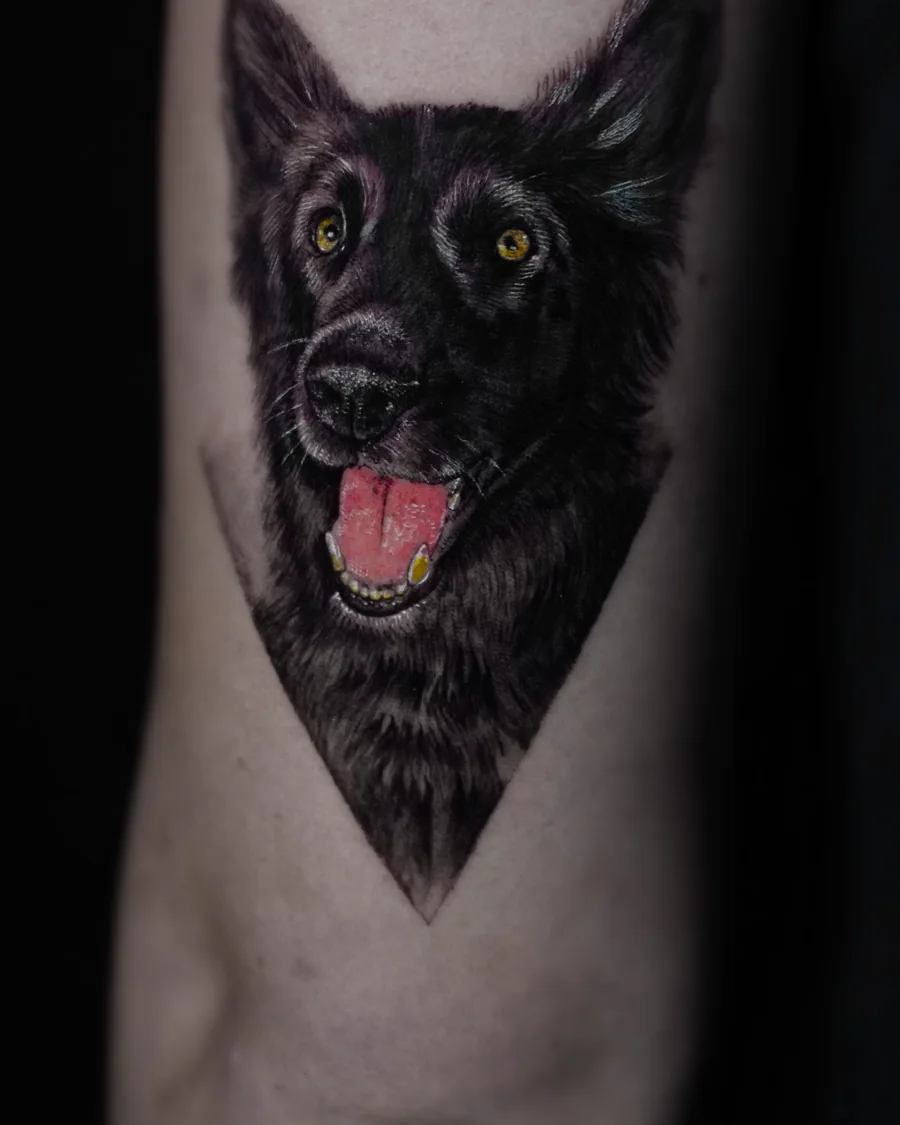
A black dog's face is described by more than the darkest areas of its coat. Reflected light around the eyes, changes across the muzzle and the edge of an ear can reveal the form inside a dark silhouette.
Choose a reference with gentle, even light. A face lost in shadow leaves the artist less information; a harsh flash can flatten the coat in another way. Supporting photographs can help explain where the fur changes direction or where a lighter marking begins.
In Companion, the bright eyes and visible tongue separate important features from the surrounding dark fur. For your own portrait, discuss which features must stay readable at the intended size. Check the portrait from a little distance as well as close up; the eyes and muzzle should remain easy to locate.
Send a reference where you can clearly distinguish the eyes and muzzle.
Keep a highlight from becoming a new coat marking
A shiny strip across black fur may describe light falling on the head rather than a stripe in the coat. If that distinction is unclear in your favorite reference, provide another unfiltered photograph that shows the same area. Explain which lighter patches are actually part of your pet.
Keep exposure edits separate from the original. Brightening an image may reveal information already in the file, but it can also make noise or a reflection more prominent. A brightened copy should help a discussion, not become the only evidence of the coat pattern.
For the drawing review, check three boundaries: where the forehead meets the ears, where the muzzle separates from the cheeks, and where any real pale patch begins. Those relationships help identify this dog. Adding a white edge around every dark feature would be a stylistic choice; it should not be mistaken for a faithful record of the fur.