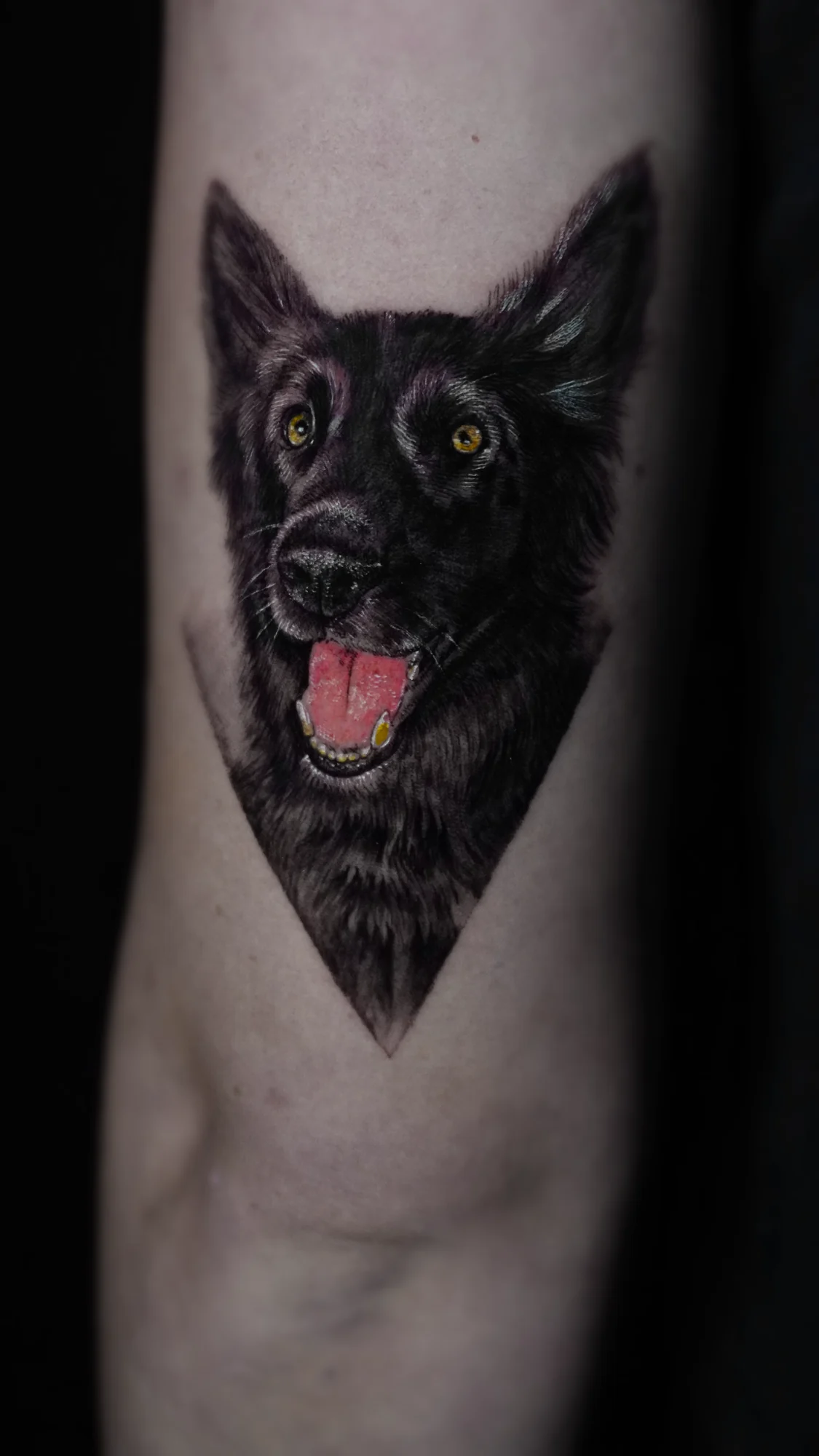
Character lives in the larger features
Companion shows a dark-coated dog with upright ears, bright eyes and its tongue visible. Those features establish a particular expression before individual marks in the coat are examined. The portrait is not defined by fur alone.
The ears contribute to the silhouette. The eyes create a concentrated point of attention. The shape of the mouth changes the overall reading of the face. Each feature has a place in the expression.
Color can remain a small part of the image
Warm areas around the eyes and mouth sit against the darker coat. Their size matters: small accents can become noticeable because the surrounding image is comparatively restrained.
A portrait does not need an equally strong accent everywhere. The value structure can carry the head while selected changes in color emphasize particular features. This keeps expression connected to the whole face.
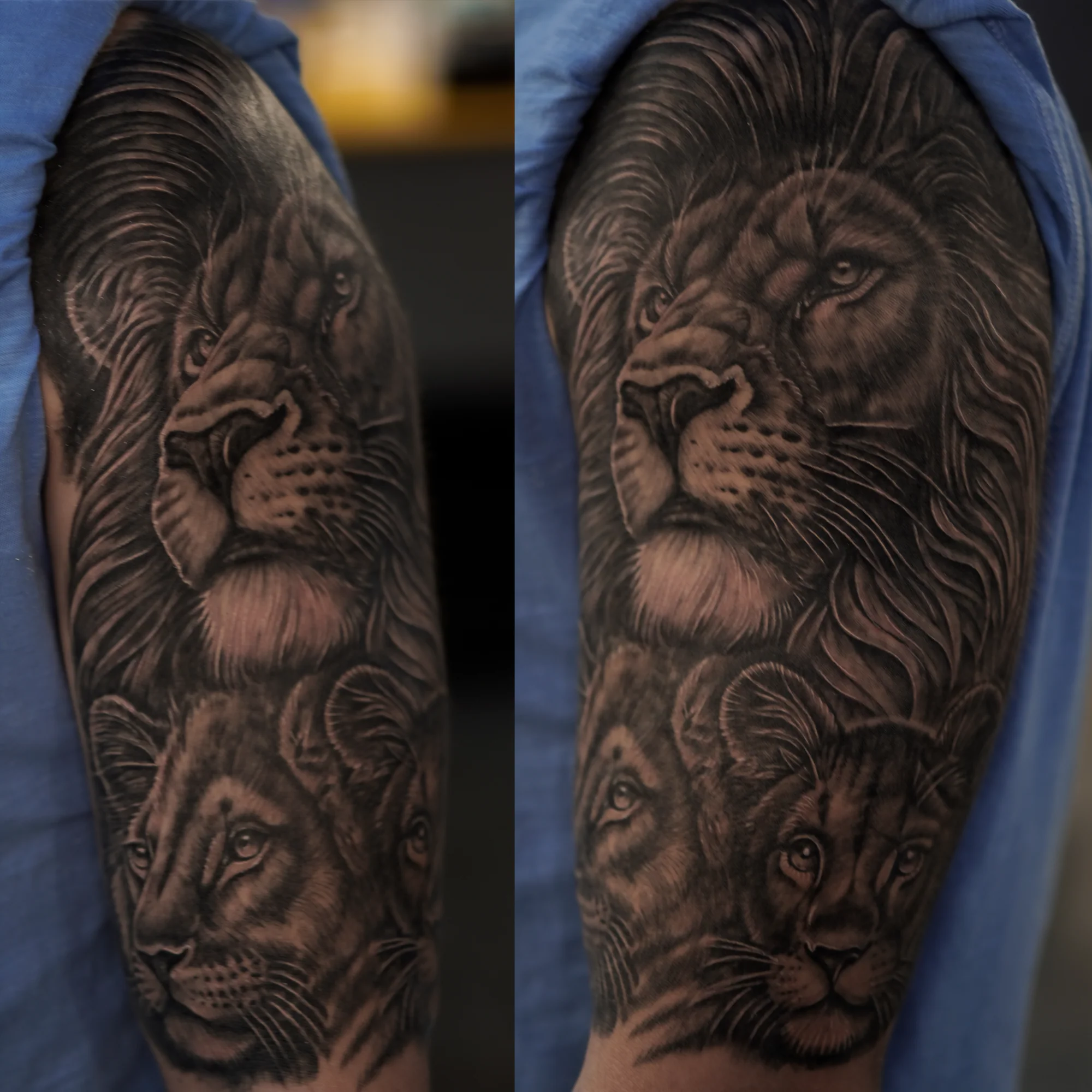
Two animals create a relationship
Lion & cub adds another question: how do two faces share a composition? Their different scales and vertical arrangement create a relationship even without a background scene. The mane frames the larger head while the smaller face changes the lower silhouette.
The texture identifies surfaces, but the composition tells the viewer how to move between the subjects. That movement is part of what makes an animal tattoo more than a collection of detailed features.