Black and gray or color for a pet portrait tattoo?
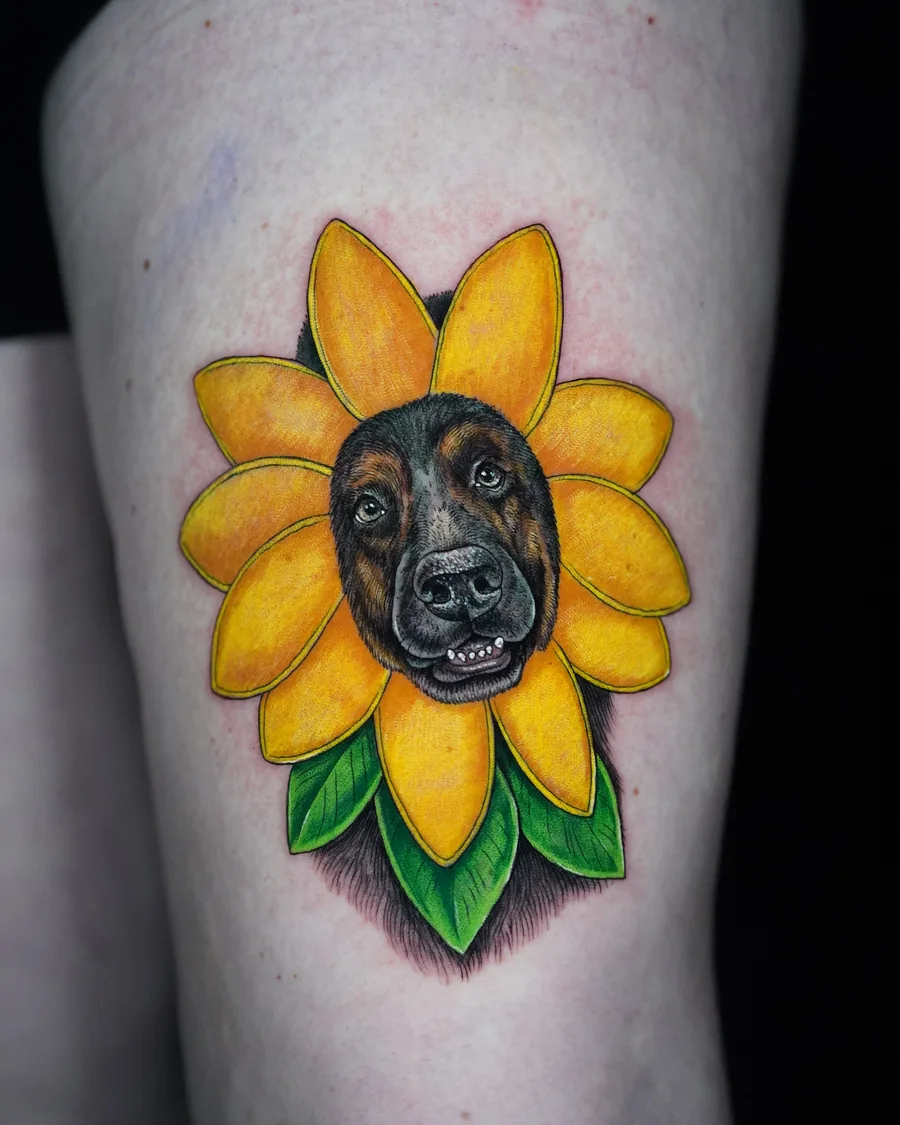
Choose a pet tattoo palette around what makes the animal recognizable to you. Black and gray can focus attention on expression and tonal detail. Color can emphasize a coat marking, an eye or a surrounding flower. Neither approach replaces a clear reference photograph.
Start with the feature you do not want to lose
It may be the shape of the ears, a white muzzle, a particular gaze or the pattern across the face. Tell William which feature matters before deciding how many colors the tattoo needs. A decorative palette should support that detail.
A dark dog can belong in a colorful design
Little sun places a dark dog portrait inside a yellow sunflower with green leaves. The flower supplies much of the color while the face remains the subject. It is a useful example if you want warmth around a portrait without recoloring the pet itself.
Compare three directions
- Black and gray: organize the portrait through light, shadow and open skin.
- Selective color: choose one meaningful accent and let the rest stay quieter.
- A broader palette: coordinate the portrait with flowers, a background or other chosen elements.
For a smaller piece, discuss which details need space. A tiny, brightly colored iris cannot carry the entire likeness if the overall face is unclear. The palette guide explains how focal points work.
What should I send for a pet portrait in Tulsa?
Send clear, unfiltered photos, your intended placement and approximate size. Add the marking or expression you want preserved. If a flower or color has personal meaning, explain it in your own words; that story should come from you.
For more specific ideas, read showing the face of a black dog and choosing flowers around a pet portrait.
Share your tattoo idea with William in Tulsa. Include the placement, approximate size and a clear reference. Sharing an idea starts a conversation; it does not confirm an appointment.