Tattoo Stencils and Freehand: How a Design Fits Your Arm
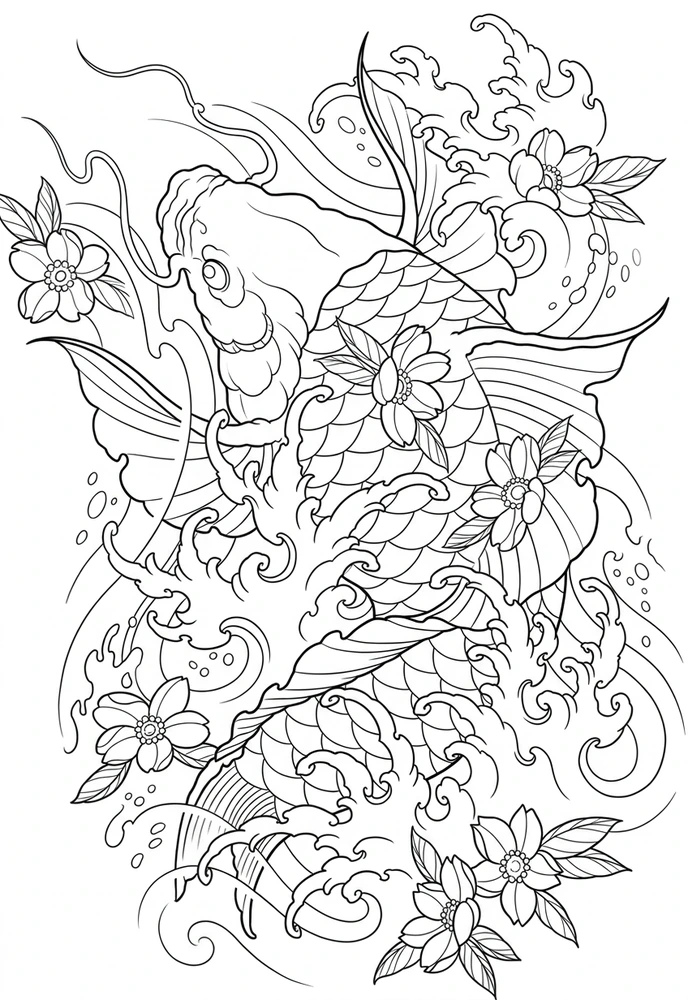
Freehand drawing on the body can help develop a design in relation to the arm’s shape, while a stencil transfers a guide prepared elsewhere. Either approach still needs a placement review. What matters to you as a client is how the subject, scale and surrounding space work when the arm is in a natural position.
What do “stencil” and “freehand” mean?
A stencil places visible guide marks on the skin. Those marks may describe outlines, proportions or selected details. They do not necessarily represent every shadow or line that will appear in the finished tattoo.
The word “freehand” can describe different things. Drawing directly on skin is one use; hand-drawing a stencil on transfer paper is another. For example, Spirit’s Freehand paper is a product for hand-drawn transfers, while its Thermal paper serves a thermal workflow. A transferred guide does not prove that the design began on a computer.
How does the arm change the placement question?
A drawing on a flat page has one fixed outline. On an arm, parts of it turn away from the viewer. The elbow, shoulder and wrist also create different boundaries for a composition. A portrait intended to face outward and a branch intended to wrap around the arm ask for different kinds of placement decisions.
On-body planning can make those relationships visible. A transferred guide can also be reviewed and adjusted in position. This guide explains the distinction; it does not claim that William uses one particular method for every project.
What should you check before approving placement?
- Look with the arm relaxed, not only held in the position used for a photograph.
- Check the main subject from the view that matters most to you.
- Notice the distance from existing tattoos and the space reserved for future work.
- Discuss the overall dimensions rather than judging only a small detail.
- Ask which guide marks describe final edges and which are planning information.
If an important feature appears to disappear around the side, mention it. If the design’s direction feels wrong, explain that before tattooing begins. Questions about the intended result are useful even when you cannot describe them in drawing terminology.
Does freehand automatically mean more original?
No. An original composition can be transferred, and a hand-drawn image can closely repeat another design. The method of placing a guide does not determine authorship, suitability or the quality of the finished work.
Use the consultation to explain what you want the tattoo to show and how it should relate to your body. For a larger project, the sleeve planning guide considers the relationship between focal points, transitions and open space.
Discuss your tattoo idea with William Martz in Tulsa. Include a clear reference, the placement and approximate size. Sending an idea starts a conversation; it does not confirm an appointment.