A palette has a direction
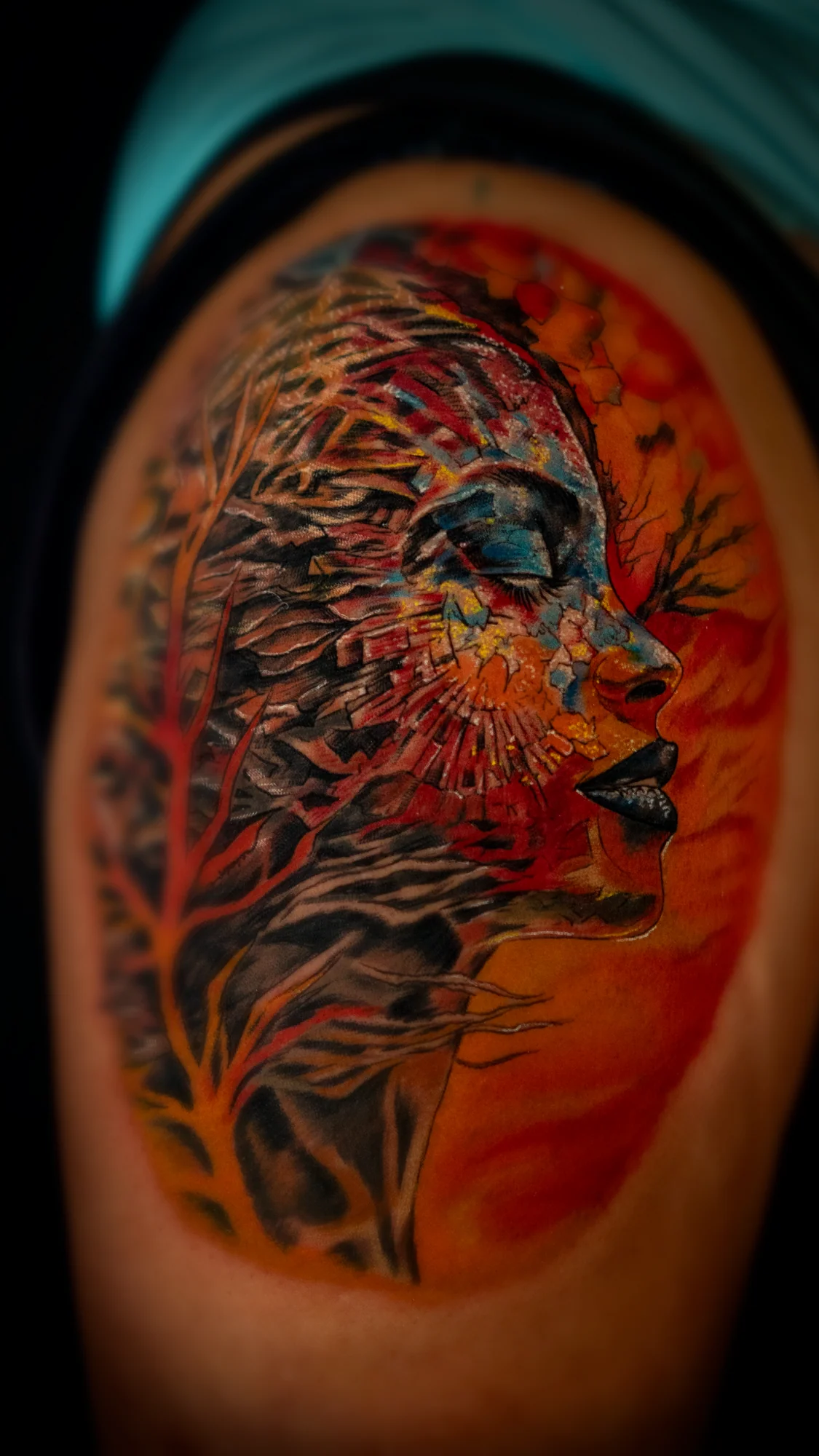
Fire in her gaze places a profile within a broad field of red and orange. Blue appears around the eye and across smaller parts of the face. The difference between those areas gives the portrait a direction: the colors participate in where attention goes.
The image does not depend on a naturalistic skin palette. The profile, eye and mouth remain recognizable while the color moves the portrait toward illustration and atmosphere.
Fragments need a stable subject
Dark marks and broken shapes move through the face and surrounding branches. They interrupt the surface without removing the main profile. The forehead, nose, lips and chin provide a contour against which those interruptions can be read.
That relationship allows complexity without making every fragment equally important. The face gives the color and texture something to organize around.
Color can also leave room
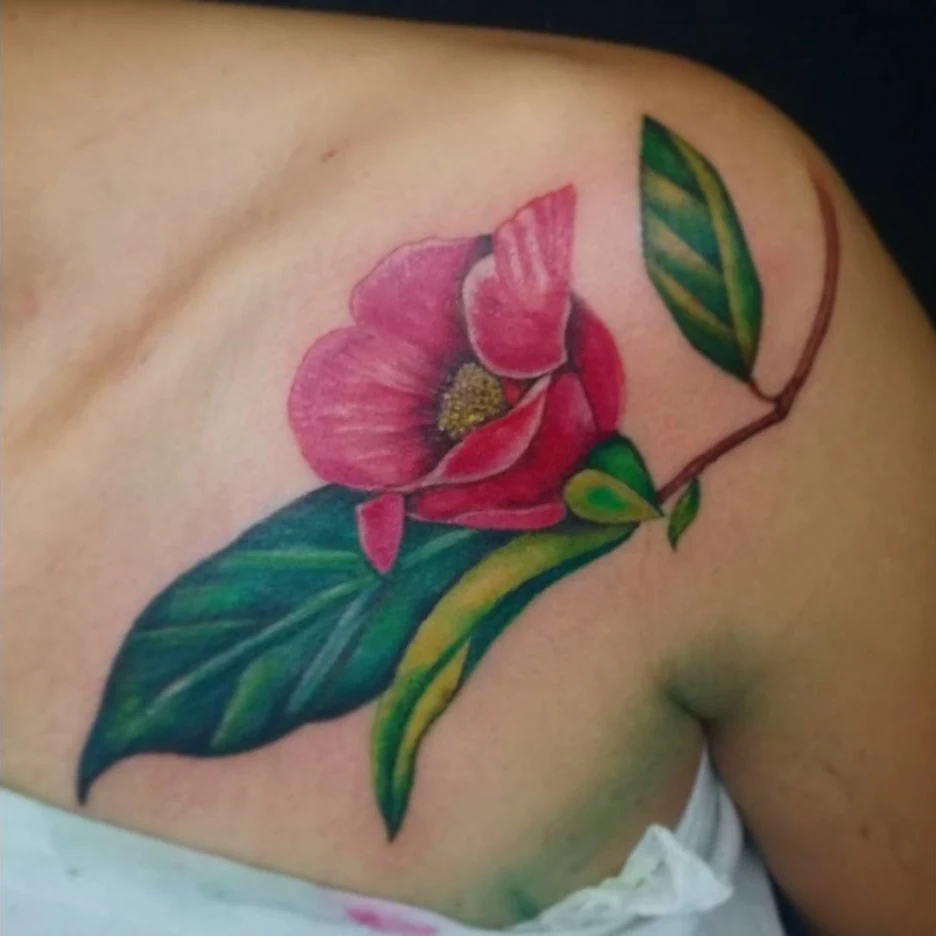
Orchid takes a different approach. Pink petals and green leaves occupy an open arrangement, with space around the flowers and a fine curved stem connecting them. The palette is still important, but it is not filling a large continuous field.
These pieces show two uses of color: one surrounds and transforms a portrait, while the other distinguishes flowers within a lighter arrangement. Saturation is only one part of the choice. Shape, neighboring values and the amount of open space determine how color reads.