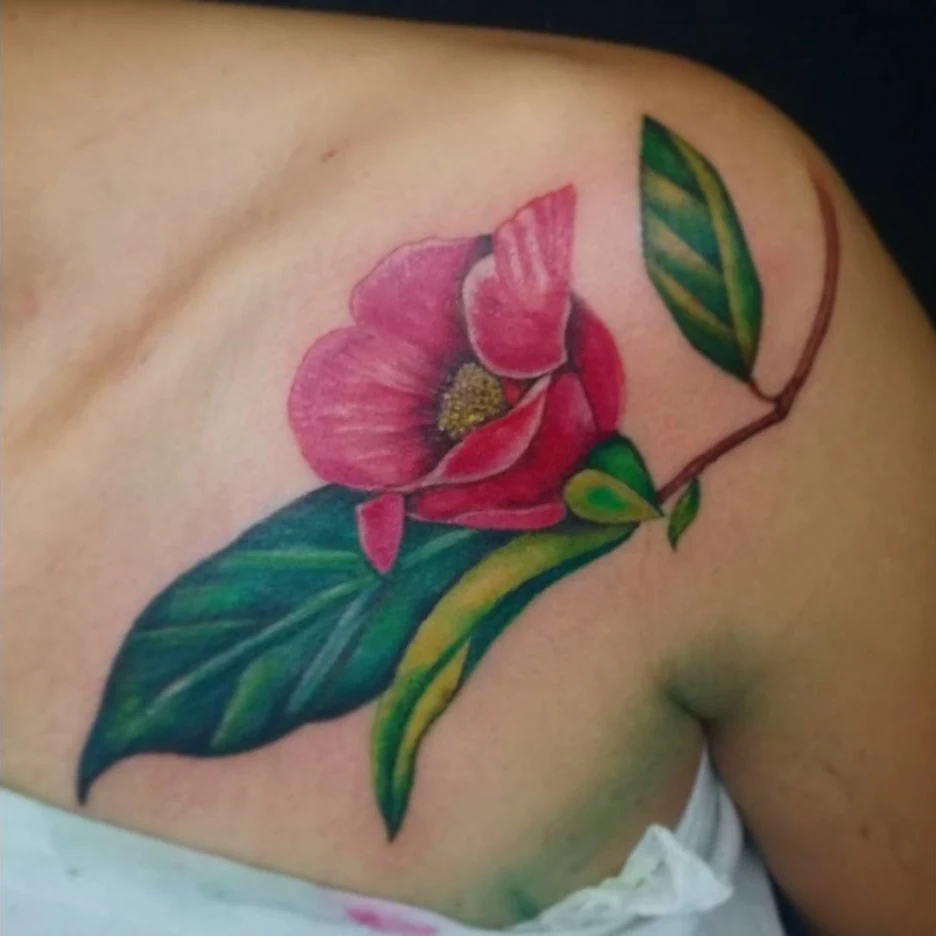
The stem sets the direction
In Orchid, pink flowers and green leaves are joined by a fine curved stem. The stem does more than identify a plant structure. It gives the separate shapes a shared direction and makes the arrangement feel connected.
A flower can be the focal point while a quieter element determines the movement of the entire tattoo. Those two roles do not have to be carried by the same part of the image.
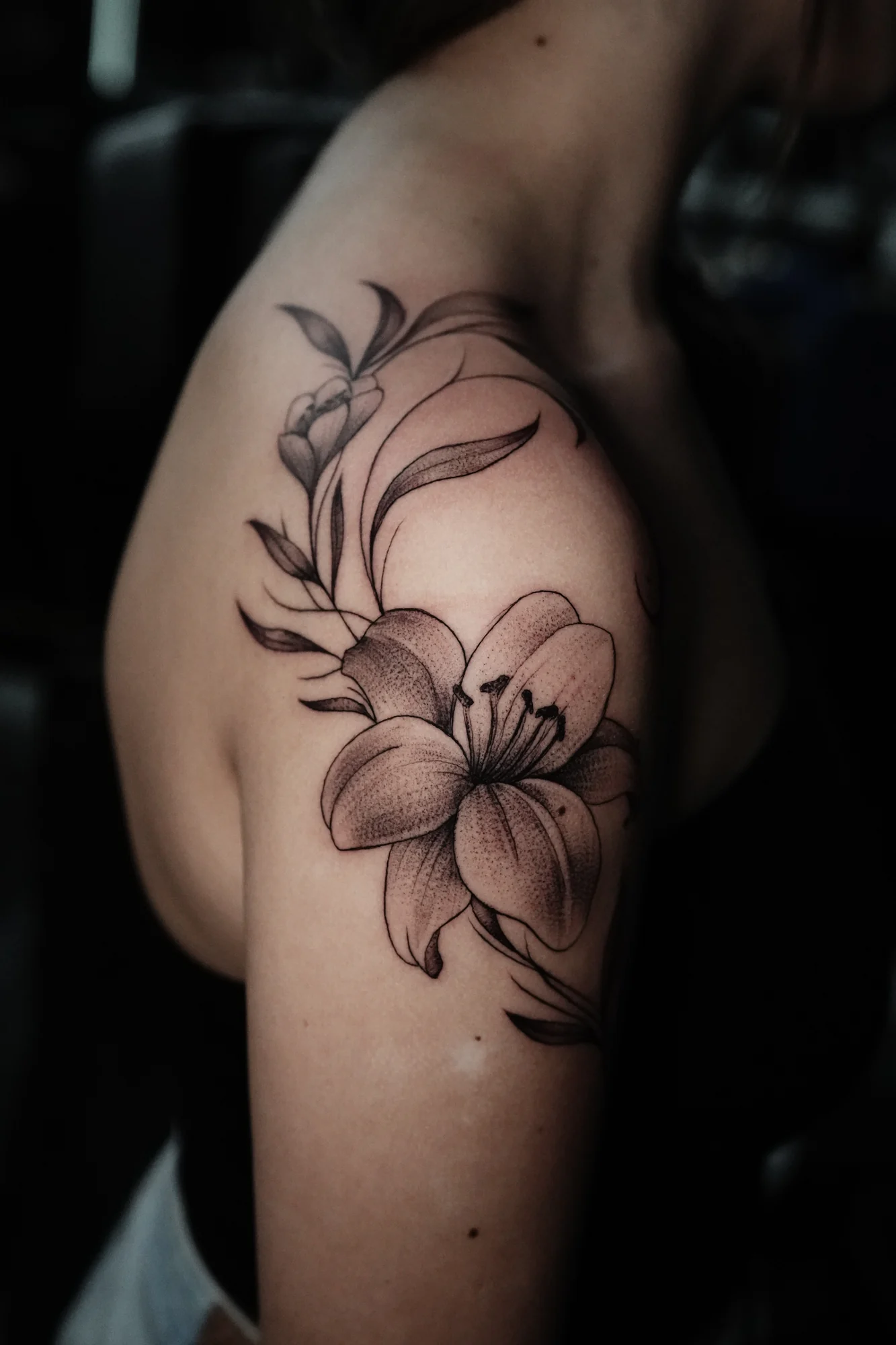
A petal has an inside and an outside
The outer contour identifies the petal, while changes within it suggest a fold, an overlap or a turn toward the center. Pink and green also separate flower and leaf without requiring each shape to be isolated from the others.
The arrangement leaves space around the blossoms. That open area is part of their presence: the flowers can expand outward without becoming a continuous block of color.
Botanical work can change its visual weight
Floral tide offers another way to think about flowers as a composition. A botanical tattoo can emphasize its line, a darker overlap, a repeated shape or the gesture of the whole arrangement. The plant remains a subject while the drawing chooses how to present it.
That is why two tattoos built around flowers can feel entirely different. Species contributes its forms, but scale, spacing and the treatment of edges determine how those forms move on the body.