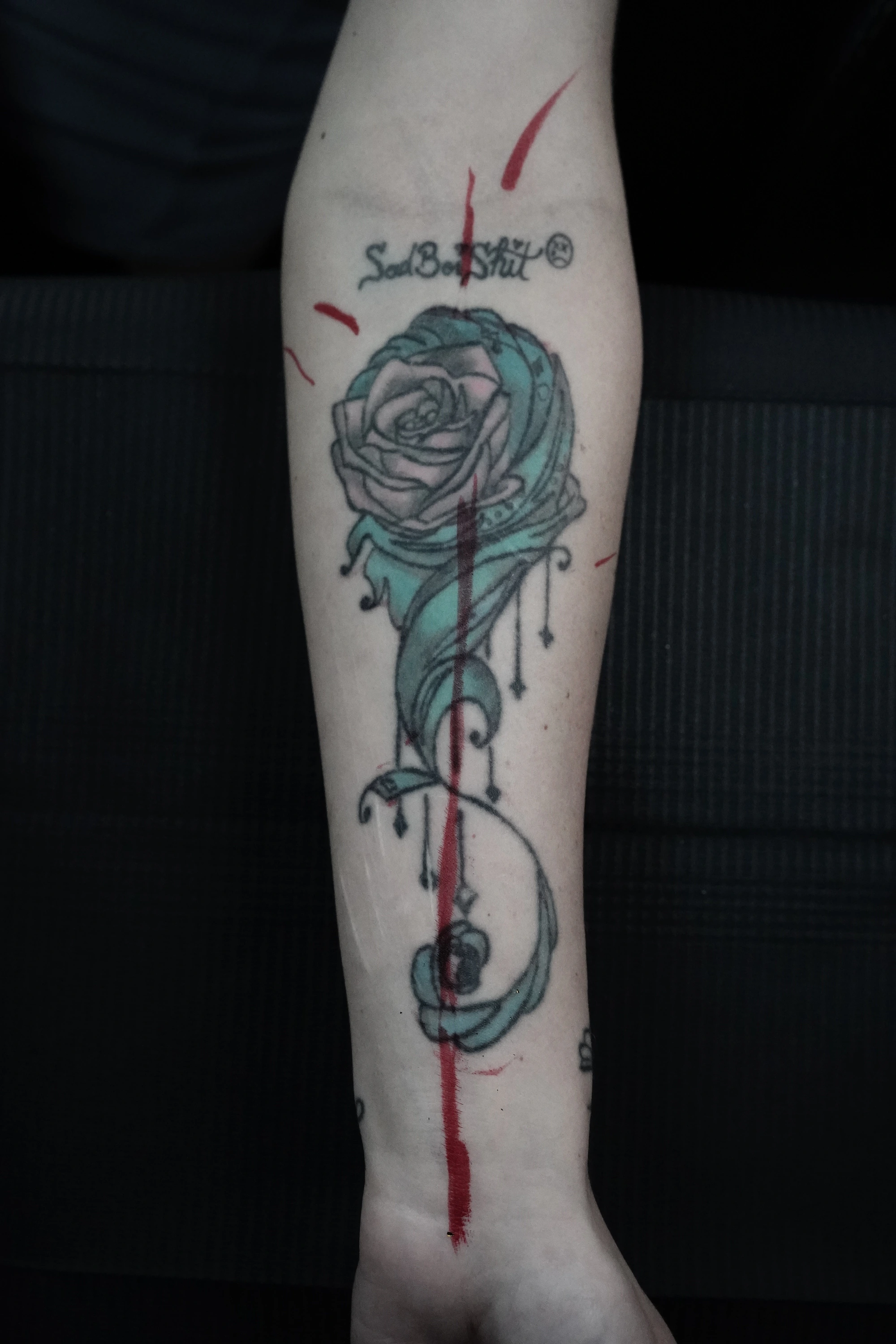
Black is part of a value pattern
A large dark area can give a tattoo weight, but weight alone does not explain the image. Black and grey depends on relationships: a deep shadow against a middle value, a narrow light edge beside a dark plane, an open passage next to a dense cluster of detail.
In a cover-up, those relationships have another job. They must work around marks already present in the skin while building a new subject that can be understood as a whole.
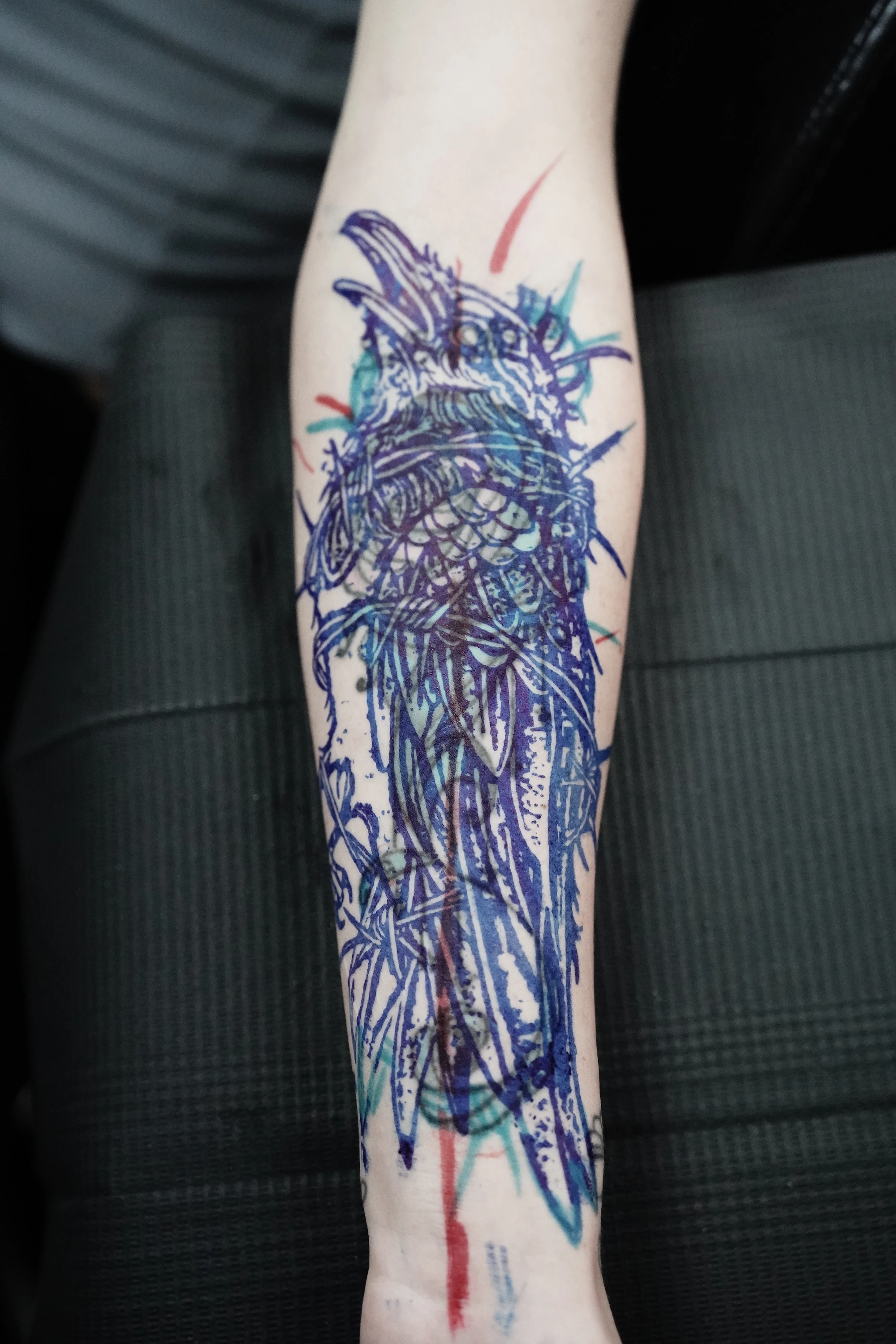
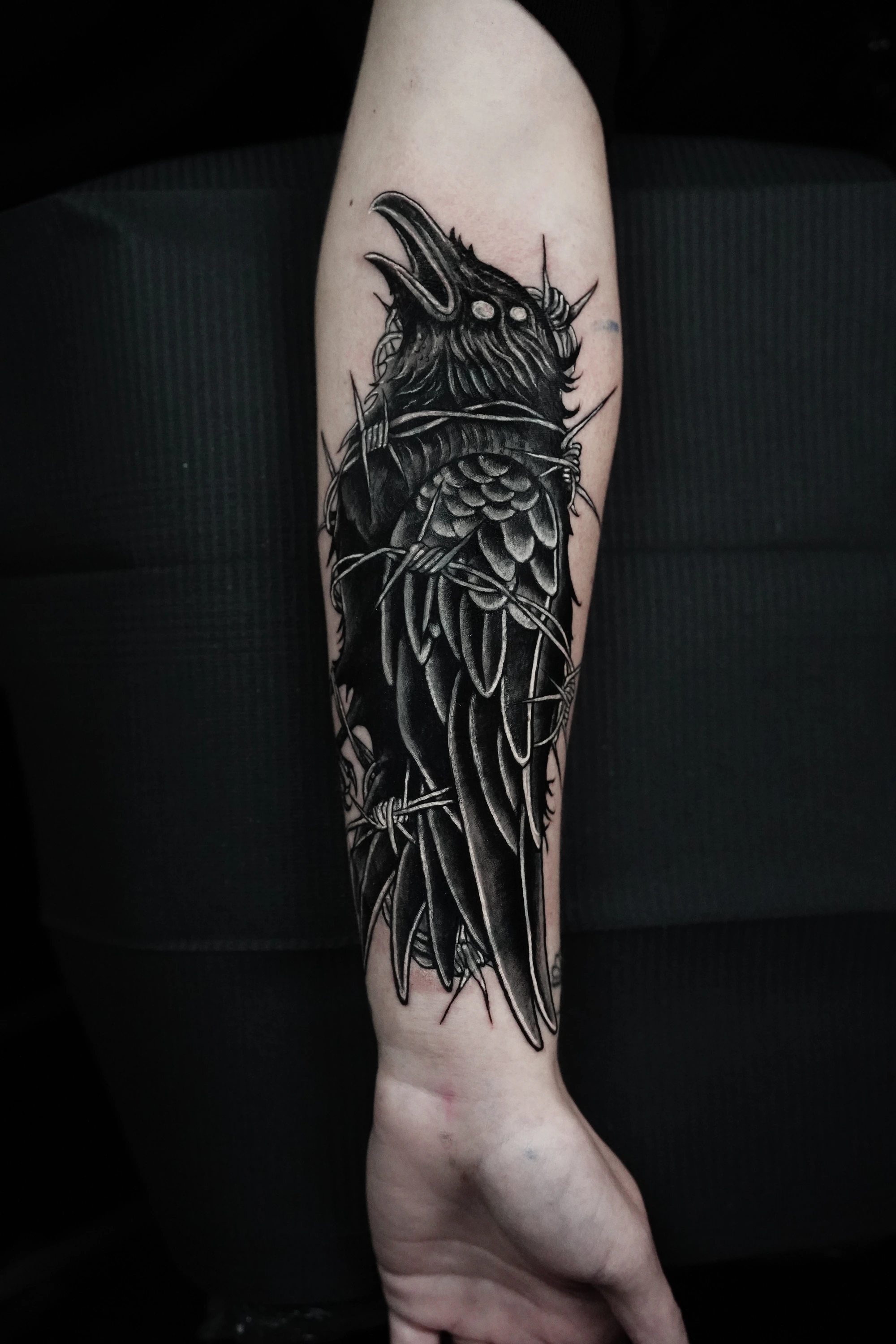
Feathers divide a dark silhouette
The raven is mostly dark, yet its wing is not a flat black shape. Overlapping feathers introduce repeated boundaries. Some edges are broad and rounded; others stretch into long points. Those changes distinguish the parts of the bird.
The lighter separations matter because they describe the new structure. Their value comes from where they sit in the composition. A bright accent is not a substitute for a place to accommodate the old ink.
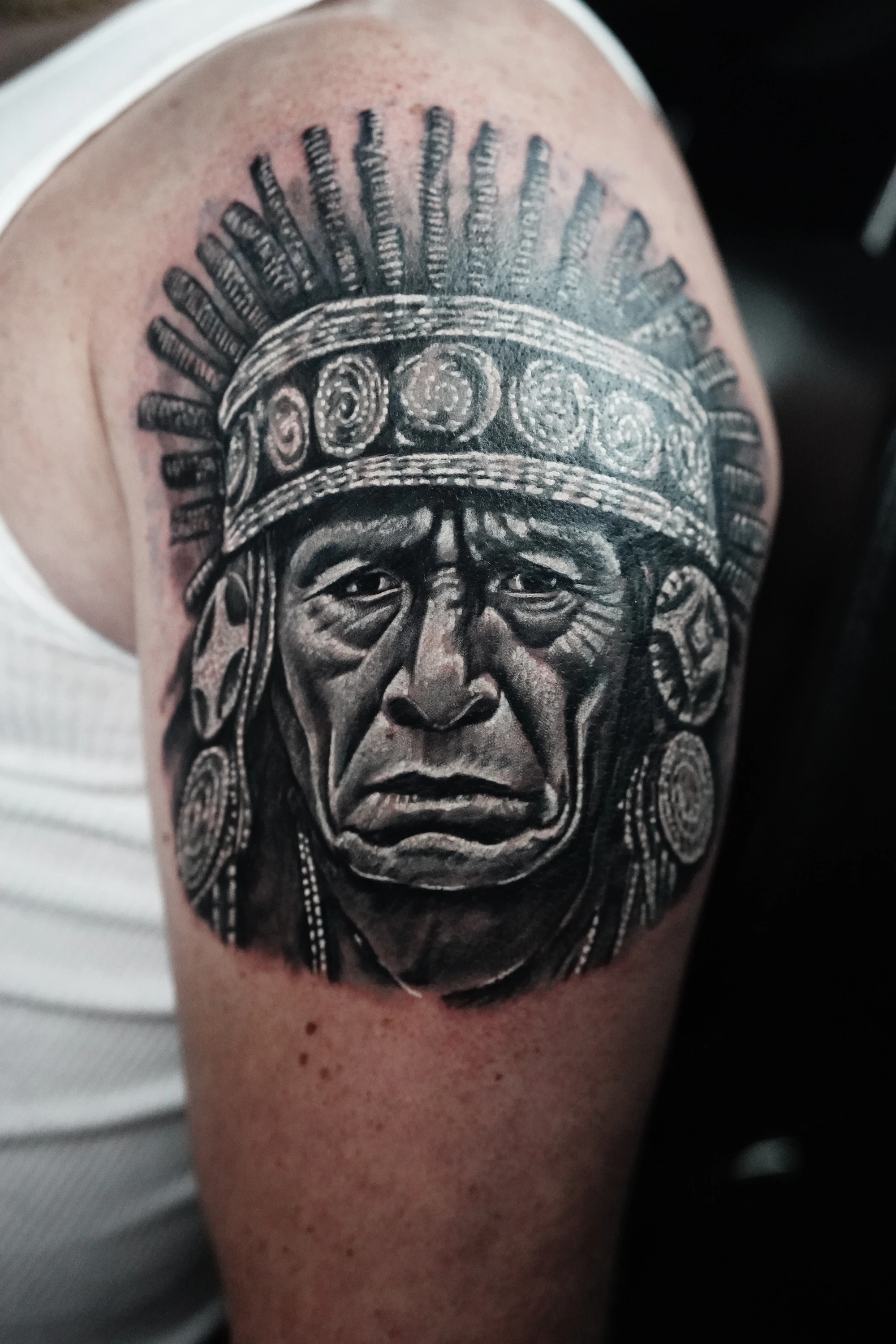
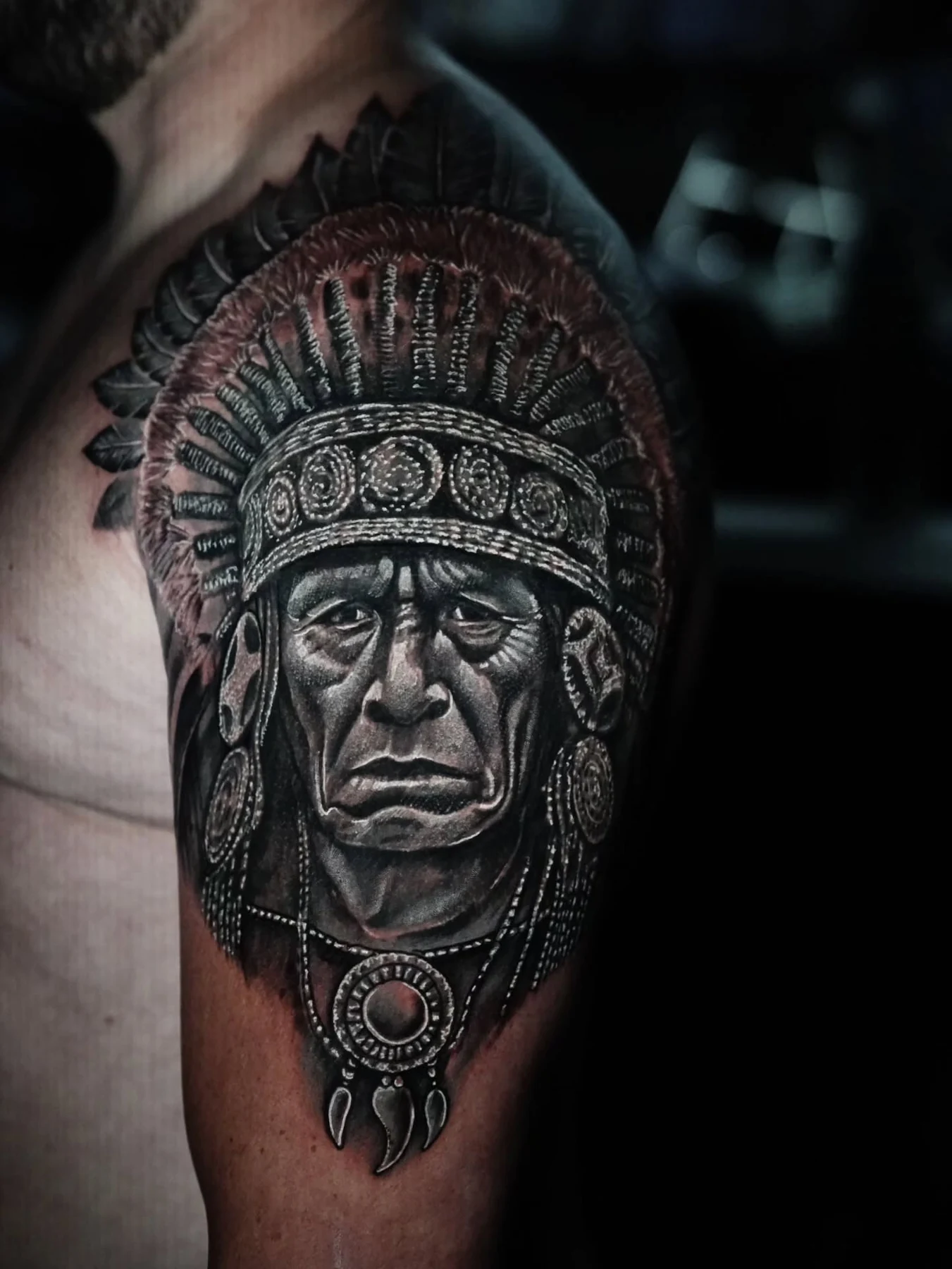
A face asks for another kind of control
Strength & continuity uses smaller shifts around the eyes, nose and mouth, surrounded by the more repetitive detail of the headdress and ornament. The face and its frame carry different visual responsibilities.
These examples share a principle without sharing a formula. Darkness gives the design a foundation; the organization of edges and intermediate values allows a raven to remain a raven and a portrait to remain a face.