Which photos should you send?
Send one straight-on photograph of the whole tattoo and another that shows the surrounding area. Use even light, keep the camera in focus and avoid beauty filters. A close-up can reveal a detail, but it should accompany the wider view rather than replace it. Include approximate measurements so a tightly cropped image does not have to communicate scale by itself.
If the tattoo wraps around an arm or leg, add views from more than one side. Mention any previous reworking or removal treatment. These details help explain the starting point; they are not a substitute for an in-person assessment when one is needed.
Separate your preferred subject from your priorities
“I want a raven” names a subject. “I want the old lettering to stop being the first thing I see” explains a priority. Both are useful. Tell William whether the new piece may extend beyond the existing tattoo, whether you prefer color or black and grey, and whether any part of the original has personal value.
There is no useful universal rule that every cover-up must be exactly twice as large. The old shapes, available space and proposed composition have to be considered together. Keep room for a different arrangement if your first reference does not fit those conditions.
Why the existing dark areas matter
The new design has to respond to where the old image is most visible. A pale focal point placed directly over a dense dark shape raises a different design problem from a feathered or textured passage crossing it. This is a reason to discuss placement and contrast before choosing isolated details.
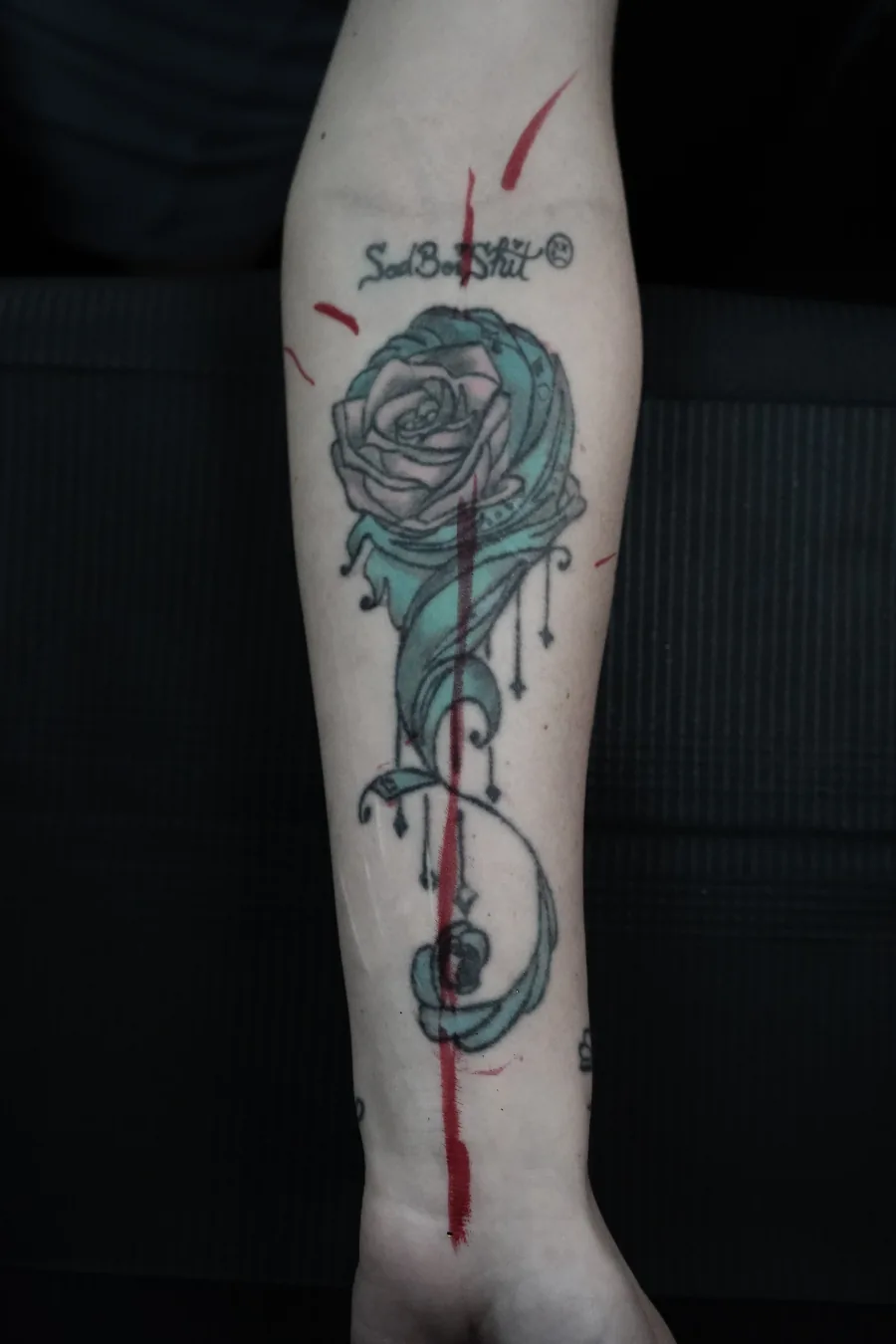
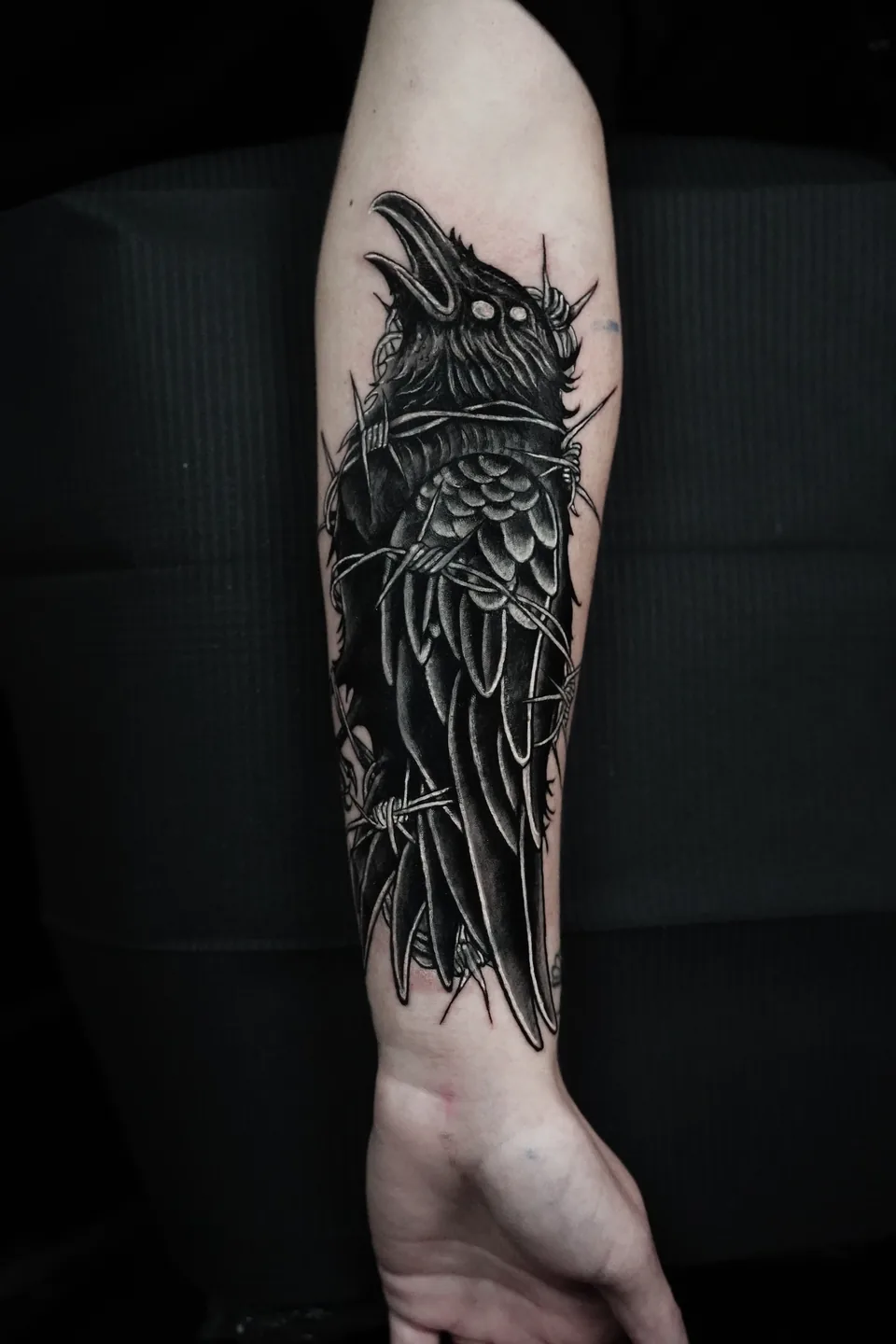
Compare the starting image, stencil and completed view in William’s raven cover-up. They document one specific composition. They do not establish that every old tattoo can achieve the same transformation.
Bring these questions to the conversation
- Which part of my idea is compatible with the tattoo underneath?
- Would changing the size, placement or background create more options?
- What can you assess from these photos, and what needs a closer look?
- If this direction is unsuitable, what alternatives should we discuss?
Questions about laser treatment belong with a qualified treatment provider; this guide does not prescribe it. If keeping part of the existing work matters more than concealing it, the rework-or-cover-up guide can help you describe that distinction.
A real example: the raven at the stencil stage
The photographic record below shows why placement is part of a cover-up’s design, not merely the last step before tattooing.
Two images occupy the same space
The stencil stage has its own visual language. Purple lines describe a bird while the blue-green rose and its old contours remain visible underneath. It can look crowded, because it contains information from two different compositions at once.
That overlap is useful. A finished photograph shows the new image taking priority. The stencil photograph shows the relationship that had to be resolved before that could happen.
Placement is part of drawing
On the forearm, the raven has a clear upper and lower direction: the open beak and head establish one end, and the long feather shapes travel toward the wrist. The wire crosses that movement rather than simply following it.
Moving or resizing this drawing would change where every feather falls in relation to the rose. Placement is therefore not a final administrative step after a design is complete. In a cover-up, it is part of the design itself.
The stencil does not contain the whole tattoo
Line placement describes boundaries, but the finished bird also depends on shadow, overlapping surfaces and the separation between feathers. Those value relationships are not fully visible in the transfer alone.
The three photographs record different kinds of information: the old tattoo establishes the problem, the stencil shows the arrangement, and the finished photograph shows the new hierarchy. Keeping that middle image makes the transformation easier to understand.