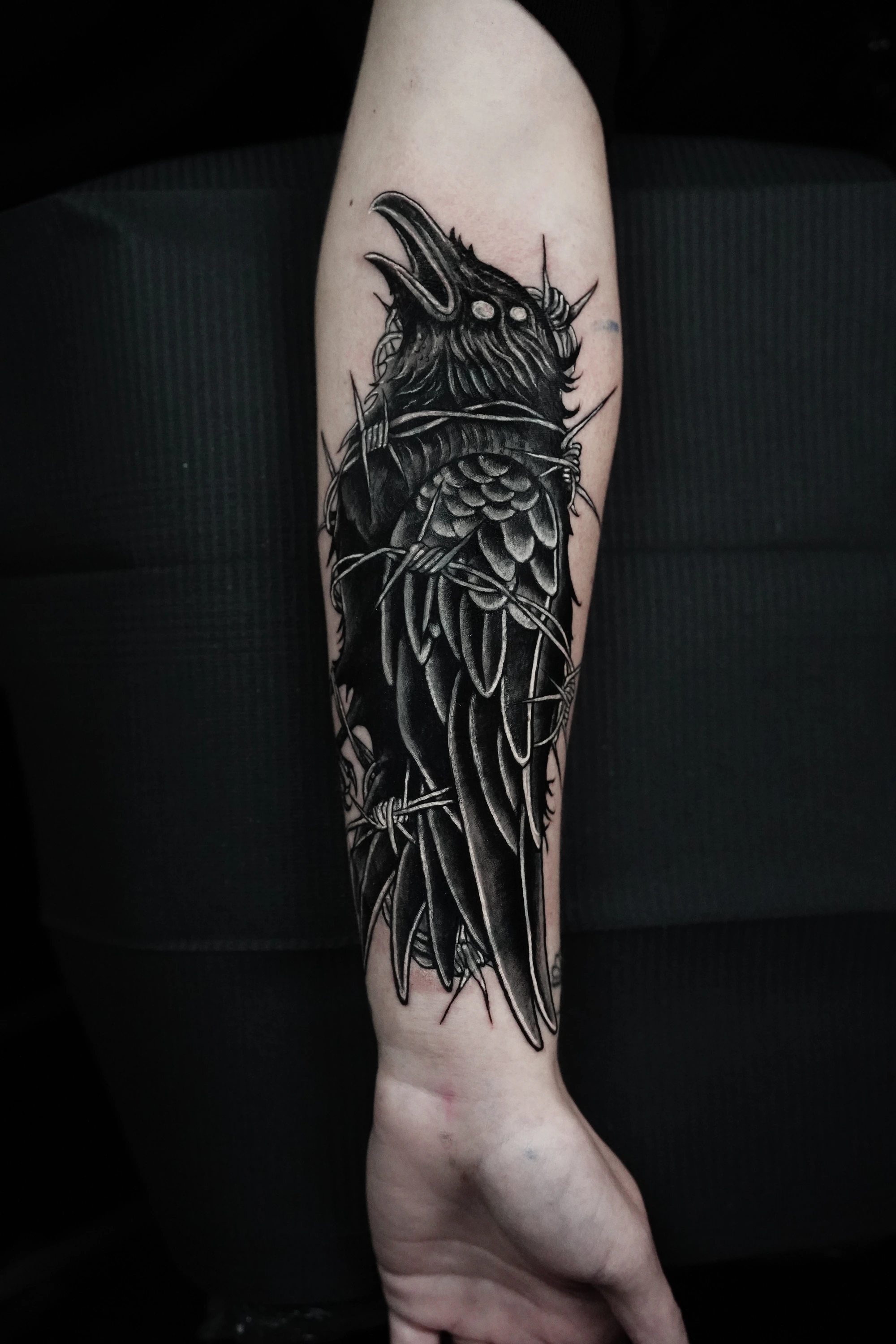
The subject is only the beginning
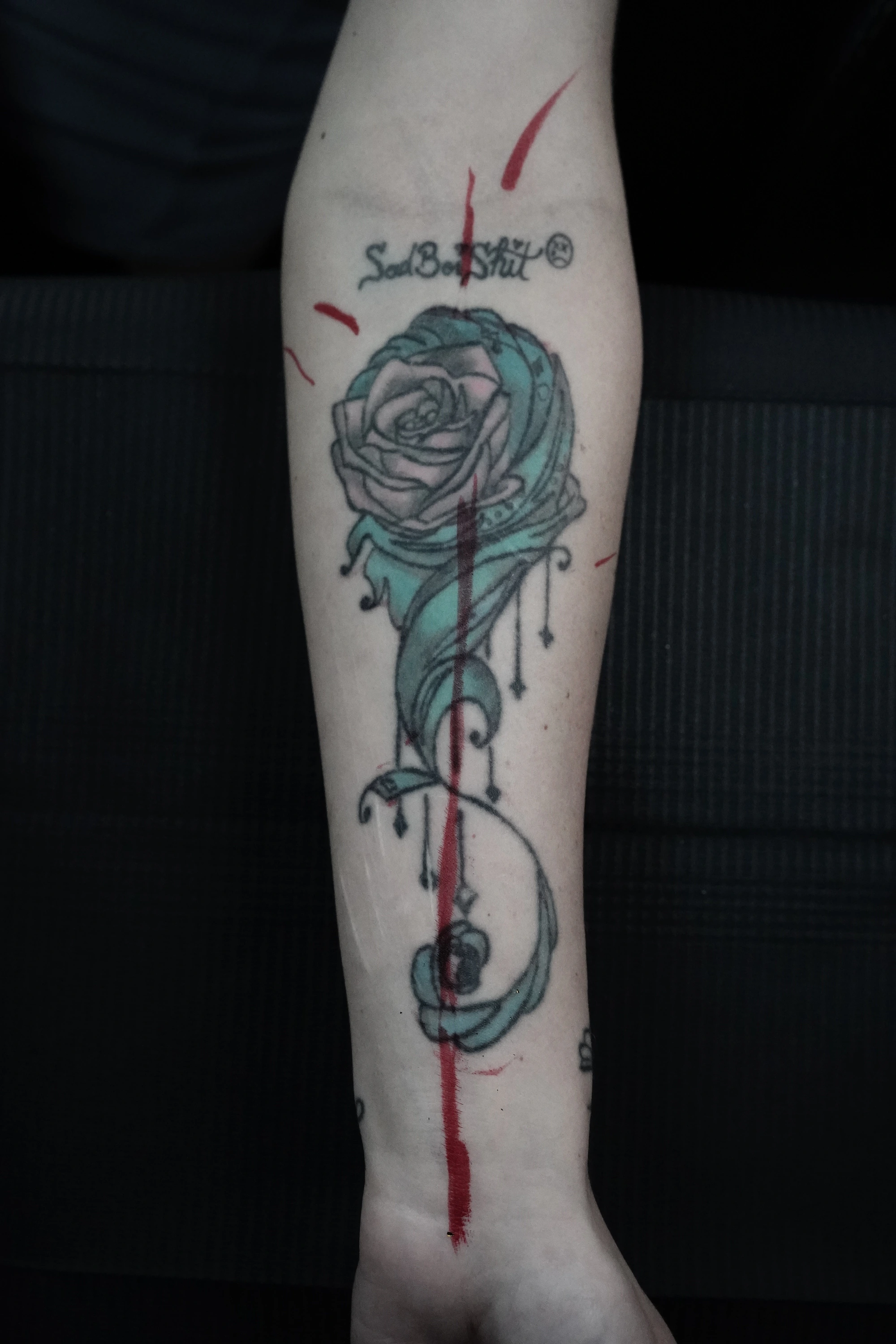
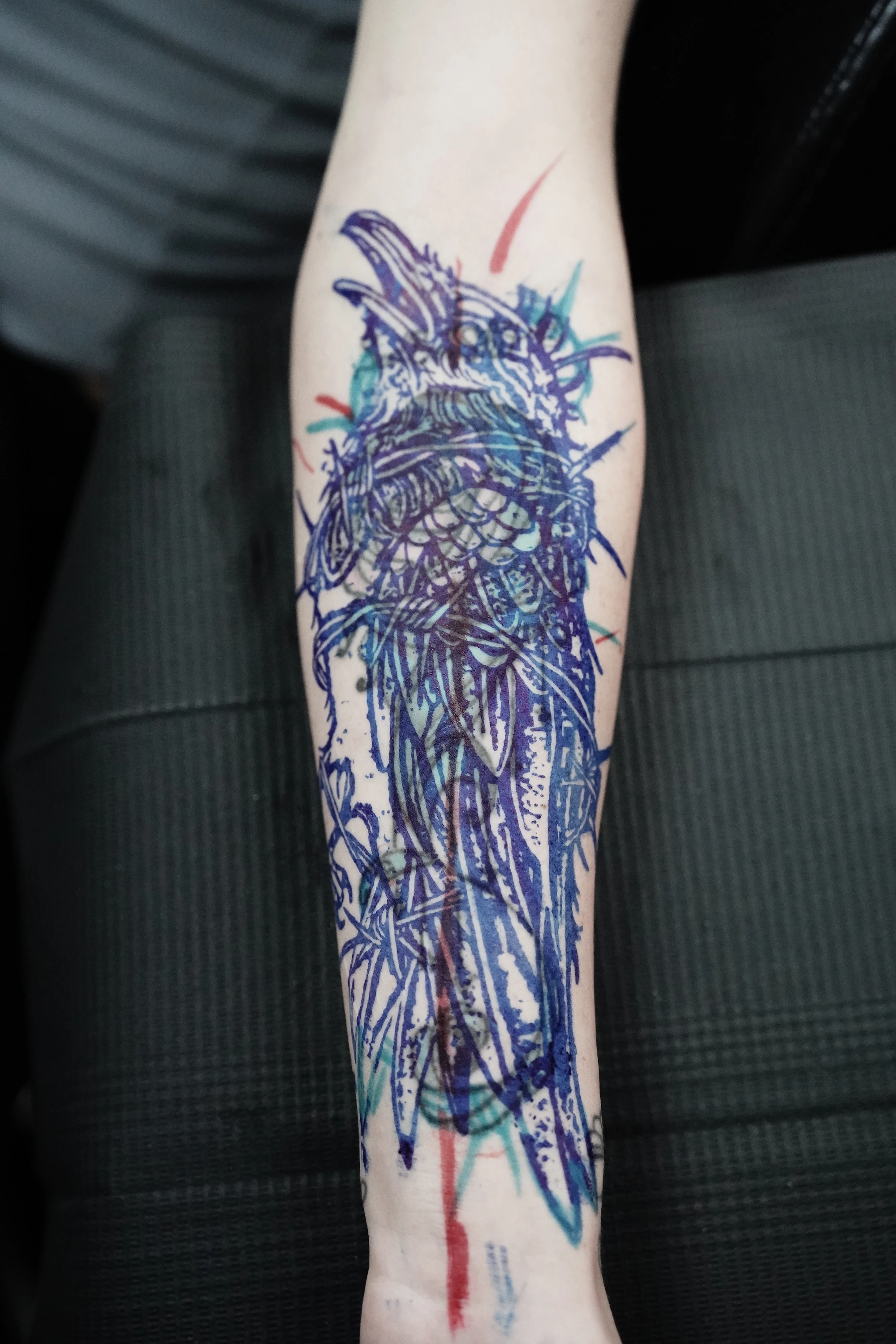
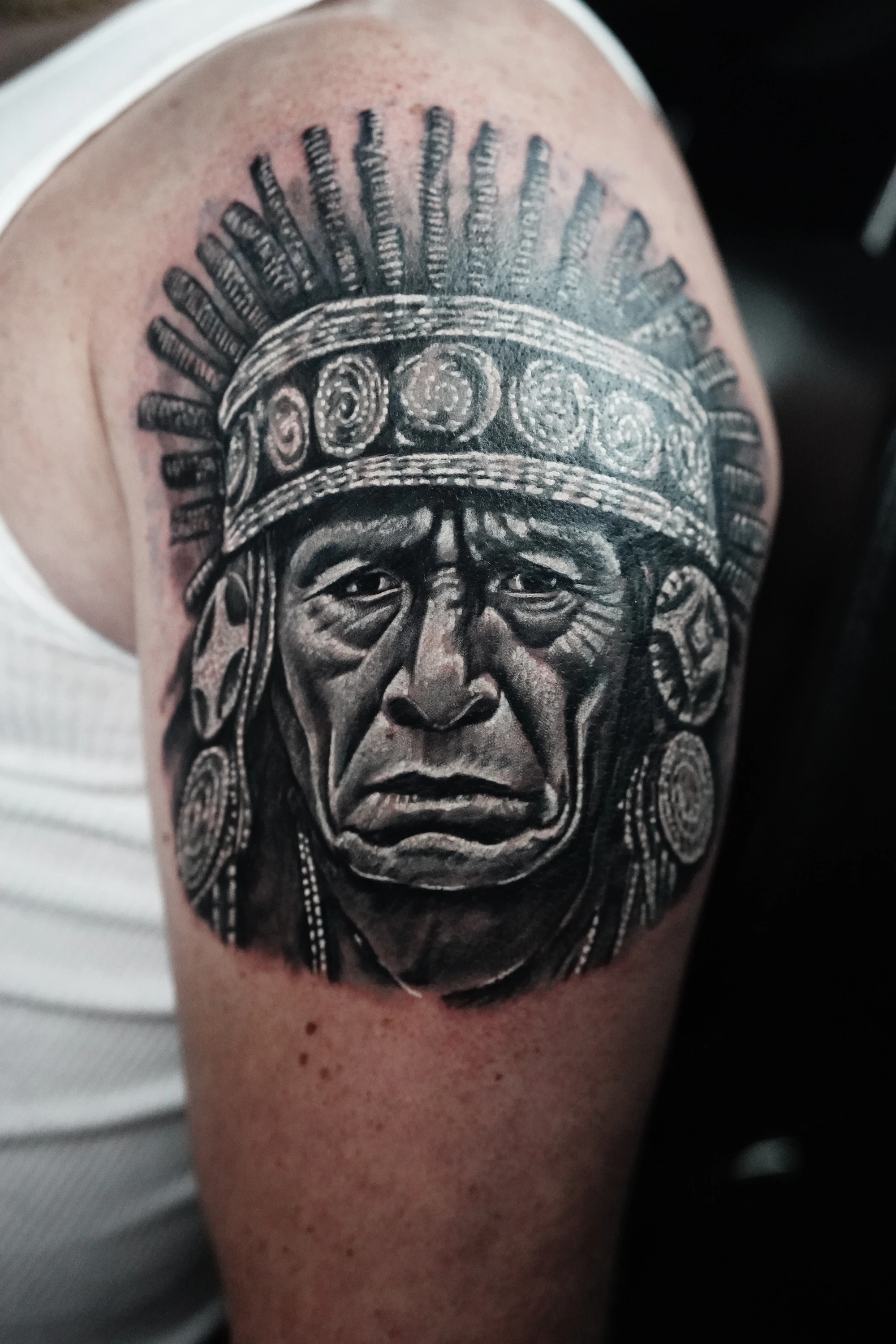
A raven and a portrait appear to offer very different answers to a cover-up. One has long feathers and a strong silhouette; the other depends on recognizable facial relationships. What matters is how the complete design can accommodate the old marks.
A subject name alone cannot settle that question. Two drawings of the same bird may distribute dark areas very differently. One portrait may have broad, quiet facial planes; another may combine deep expression lines, textured clothing and an elaborate frame.
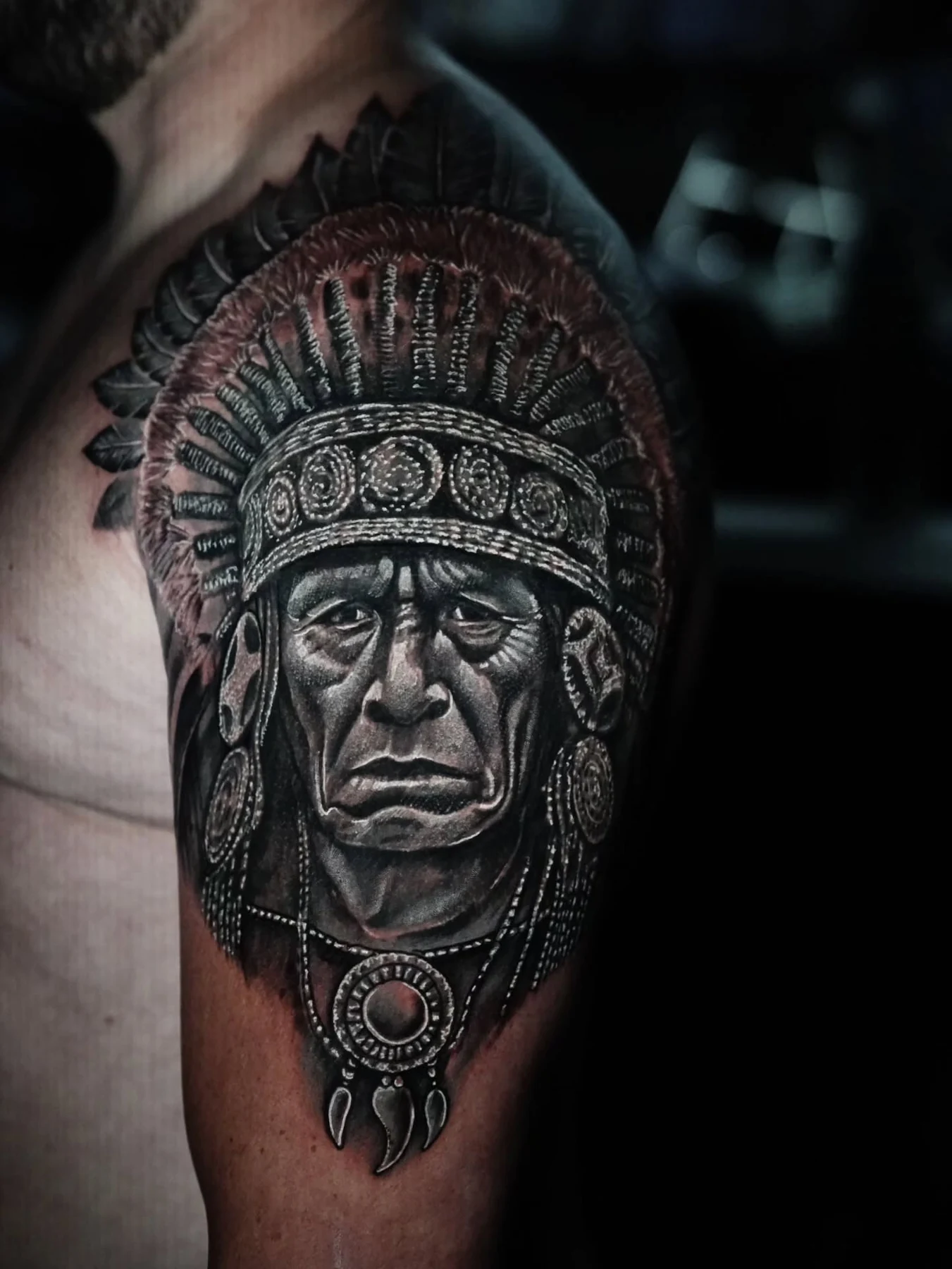
Changing scale changes the relationships
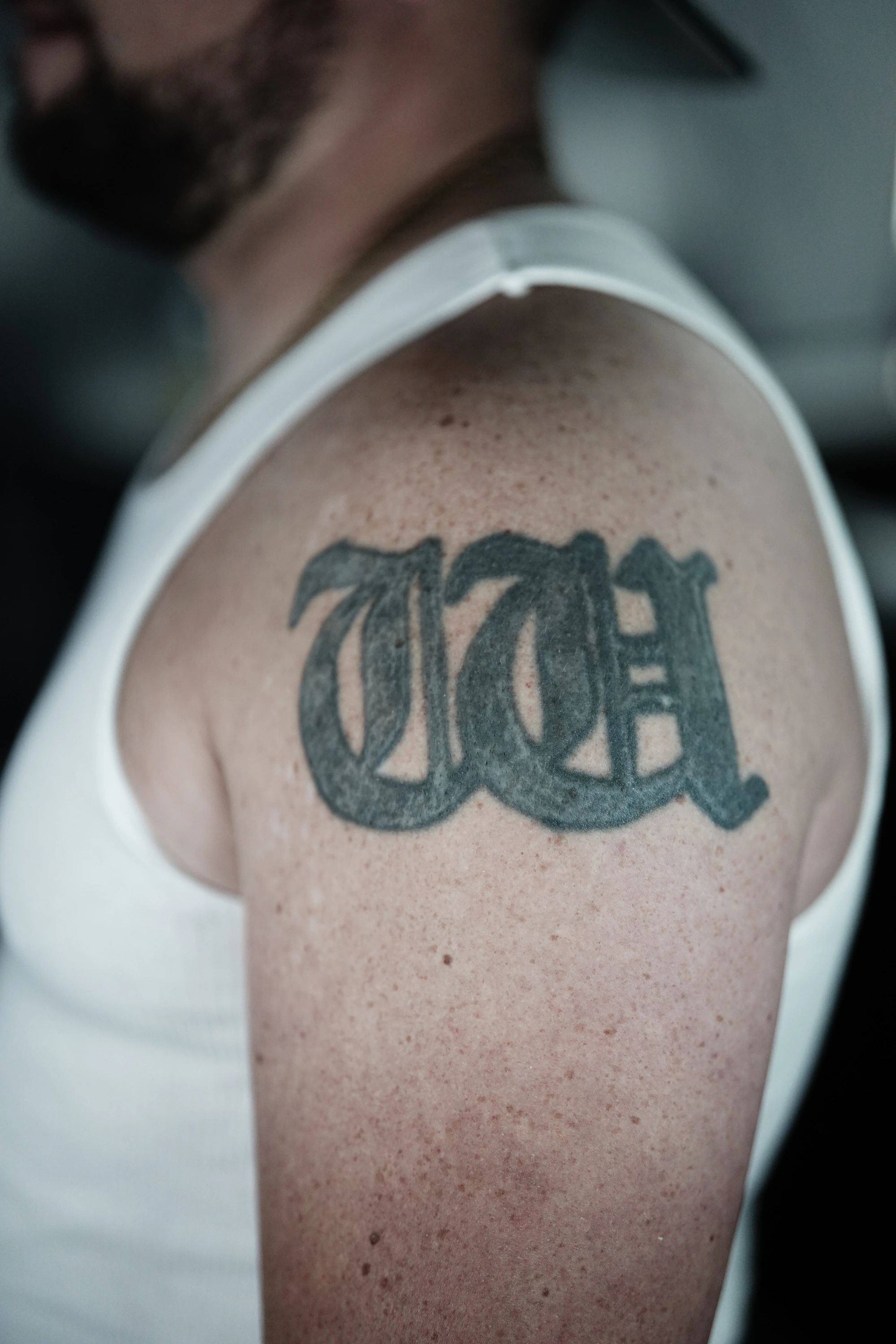
The before-and-after photographs of Strength & continuity show lettering replaced by a larger portrait composition. The headdress and ornament create space around the face. The new tattoo is not confined to the outline of the letters.
That change of scale matters because it creates somewhere for supporting elements to go. Enlarging a design is useful when it improves the relationship between old marks and new forms, rather than merely enlarging everything by the same amount.
Possibility is a process
My approach is to explore what can change: the subject, its scale, the focal point, the supporting texture, or the stages of the project. Willingness to rethink those relationships can open possibilities that a fixed drawing does not offer.
That is different from promising that any chosen picture will hide any existing tattoo in one session. The photographs here show particular solutions. The broader lesson is to investigate the composition before treating the first limitation as the final answer.