The old image is a map
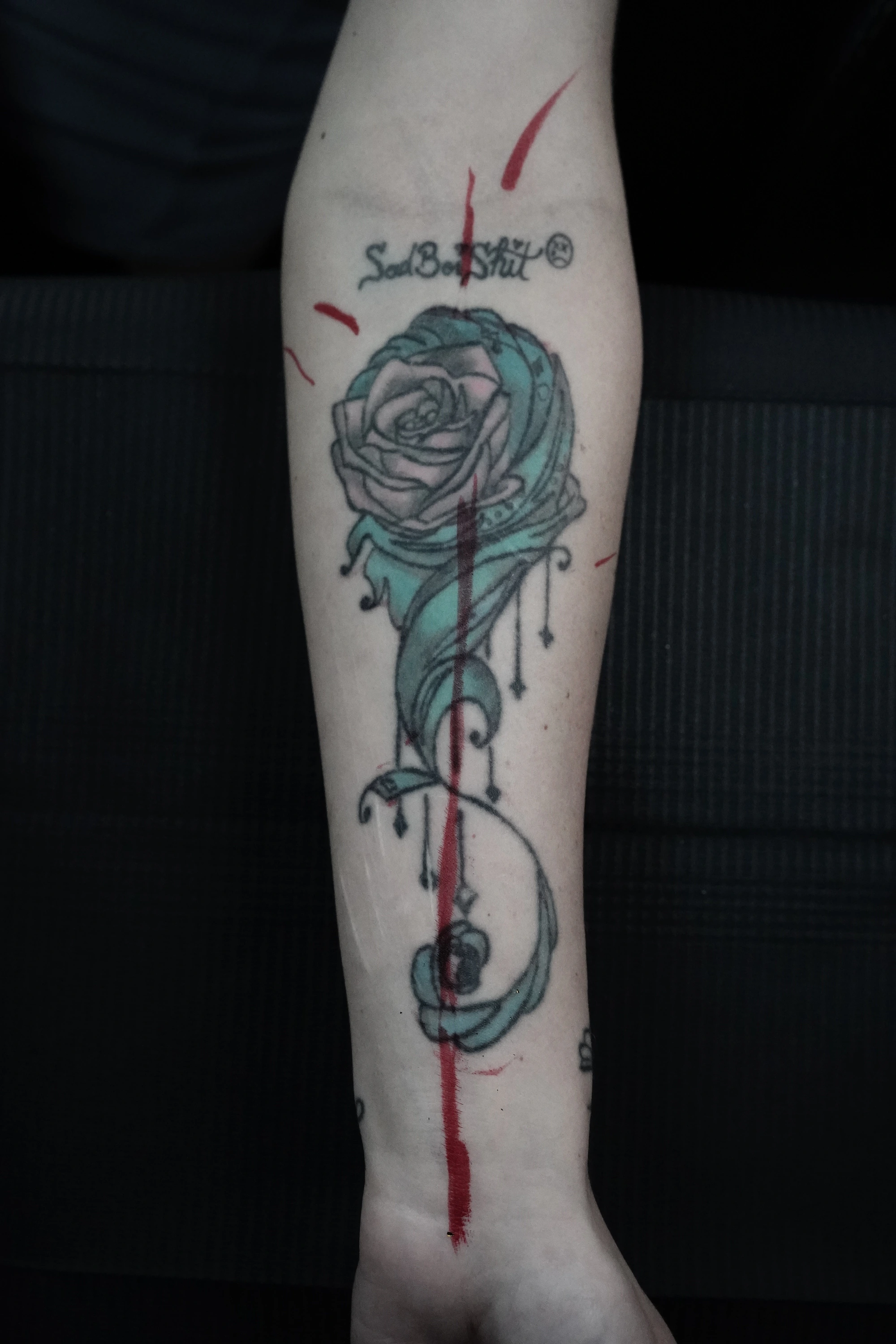
The rose in the before photograph has more than one kind of mark: a dark outline, a broad area of blue-green color, lettering above it, and thin shapes extending toward the wrist. These elements occupy different parts of the arm. Treating them as one uniform stain would miss the actual design problem.
A cover-up begins by reading those differences. A strong old contour needs a place within the new image. A lighter passage offers another kind of space. The previous tattoo becomes a map of edges and values around which the next composition takes shape.
What the stencil makes visible
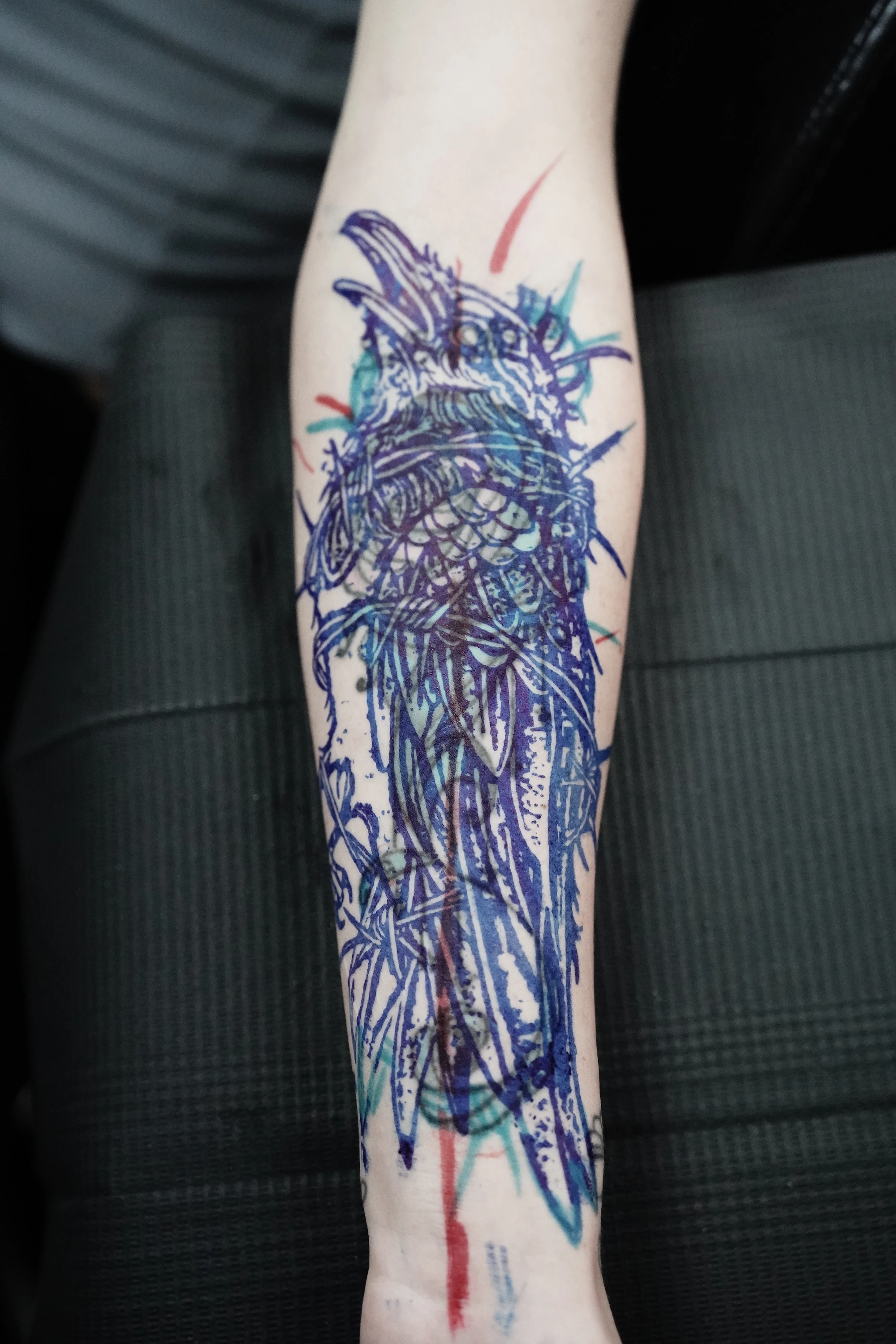
The stencil photograph is the bridge between the rose and the finished raven. Both images are visible at once: the old color remains underneath while the bird establishes a larger silhouette. This is where the relationship between the two compositions can be seen most clearly.
The raven does not simply repeat the outline of the rose. Its head, layered wing, long feathers, and surrounding wire give the new piece a different rhythm. The design extends beyond individual old marks so that they can belong to a larger image.
A new image takes priority
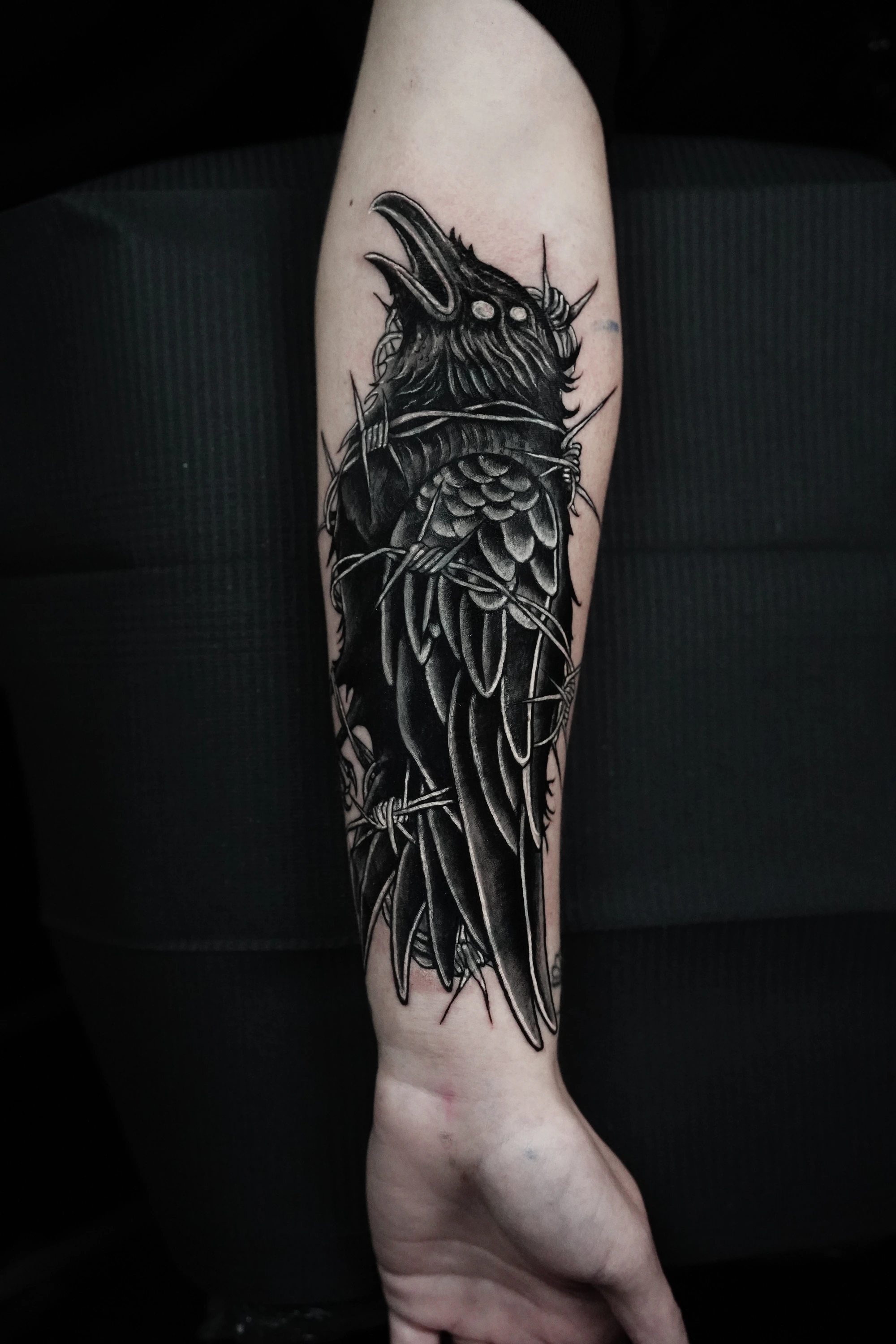
In the finished photograph, the beak and pale eye shapes identify the bird before the eye moves through the wing. Repeated feather edges divide the long dark form, while the wire crosses it in another direction. The subject remains legible because those details are organized, not evenly scattered.
The useful comparison is therefore not only before versus after. It is old contour, new placement, and finished structure. Seen together, the three photographs show a cover-up as a design transformation.