Tiger Tattoos: Realism, Armored Characters and Floral Ideas
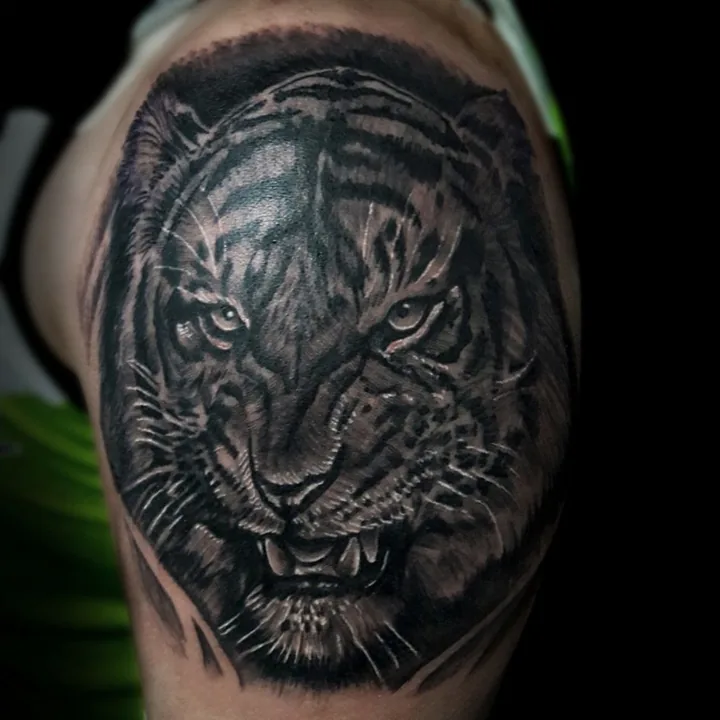
William's Tiger gaze tattoo and Tiger in samurai armor drawing start with the same animal but lead in different directions. One concentrates on a tiger's face; the other develops an armored character. Decide which kind of image you want before collecting backgrounds.
What matters in a realistic tiger portrait?
The stripes follow the face rather than sitting on it as an unrelated pattern. Eyes, muzzle and the larger shadow shapes establish the expression. In William's Tiger gaze tattoo, those features work together within a close view of the head.
When selecting references, look beyond sharp fur detail. A useful photograph also shows the angle and expression you want. Combining the eyes from one angle with a muzzle from another can change the animal, so explain your preferences and let the composition be developed as a whole.
How is an armored tiger different?
William's Tiger in samurai armor study is an imaginative drawing of an armored tiger. The equipment adds another layer of shapes around the animal. Decide whether the face or the armor is the feature you want to give the most room.
This direction suits a brief centered on an illustrated character. If historical equipment matters to you, bring specific references and identify which details you want researched. A general Japanese-inspired label does not establish historical accuracy by itself.
Can flowers soften the composition?
Flowers can introduce contrasting shapes, but they do not have to make the tiger feel gentle. Their size, position and color determine whether they act as a frame or compete with the face. Choose the relationship you want rather than adding blossoms simply to fill empty space.
At your consultation with William, keep the animal reference separate from any armor or flower references so each choice is clear.