Roaring or Calm? Choosing the Expression of an Animal Tattoo
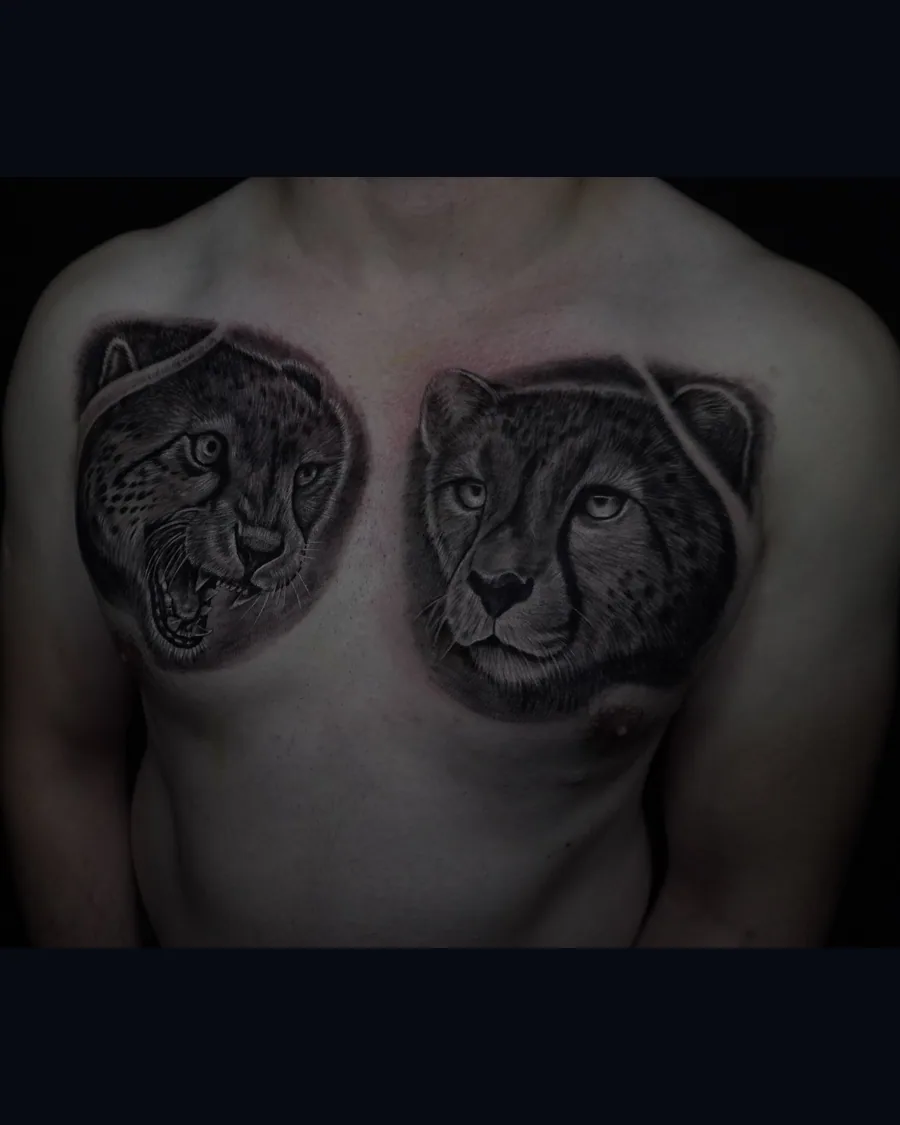
An open jaw changes an animal portrait as much as its species does. Teeth, tongue and the dark space inside the mouth all need room. Compare a roaring reference with a calmer face before choosing the flowers, crown or background around it.
What changes with an open mouth?
An open mouth creates additional shapes: teeth, tongue, jaw and darker spaces inside. Those features can make the face more forceful, but they also take room. If the reference is cropped tightly, check whether the whole jaw and surrounding structure are visible enough to understand.
In Twin predators, William places different expressions on opposite sides of the chest. Compare the mouths and eyes before looking at the surrounding fur. Those differences give each face a distinct presence within the pair.
Expression without an open mouth
Small changes in the eyes, head angle and surrounding fur can hold attention without a dramatic mouth. A calmer pose may give more emphasis to recognition, texture or the relationship between two subjects. Calm does not have to mean blank or symmetrical.
Bring references for the expression, not only the species. If you like one lion's eyes and another lion's mouth, explain that clearly and ask whether they can belong to one believable face. The angle and proportions still need to fit together.
Does the animal's symbolism decide the pose?
It can inform your preference, but it does not dictate a single expression. Your personal association with an animal may differ from a popular description online. Share your interpretation if it matters to the project.
Bring William your preferred expression before choosing what goes around the face.