Tattoo Numbing Cream: Ask Before You Apply Anything
Do not assume a numbing cream is appropriate for your tattoo appointment because it is sold online or marketed for tattoos. Discuss the exact product before applying it, and direct questions about its safety for you to a qualified healthcare professional. An artist's session policy and individual medical suitability are separate issues.
What has the FDA warned about?
In March 2024, the FDA warned consumers about certain topical pain-relief products marketed for procedures including tattooing. The agency identified potential serious health effects associated with excessive absorption of ingredients such as lidocaine. Its warning also discusses greater risk with large areas, irritated or broken skin, prolonged application and covering treated skin. Read the FDA warning.
A product name or a reassuring social-media testimonial cannot answer whether a cream is appropriate for you. Keep the packaging or ingredient list available when asking a qualified healthcare professional about it.
What should you tell the artist?
Ask about the current policy before the session. Give the product's full name rather than calling it just numbing cream. If you have already applied something, tell the artist what it was and when. Do not conceal it because you are worried the appointment might need to change.
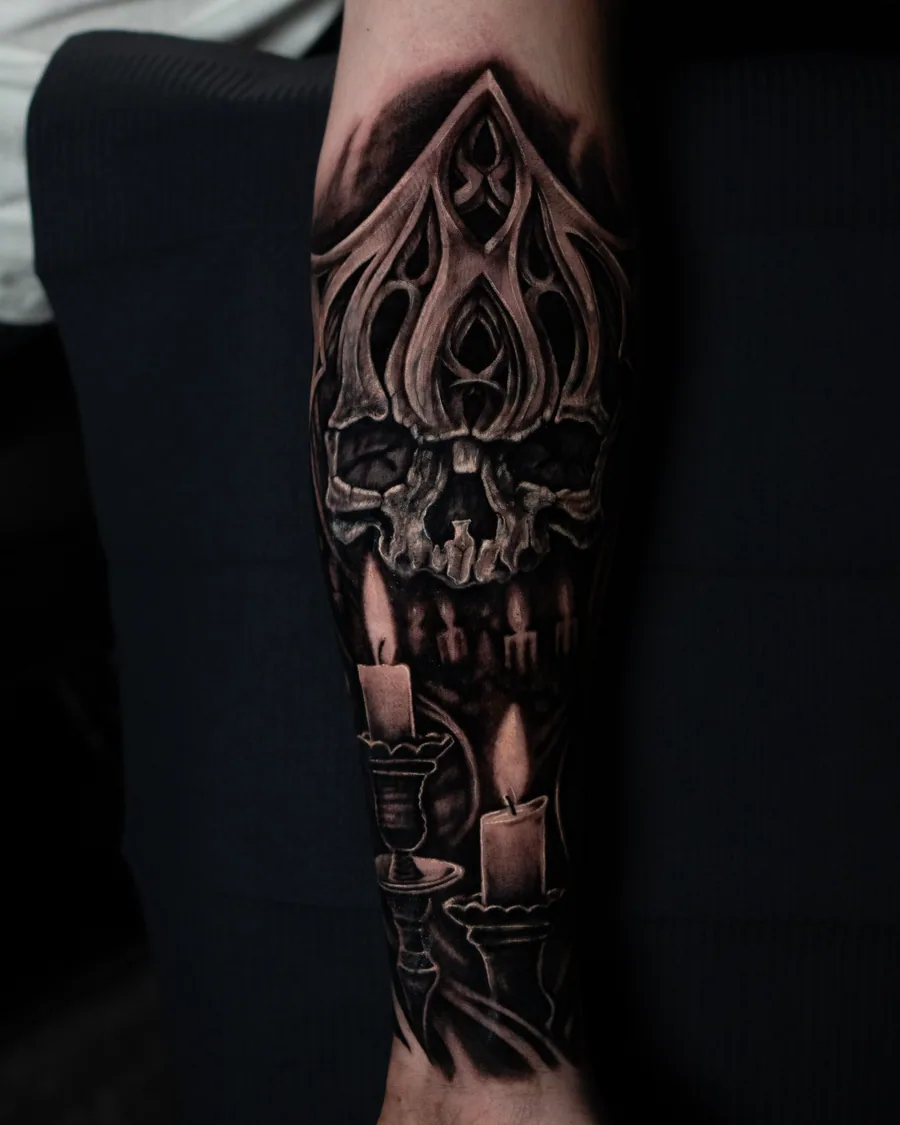
The Gothic vigil tattoo illustrates William's work. Its photograph gives no information about numbing products used during the session. Ask about products directly rather than choosing one based on another person's finished tattoo.
Can the artist approve a product medically?
An artist can explain the session policy. Questions about your medicines, allergies or health conditions belong with a qualified healthcare professional. Confirm William's current policy directly before applying any cream.
Ask about the session policy at your consultation in Tulsa. A qualified healthcare professional is the appropriate person for questions about whether a product is safe for you.