Cover-up color and optics: changing what the eye recognizes
A bright white ink swatch or a high reflectance reading does not establish that white will conceal an old black tattoo. The evidence below separates measurements of dried ink, measurements in tattooed skin and photographs of real cover-ups. Each answers a different question; none supplies a universal color recipe.
Research summary: use optical studies to understand what was measured, a documented cover-up to examine composition, and a health professional for questions about future laser treatment. Keep the decision about a new image separate from the decision about removing pigment.
In this review: White ink and the laboratory result · What skin measurements establish · Reading a real cover-up · White ink and future removal · Method and limits.
A cover-up asks an image to do two jobs: become a convincing new composition and change how the previous tattoo is perceived. It is tempting to imagine the process as putting a fresh coat of paint over a wall. That comparison leaves out both the skin and the way a viewer recognizes a drawing.
The useful distinction is between changing the visible image and removing the material already present. A new design may redirect attention, integrate a dark shape or interrupt an old outline. Those artistic possibilities do not prove that the earlier pigment has disappeared.
Pigment is inside skin, not on a blank sheet
The FDA describes tattooing as placing ink in the dermis, beneath the outer skin layer. Its explanation of laser removal involves breaking down pigment particles so the body can clear them, with results and treatment requirements that vary. Adding another tattoo is a different process from removing those particles. FDA: tattoo removal options and results.
A color chart printed on white paper therefore cannot establish what a particular pigment will look like in an existing tattoo. The original image, the skin and the new work are part of the situation. A bright swatch is evidence of how that swatch looks, not a promise that the same color will erase a dark shape underneath.
Optical measurements are not a cover-up recipe
A human imaging study measured absorption and reduced scattering in multicolored tattooed skin and adjacent untattooed skin at wavelengths from 650 to 970 nanometers. It investigated a way to characterize optical properties relevant to tattoo removal. It did not test which new tattoo colors can conceal particular old ones. Ayers and colleagues: optical properties of tattooed skin.
That boundary matters. Scientific language about light absorption should not be used to dress up an unsupported recipe. The study does not establish that a complementary color “cancels” another tattoo or that white ink restores untreated skin. A measurement method and a successful cover-up design answer different questions.
Surrounding shapes change an image's reading
Color appearance is also relational. The Exploratorium demonstrates that an unchanged patch can look different when its background changes. The surrounding image affects what the viewer perceives even though the patch itself has not changed. Exploratorium: Mix & Match.
As an artistic example, imagine an isolated dark curve on paper. It dominates an otherwise open field. Within a larger drawing, that same curve might become part of a feather, a fold or an area of shadow. This hypothetical example illustrates compositional integration; it is not evidence that a specific tattoo can be covered with any chosen subject.
Texture can contribute to that integration, but detail alone is not a solution. A crowded image can still leave the old outline easy to follow. The new work needs a readable structure of its own, with deliberate relationships between its larger dark and light areas.
A convincing result is more than an immediate photograph
A mockup can explore those relationships without proving how additional pigment will appear after healing. Likewise, a dramatic fresh photograph documents one stage under one set of viewing conditions. Neither should be treated as a universal demonstration of color behavior in skin.
The artistic goal is a new image that makes sense as an image, rather than a collection of distractions around an unwanted mark. Optics helps explain why simple paint-over language falls short. Composition explains another part of the challenge: changing what the eye recognizes while working honestly with what is already there.
Does high white-ink reflectance prove it can hide black ink?
A 2023 laboratory study by Stolecka-Warzecha and colleagues examined seven tattoo and permanent-makeup dye products. The researchers spread the samples on glass slides and let them dry, then measured their spectral response between 400 and 1000 nanometers. In that setup, the white sample’s maximum reflectance was almost 38 times the black sample’s, expressed in relative units. Original study: methods and results.
That ratio describes the instrument reading for those prepared samples. It is not a percentage of an old tattoo concealed, a measurement of opacity inside skin or a count of sessions needed. The comparison was not a healed cover-up trial with new white ink placed into an existing black tattoo. It therefore cannot establish that a particular white product will deliver a particular cover-up result.
The useful question for a claim based on that number is: “What object was measured?” A dried sample, tattooed skin and a finished tattoo are different objects. A result can be accurate for the experiment while remaining insufficient for the decision you want to make.
Would measuring tattooed skin settle the design question?
The skin measurements discussed above are a different kind of evidence from the dried samples. They do not turn a reflectance ratio into a test of tattooing white over black. The results reviewed here do not establish a clinical cover-up success rate for these palettes. The unanswered question remains how a new image will work with the particular old marks. Ayers and colleagues: original abstract, 2009.
What can a real cover-up show that a swatch cannot?
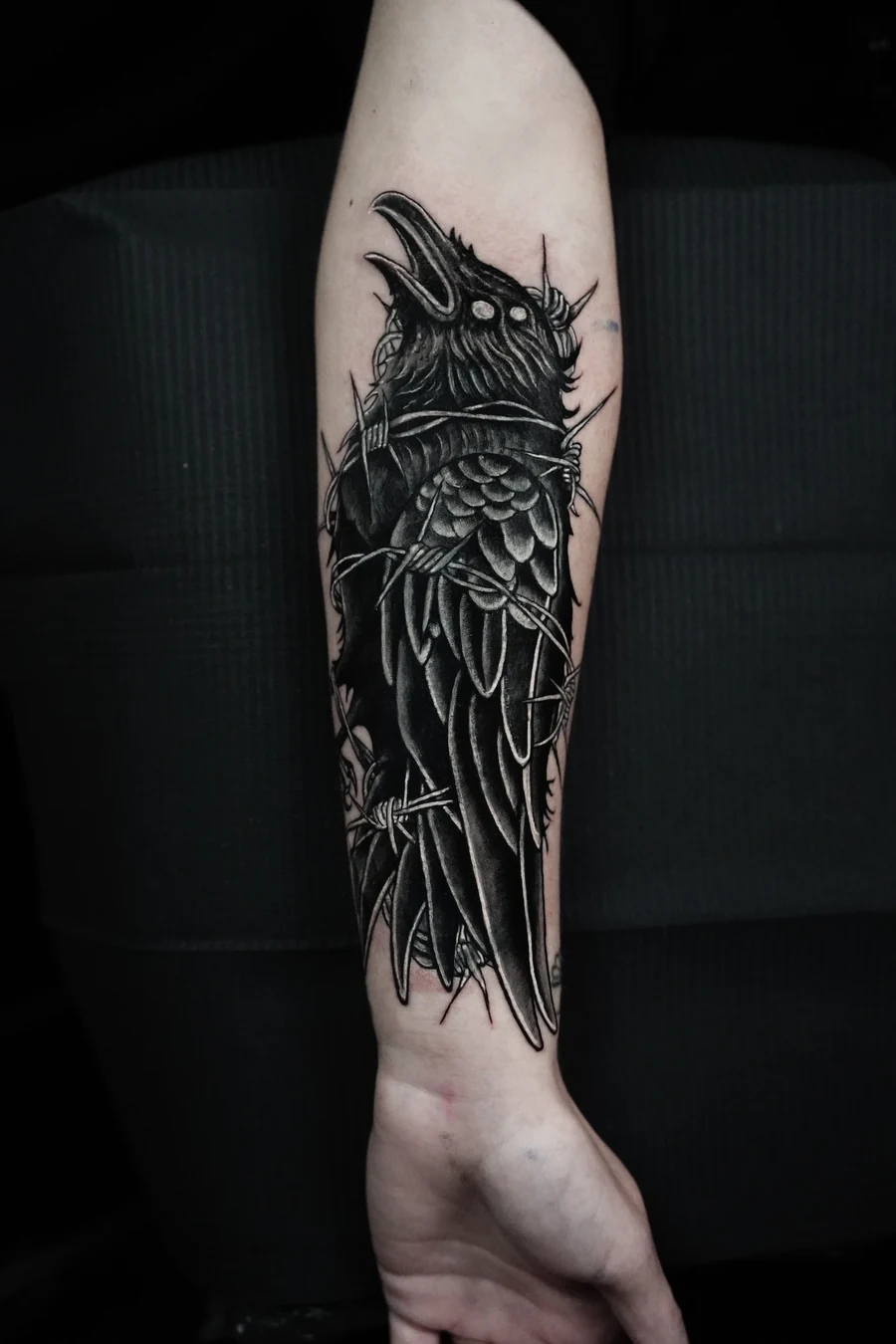
William’s Raven cover-up has a finished view, the earlier tattoo and the stencil placement. Compare the location of the old image with the bird’s outline and feather groups. The placement view helps explain where the new drawing was arranged; the finished photograph lets you examine the resulting subject. Neither image identifies the pigment chemistry or establishes an unrecorded healed interval.
The raven and skull-with-flames discussion compares two different visual structures. Use it to ask where an existing edge might belong within a new drawing, rather than selecting a bright color in isolation. A recognizable face, bird or skull still needs its own organization; adding more marks is not the same as resolving the composition.
For your own project, bring the old tattoo’s approximate dimensions and a clear overall photograph. Name the image you want, the largest area you would accept and any neighboring tattoo you want untouched. Then ask which features need changing and which part of the proposal remains uncertain. The cover-up assessment guide develops that separate planning decision.
Why discuss future removal before adding pale ink?
The FDA warns that white ink, flesh-colored tattoos and permanent makeup can darken when treated with a laser. That warning does not mean every pale tattoo will behave identically. It does mean that a plan to add light ink should not assume a later laser procedure will simply undo the choice. If lightening or removal is an option you are considering, discuss the existing and proposed ink history with the health professional assessing that option. FDA: laser removal and pigment changes.
A tattoo-design consultation and a removal assessment serve different purposes. This review chooses no device, wavelength, treatment interval or medical procedure. The laser-removal explanation provides further context; it is not an offer of laser treatment by William.
Research method, review date and limits
Reviewed October 16, 2026. This expansion compared the 2023 paper’s methods and results on dried dye samples, the 2009 authors’ abstract and figure captions, current FDA consumer guidance, the Exploratorium demonstration and William’s published case records. The 2009 review used the abstract and captions; it is not a complete reanalysis of the study’s underlying data.
These are historical studies reviewed for a current planning question, not a new trial or clinical review of William’s work. No pigment was independently tested and no healed interval, probability of concealment or individual suitability was established. The point is to match each claim to the evidence that can support it, then take the remaining design questions to a consultation.
Discuss a medium or large cover-up with William Martz in Tulsa. Include your placement, approximate size and what you want to change. Sending an idea starts a discussion; it does not confirm an appointment.