The edge of the old tattoo is not the edge of the composition
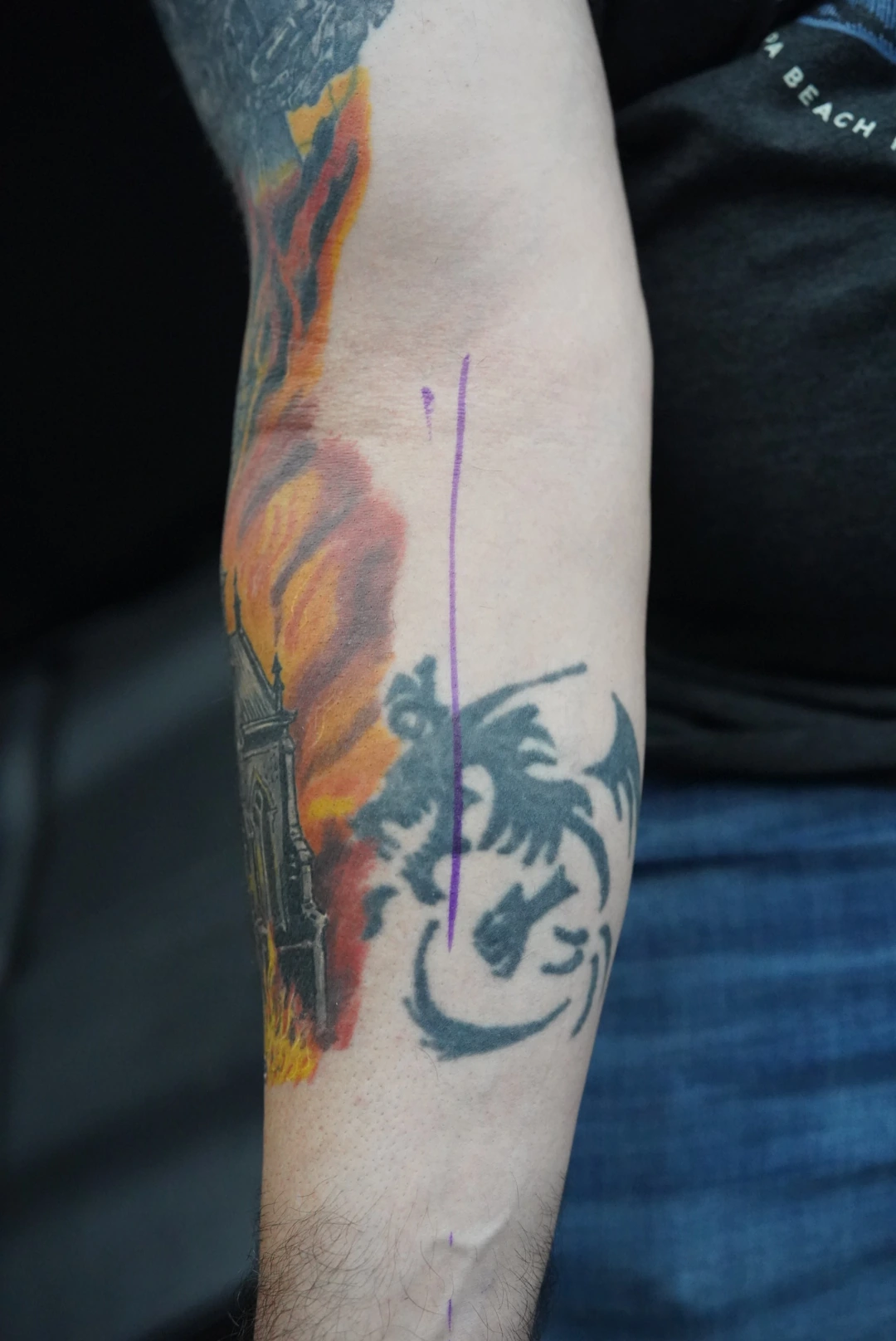
In the before photograph, the motif to be covered sits beside existing colored flames. Those neighboring shapes are part of what the viewer sees, even though they are not the central target of the cover-up.
A replacement image has to meet that surrounding work somewhere. It can repeat a movement, continue a palette, or create a deliberate pause. Without that relationship, even a strong individual subject can feel detached from the arm around it.
Flames provide a connecting rhythm
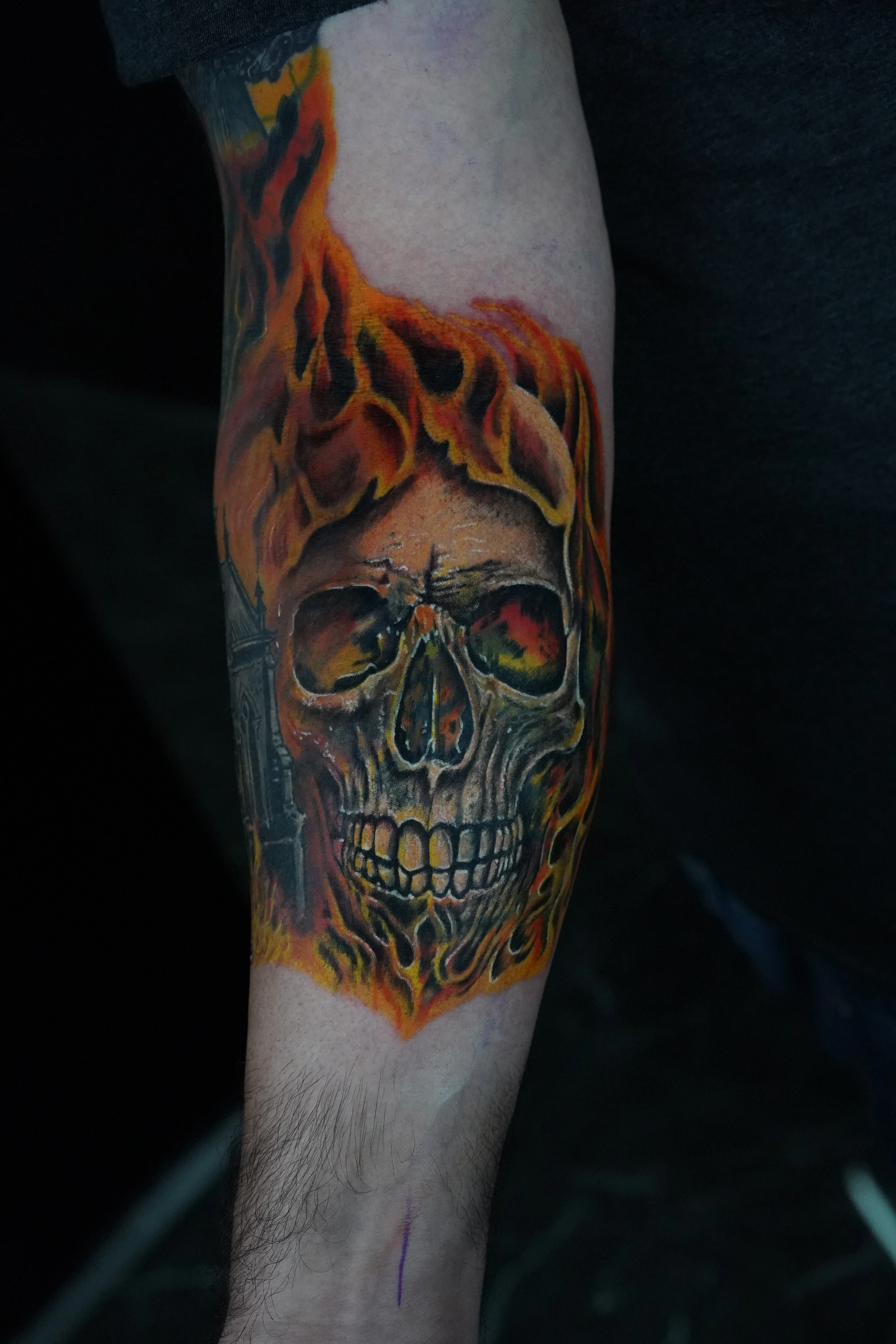
The finished skull is surrounded by yellow, orange and red fire. The flames bend and taper around the bone structure, extending a visual language that is already present nearby. They give the new subject a way to meet its surroundings.
The skull introduces a different rhythm inside that movement: eye sockets, teeth, ridges and smaller surface details. The contrast between a stable face and flowing edges keeps the composition from becoming one continuous pattern.
A larger view changes the reading
Seen close up, this is a skull with fire. Seen as part of the arm, it is also a transition between areas of a larger tattoo. Both readings matter.
The same question becomes especially important in sleeve work: how does one subject lead into the next? Background, direction and open space connect the pieces. A coverage decision can therefore be local while the compositional decision belongs to the whole limb.