Landscape Tattoos: Choosing the Details That Make a Place Personal
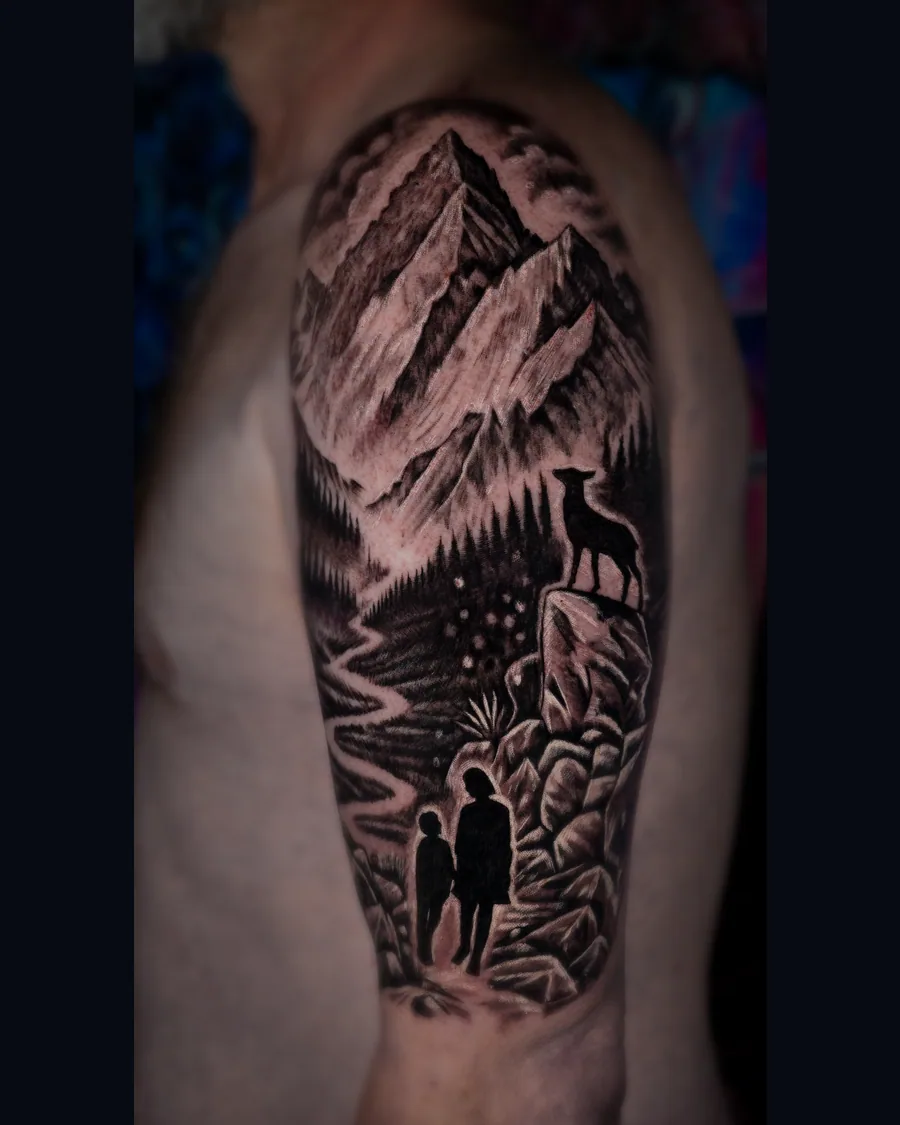
Think of the feature that would make you recognize a place without its name. It might be a mountain profile, a bend in a path or one tree. Give that feature priority when planning a personal landscape tattoo; the rest of the scene can develop around it.
Start with the feature you would recognize
Choose the feature you would miss if it disappeared. If it is the outline of a real mountain, bring a clear photograph of that profile. If it is the feeling of walking with someone, the figures and path may matter more than accurate distant geology.
In Toward the summit, William combines mountain peaks, forest, a deer and two walking figures. Look at the difference in scale between the people and the peaks. A small figure can remain part of the scene without taking over the landscape.
How do you prevent the scene from becoming crowded?
Divide the brief into a main subject, a supporting setting and optional details. A tiny figure can still carry meaning without competing in size with a mountain. Conversely, including too many equally detailed objects may make the overall scene harder to understand.
Discuss where open areas can separate foreground and distance. The shape of a trail, water or sky can connect different parts of the image without requiring another object. Bring references that explain the individual elements, but let the final layout become one composition.
Does it have to depict an exact location?
No. You can choose an imagined landscape if that is your intention. Tell the artist whether geographic accuracy matters before combining scenes that belong to different places.
At your Tulsa consultation, start with the feature you would miss most if it were removed from the landscape.