Hummingbird Tattoos: Give the Bird Somewhere to Move
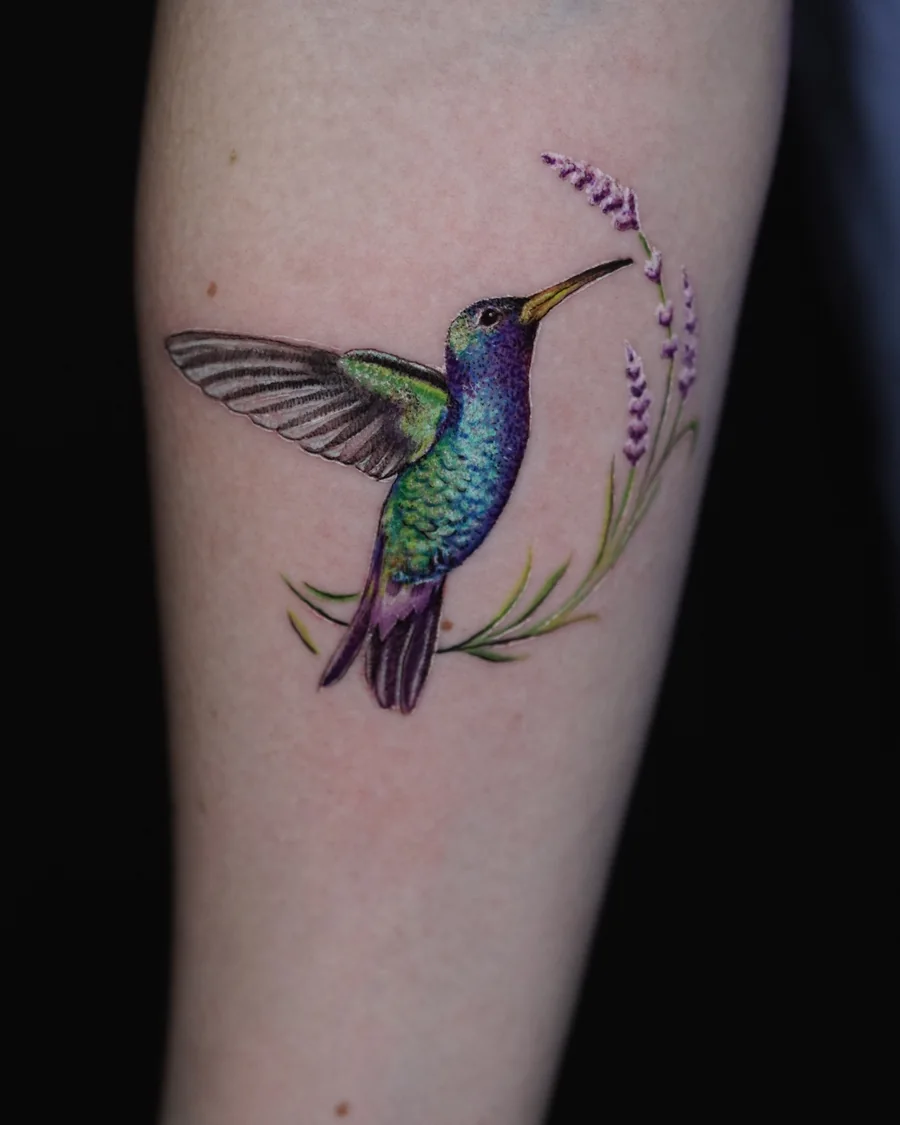
A hummingbird's beak points somewhere. The wings and the flower need to make sense beside that direction. In a tattoo, even a small gap between bird and bloom can help establish whether it appears to hover, approach or reach.
Where should the flower sit?
Decide whether the bird is approaching a flower, hovering beside it or appearing independently. The flower's position should support that action. If the beak points toward an unrelated area, adding a bloom afterward may not make the movement convincing.
William's Hummingbird pairs a colorful bird with a slender flowering stem. Follow the spread wing toward the body, then the long beak toward the plant. Open skin around those shapes gives the pose room to read.
Which details matter most at a small size?
Keep the bird's overall body, beak and wing direction clear. Individual feather details are secondary to recognizing the pose. If species identification matters, bring a photograph that shows the relevant markings rather than relying on a generic hummingbird illustration.
Color can help distinguish the bird from the plant, but the shapes should also remain understandable through their edges and spacing. Discuss whether you want a naturalistic color reference or a more expressive palette before combining several images.
Adapting the movement to a vertical piece
A curved plant stem or an angled bird can create a taller arrangement, but simply rotating a horizontal picture may change the apparent action. The composition should be redrawn around the direction you want on the body.
Show William the pose you have in mind. The flower's position can then be worked out in relation to the bird.