Dragon Tattoos: Choose the Creature Before the Placement
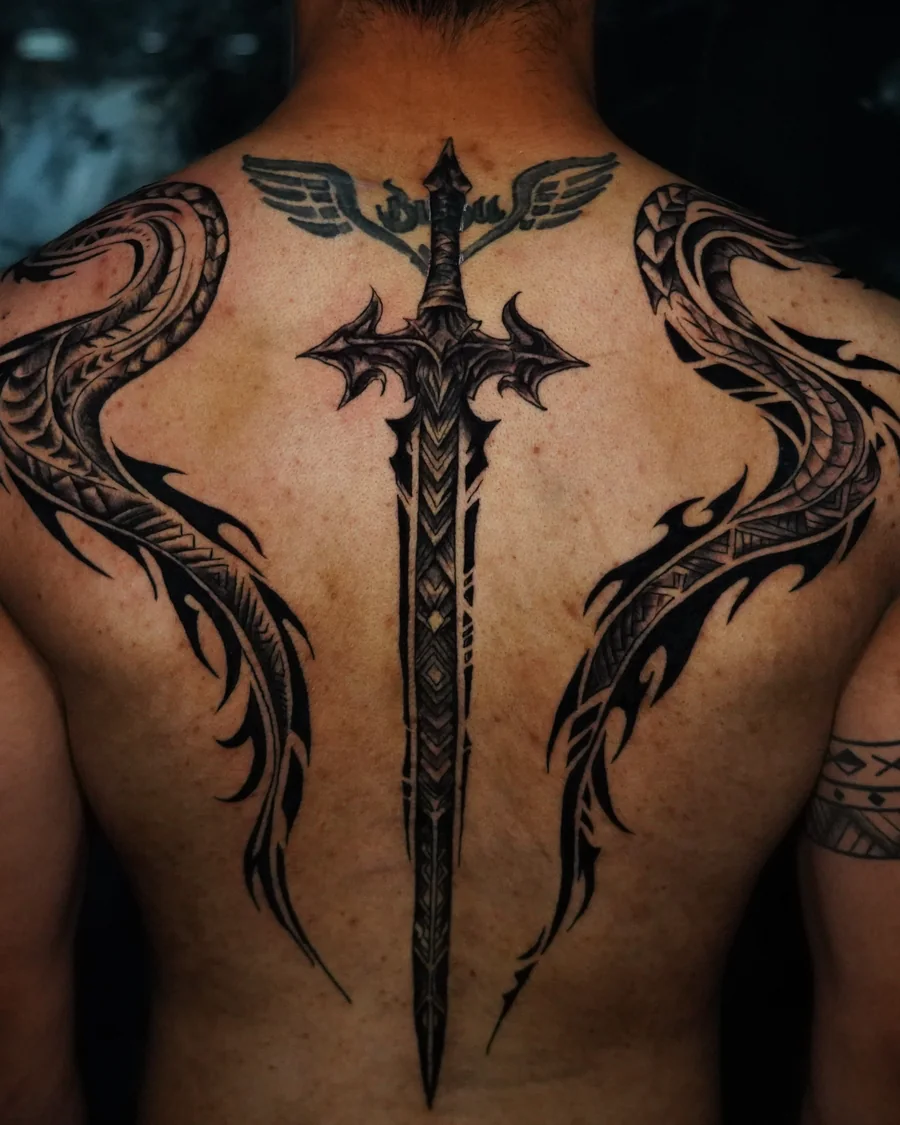
Choose the dragon before choosing the spot. A long body can turn around a limb; broad wings or a pair of creatures need width. The anatomy and source of your reference will shape the tattoo before scales and background enter the drawing.
Do you want one dragon or a pair?
William's Twin dragons tattoo places two dark dragon forms across the upper back around a central cross. The body's center organizes the pair. Compare that wide arrangement with the shape of a single, long-bodied creature.
A single dragon offers different possibilities. Its head and body can form one continuous movement, while a pair creates a relationship across two sides. Decide whether balance, confrontation or a shared direction is the visual idea you want to explore.
Why should the reference tradition be identified?
Dragons from different artworks and stories do not have identical anatomy or meaning. If a specific painting, sculpture, film or illustration matters to you, bring that source. It is more precise than asking an artist to infer the creature from a broad regional label.
William's Dragon among flowers and clouds study shows a long-bodied creature with surrounding ornament. It is a drawing. Compare its overall shape with the paired back tattoo instead of assuming one is a smaller version of the other.
How does the creature affect placement?
A long body can turn with a limb, but the head still needs a readable viewing area. Broad wings or a paired arrangement may require width. Reducing the whole reference without adjusting those relationships can lose the feature that made you choose it.
Bring a clear anatomy reference to your dragon tattoo consultation. Choose the placement with the creature's full outline in view.