Dragon and Flower Tattoos: Keeping the Creature’s Shape Clear
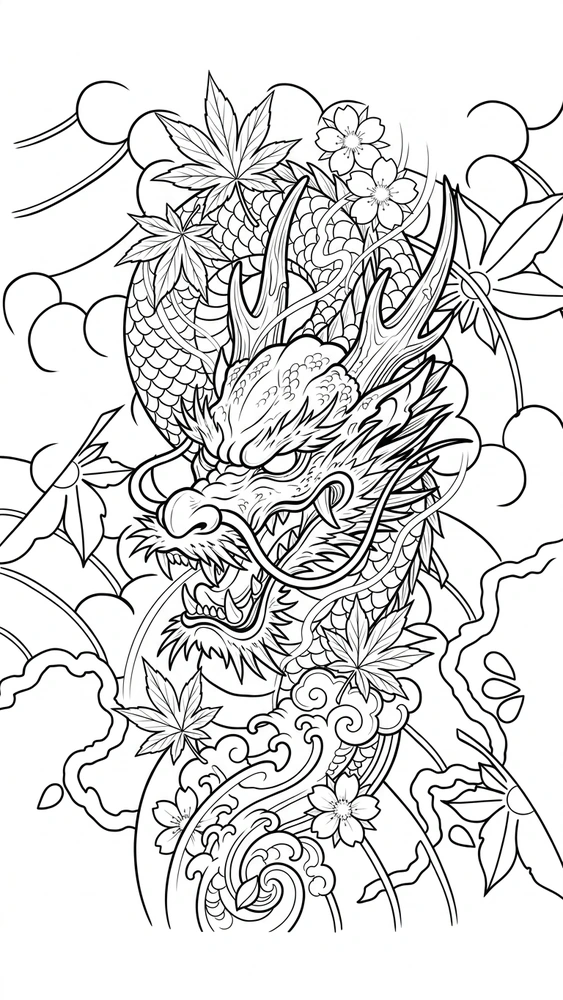
Can you follow the dragon's body through the flowers? In a detailed reference, scales, petals and clouds can blend together. Trace the main outline first and check which shapes pass in front of others.
Can you trace the dragon through the design?
Look for a continuous path from the head into the body and other visible features. Where forms overlap, ask what passes in front and what continues behind. This is especially useful when a reference has many scales, curling clouds and pointed petals in the same area.
William's Dragon among flowers and clouds study layers the creature with blossoms and curved surrounding shapes. In this drawing, compare the gaps as well as the lines. Both affect how clearly you can follow the dragon through its frame.
What should the flowers contribute?
They might soften the outer edge, create an area of contrasting shape or establish a second focal point. Decide which of those jobs matters. Adding a flower to every gap may make the design busier while obscuring the subject that brought you to it.
If you want a particular flower, supply a reference. If the dragon should follow a specific artistic tradition, say so rather than mixing unrelated examples under one general label. A fantasy combination can be deliberate, but clarity about the intention helps avoid accidental misdescription.
Match the detail to the available area
The required size depends on the amount of detail and the version of the composition you choose. A simpler head-centered piece asks for a different plan from a creature surrounded by several flowers. Discuss simplification alongside placement instead of assuming a detailed sheet can be reduced unchanged.
For your dragon tattoo consultation, choose one clear creature reference and a flower reference if a particular bloom matters.