A color cover-up needs somewhere for the light to live
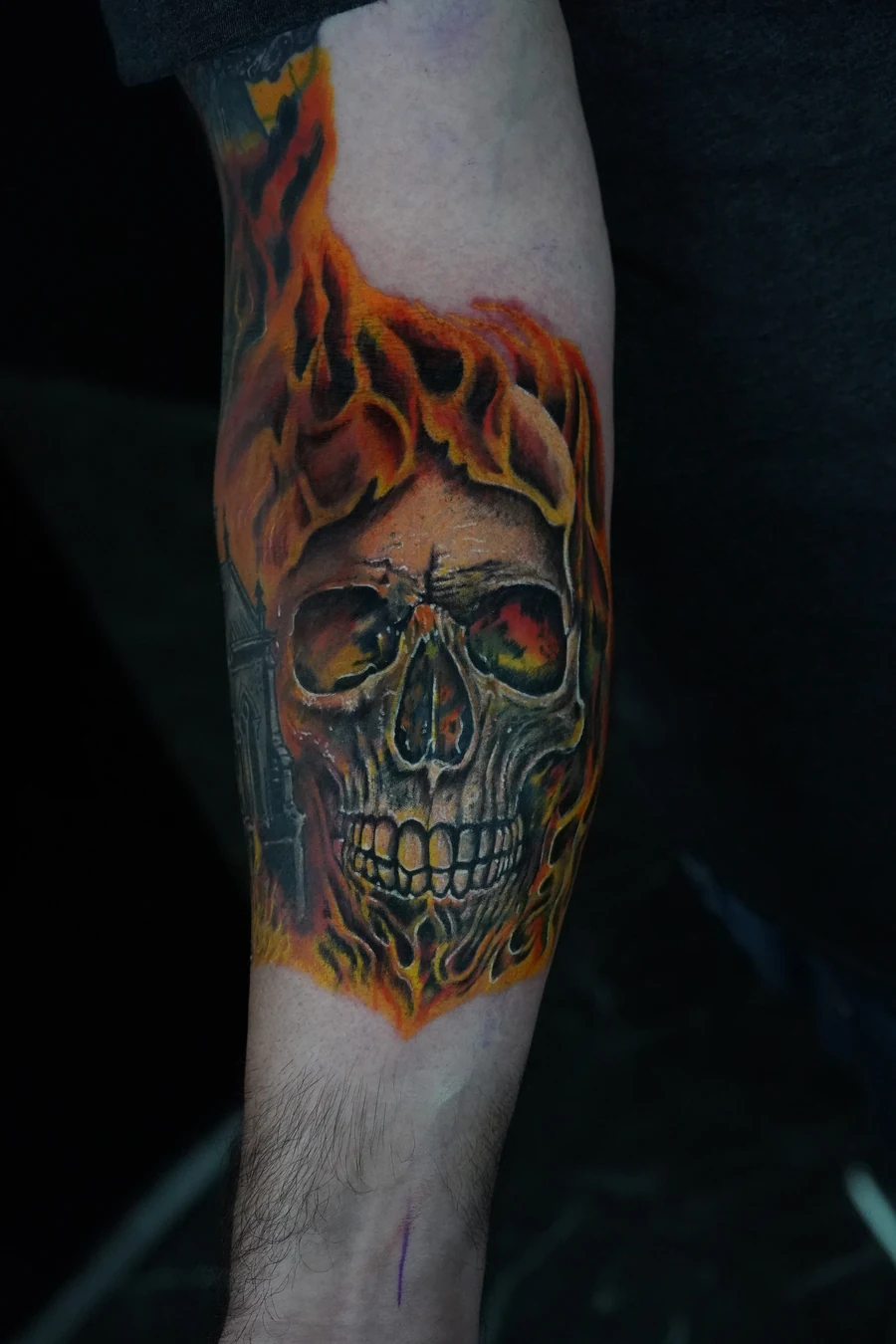
The first thing you notice in William Martz’s skull-and-flames cover-up may be the fire. Yellow edges run into orange and red, surrounding a skull with dark eye sockets and small changes across the bone. It is a colorful image. Looking at it as a cover-up introduces a more specific question: where can those bright passages belong when a tattoo already occupies the skin?
That question matters more than a list of colors supposedly capable of covering other colors. A palette is only part of the design. The placement of its light and dark areas determines what the image can do.
A bright image contains dark decisions
In the skull-and-flames photographs, the finished piece contains both saturated color and deep shadows. The cavities around the eyes and nose give the skull a strong internal structure. Flame shapes introduce bright edges and irregular turns around it. Those elements allow the viewer to read a face and a surrounding movement at the same time.
The yellow in the photograph is not evidence that yellow alone concealed the darkest parts of the old tattoo. A finished image does not reveal the precise behavior of every layer of pigment. What it does show is a composition in which brightness and darkness have different jobs. The luminous areas make the darker passages feel intentional.
Placement comes before a favorite shade
Imagine a proposed flower with a pale center directly over a dense black letter. Moving the flower, changing its angle or letting a leaf occupy that area creates different design possibilities. This is a hypothetical drawing problem, not a description of a particular client’s treatment. Its value is in showing why choosing a subject and choosing its position are inseparable.
For a color tattoo cover-up in Tulsa, useful references therefore show more than a preferred palette. They reveal which qualities matter: a warm atmosphere, distinct petals, a recognizable animal, or a soft background. Some of those qualities may remain possible even when the exact reference cannot be placed over the existing ink unchanged.
The surrounding tattoo is already part of the palette
The skull case includes neighboring flames in its earlier photograph. The new fire speaks to that existing color instead of ending abruptly at the boundary of the old motif. Repeated reds, oranges and yellows help the replacement belong to the wider arm.
That continuity is a separate concern from concealment. A design can address the marks underneath yet still feel disconnected from everything around it. The existing journal entry on building a cover-up into the whole arm examines that larger relationship. Here, the color connection makes the change readable as part of a composition.
Judge the whole image, then the details
Step back from a proposed design. Can you recognize its subject before inspecting each texture? Then look closer: do the shadows have a reason to be there, and do the bright passages support the focal point? These are useful artistic questions even before a particular cover-up is assessed.
The color portfolio shows the range of subjects William Martz works with in Tulsa. His artist page also connects tattooing with his painting practice. For an existing tattoo, the next drawing has to answer both that broader artistic interest and the specific marks already present. Color gives the work possibilities; a considered arrangement gives those possibilities a place.