Pet Portrait Tattoo Expression: Choosing a Familiar Face
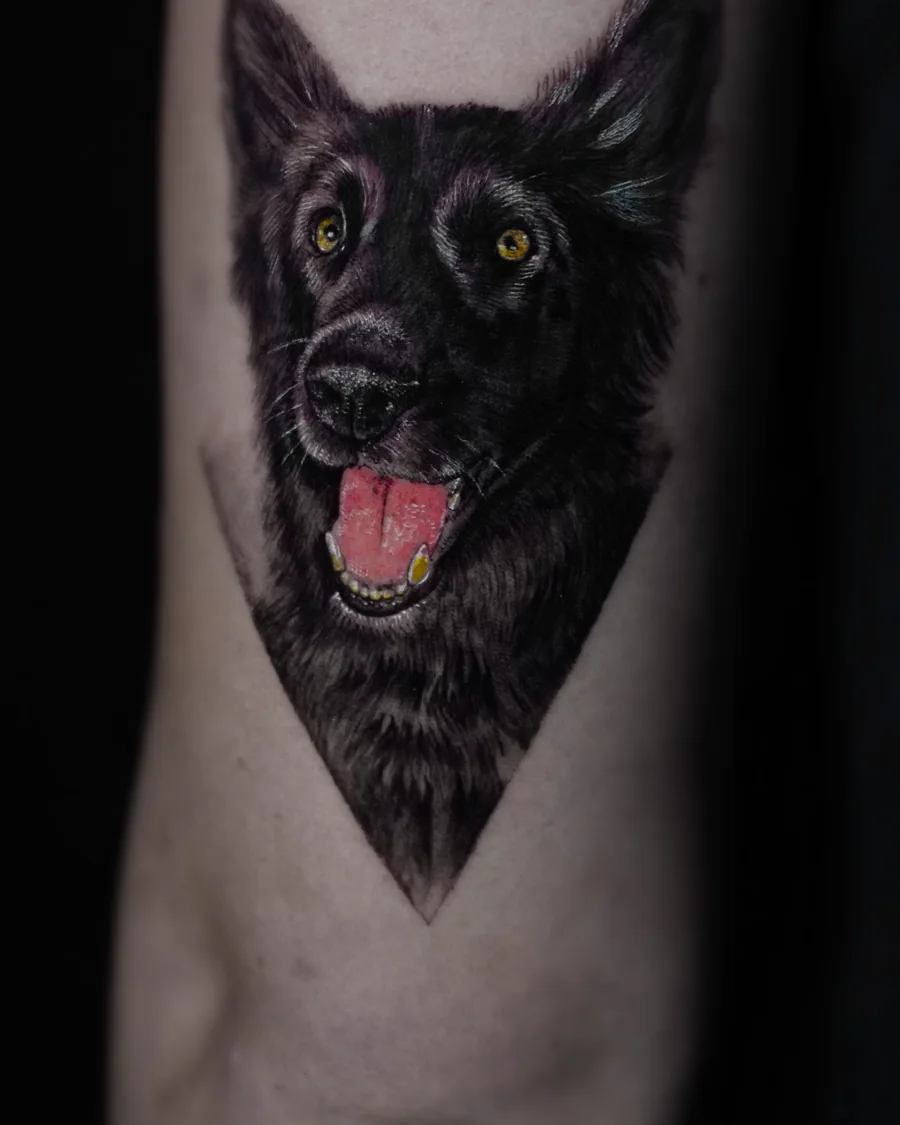
A recognizable pet portrait depends on how the eyes, ears and mouth work together. A slight head tilt or an uneven ear can change the feeling of the whole face. Perfect symmetry may remove a detail you associate with your pet.
Compare a few photos before picking the main reference. One may be sharper, while another carries the expression you love. Tell the artist what matters in each image rather than asking for every feature to be combined automatically.
Companion shows an alert dog with upright ears and its tongue visible. That open expression is part of the composition. A closed-mouth reference of the same animal would lead to a different portrait, even with the same coat markings. Choose the expression you recognize from your time together.
Point out the expression you want William to preserve.
Give each reference one clear job
Label the preferred image “main expression.” On supporting photographs, identify the limited detail they explain, such as the ear outline or the patch above the nose. This is more precise than sending several favorites without indicating which face you want the tattoo to follow.
For example, a relaxed closed-mouth portrait and an alert open-mouth portrait offer different starting points. Choose the one that feels familiar, then ask whether its reference is clear enough for the intended drawing. The sharper photograph can inform a marking without becoming an instruction to replace the whole expression.
When reviewing the proposal, compare the eye line, head angle and mouth together. Check whether you still recognize the chosen mood before discussing a background or flower. If a feature has changed, describe the change directly; “the head feels more upright than my selected photo” gives a clearer correction than “make it look happier.”