Can a Vertical Tattoo Design Fit a Wider Placement?
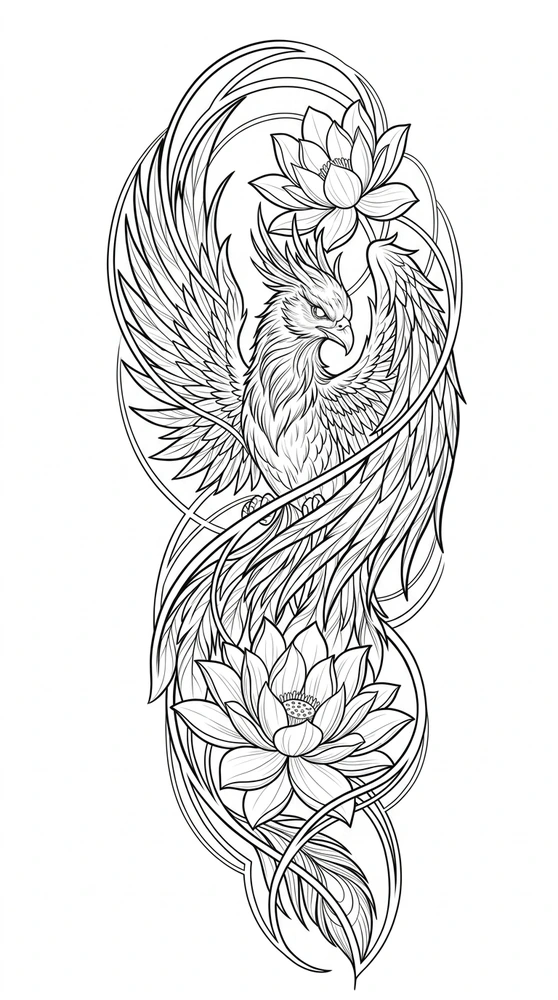
A tall drawing will not become a wider tattoo simply by stretching it. Faces change shape, circles turn oval and the gaps between details shrink. Adapting a vertical idea starts with moving its elements while keeping the important proportions.
Why not simply make it wider?
Stretching changes the proportions of faces, animals and circular forms. Shrinking the height without changing the layout can also compress the spaces that separate details. A better discussion identifies which shapes can move and which proportions need to stay believable.
William's Phoenix among lotus flowers study is a tall drawing of a bird, feathers and blooms. Its length is part of the composition. For a broader placement, compare which flowers could move and how the bird's pose might need to change.
Which elements are flexible?
Supporting flowers, curves or background may be moved more readily than the anatomy of the central subject. But moving them still changes the rhythm and emphasis. Decide which feature makes the study appealing before allowing every part of it to change at once.
Bring a clear description of the placement and mark the approximate boundaries you have in mind. If an existing tattoo limits the space, include it in the reference. The available shape may call for a different pose, fewer supporting elements or a new design inspired by the original.
Keep the subject, reconsider the arrangement
The first drawing may have helped identify the subject you want, even if its format does not suit the placement. Keeping the important idea while changing the arrangement can produce a more coherent result than forcing the original sheet to fit.
Show William the study and the proposed placement together. Mark what you want preserved and what you are willing to move or simplify.