Patchwork Tattoo Sleeves: Plan the Gaps Before the Fillers
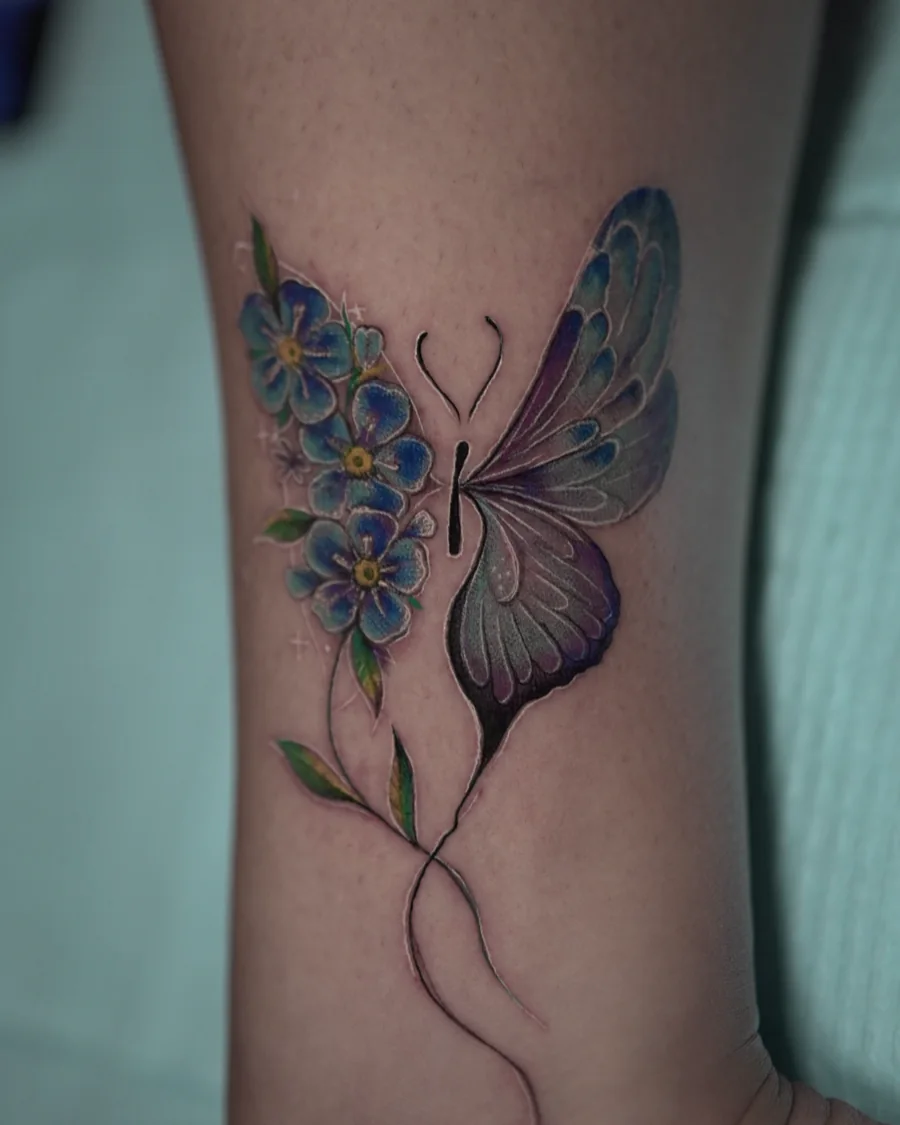
That gap between two tattoos may be worth keeping. In a patchwork sleeve, open skin helps each piece hold its own outline. Before searching for a small filler, look at the whole arm and decide whether the space actually needs anything.
Which gaps should remain open?
Map the existing work before selecting the next piece. Mark the edges you want to keep visible and any area reserved for a larger future subject. A narrow gap may look available on a flat photograph while closing up when the arm turns.
Look at the open edges around Between petal and wing. The flowers and butterfly wing keep a distinct outline against the skin. When planning neighboring pieces, notice where adding another shape would make that outline harder to see.
When does filler make sense?
Filler is useful when it solves a specific visual problem: an abrupt transition, an isolated dark patch or an awkwardly shaped space. It is less useful when it is added only because a gap exists. Repeating a modest element can create a relationship, but repeating it everywhere may compete with the pieces you originally wanted to show.
Bring photographs of the full arm from several sides. Identify which existing tattoos must remain separate and which could connect. Also say whether variety is the point of the sleeve; a mixed collection does not have to imitate a continuous scene.
Leaving room for later pieces
You can leave choices open while reserving important areas and agreeing on a rough balance of sizes. Planning room for later work is different from choosing every image today.
Bring full-arm photos to a Tulsa consultation. Include the gaps you like, not just the ones you want filled.