Faces leave less room for arbitrary marks
A dark mark in the wrong place can change the reading of an eye, a nose or a cheek. A face depends on particular relationships between features, so there is less freedom to move a shadow simply because an old line needs to be accommodated there.
That makes portraits demanding cover-up subjects. The difficulty is not that a face can never work. It is that the structure of the face and the structure of the existing tattoo both have to be considered.
This face has a larger frame
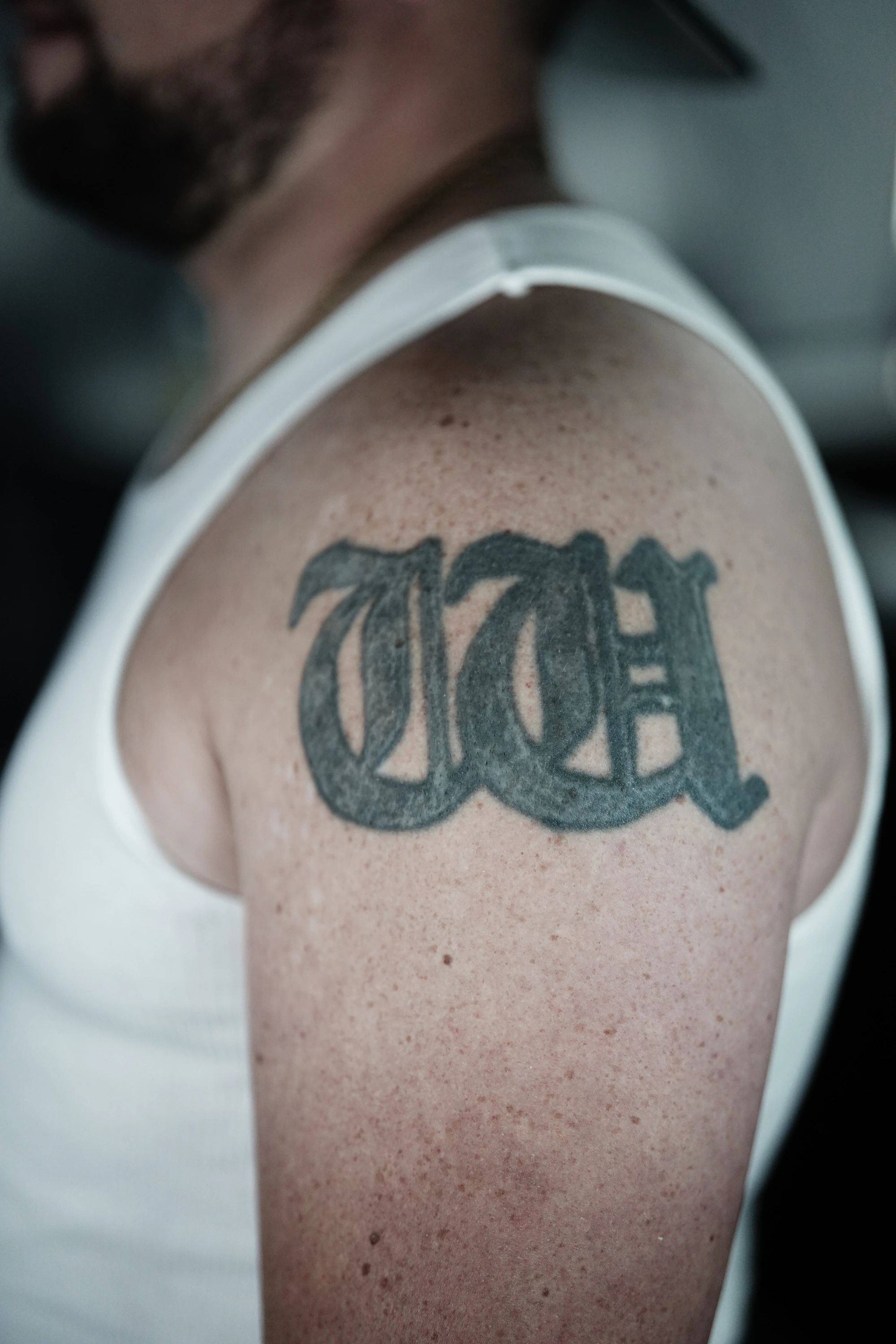
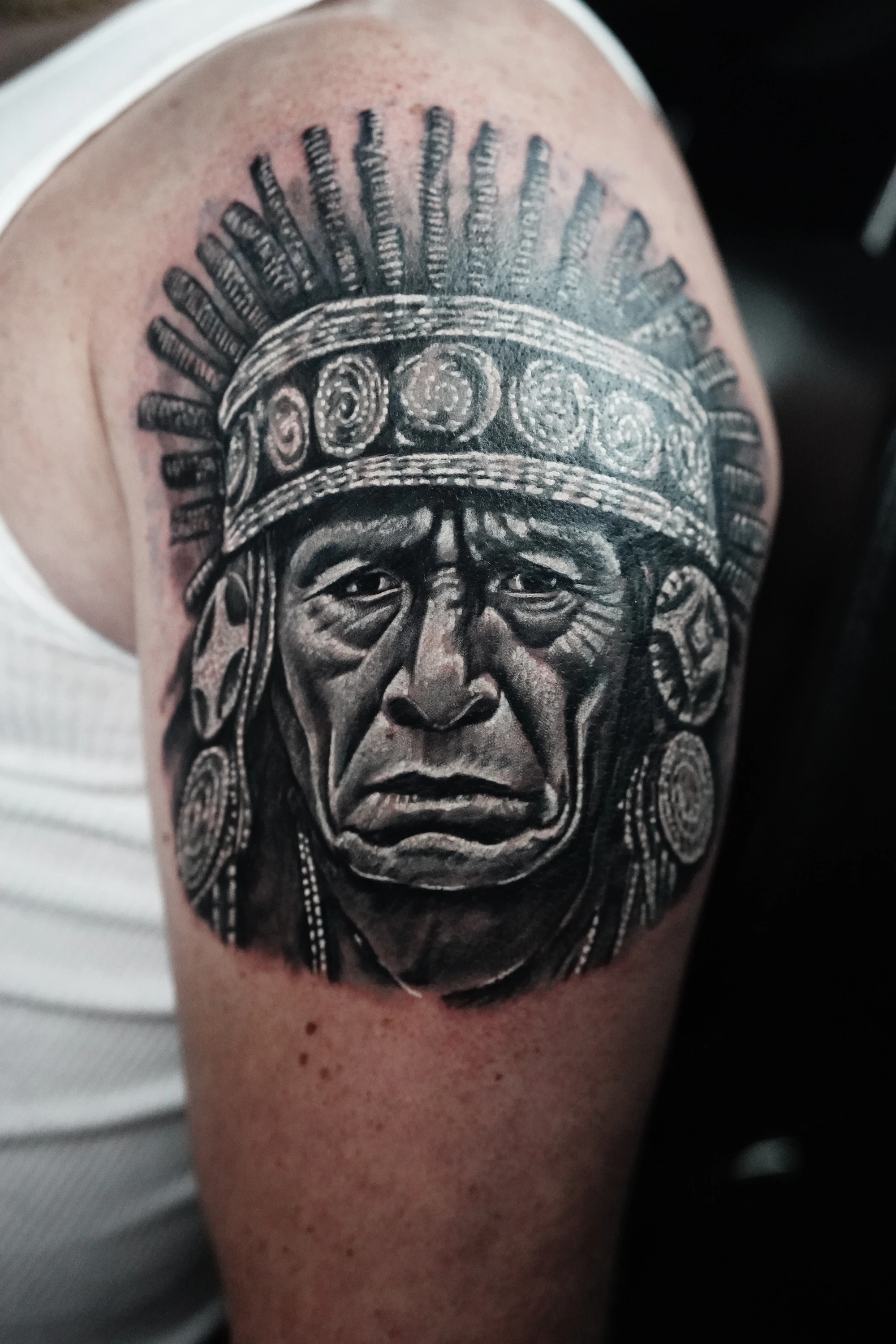
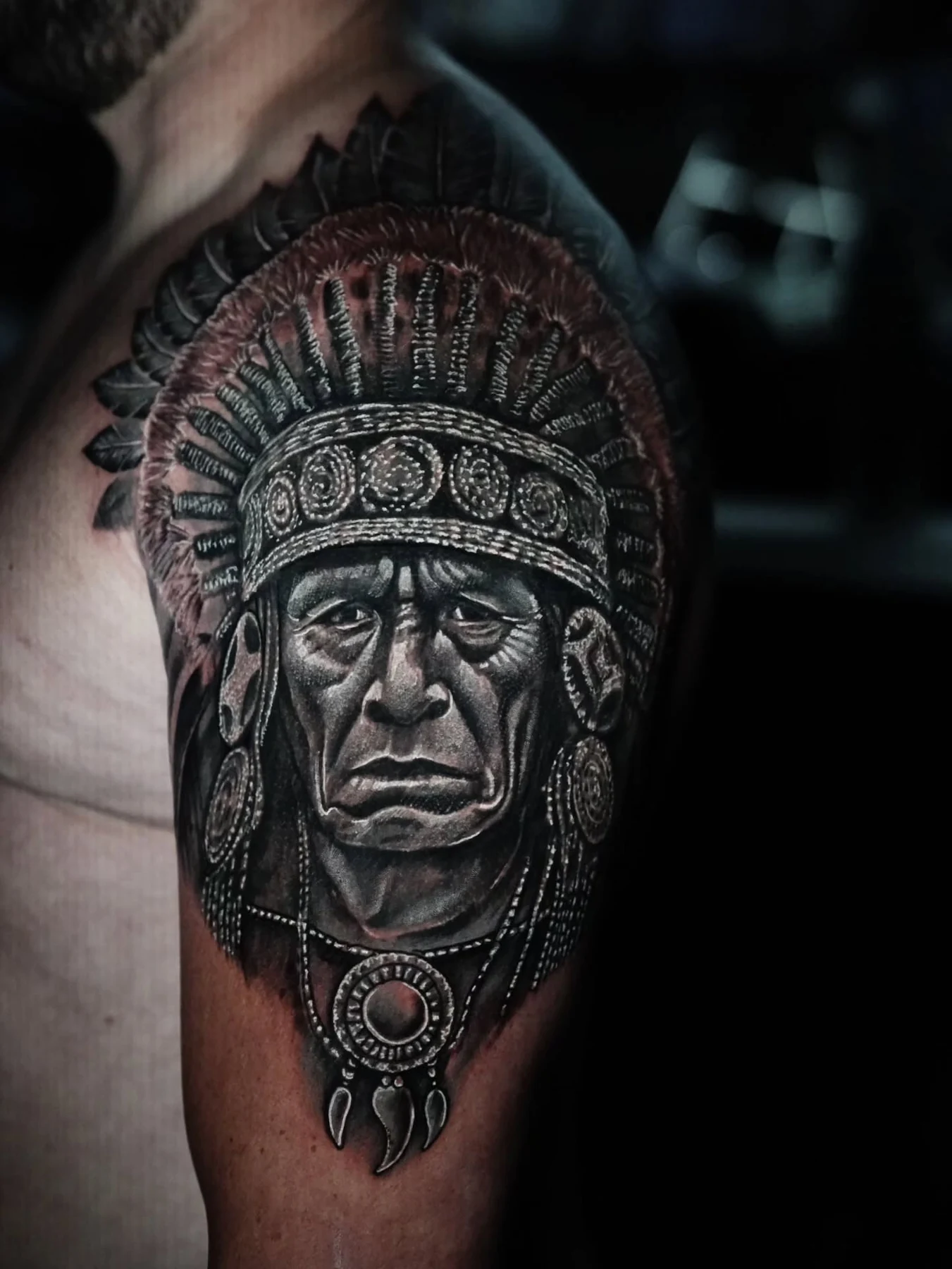
The before photograph shows bold lettering on the upper arm. The new composition extends beyond that compact shape with a headdress, side ornament and a lower decorative element. The face belongs to a larger design rather than carrying the entire coverage problem alone.
Within the portrait, expression lines and changes in value create a textured surface. Around it, repeated ornament introduces another scale of detail. Those areas have different visual jobs, but they contribute to one composition.
An exception is something to understand
The point of this example is not to replace one absolute rule with another. A portrait can be difficult precisely because its features cannot move freely; a particular portrait-led design can offer more possibilities through texture, scale and additional elements.
Looking closely at the exception is more useful than reducing it to a percentage. The comparison shows the change in size and visual structure. It does not establish that every portrait could have solved the same problem.
The process can change the possibilities
Being open to a different scale, a more elaborate frame or a different arrangement can make room for a solution. That flexibility is part of the artistic process, not an afterthought once a drawing is chosen.
Strength & continuity is worth studying because it keeps a recognizable face at the center of that process. The supporting elements create complexity, while the expression gives the finished tattoo its focus.