Texture gives old edges somewhere to belong
A broad, quiet surface leaves an old contour with little visual competition. A feathered wing offers overlapping edges, changes in direction and repeated shifts between light and dark. Those features provide more possibilities for arranging a new image around an existing one.
That is why my attention goes beyond choosing the darkest subject. The question is what kind of structure the subject offers. Texture is useful when it gives the design places to accommodate the marks underneath.
The raven has several rhythms
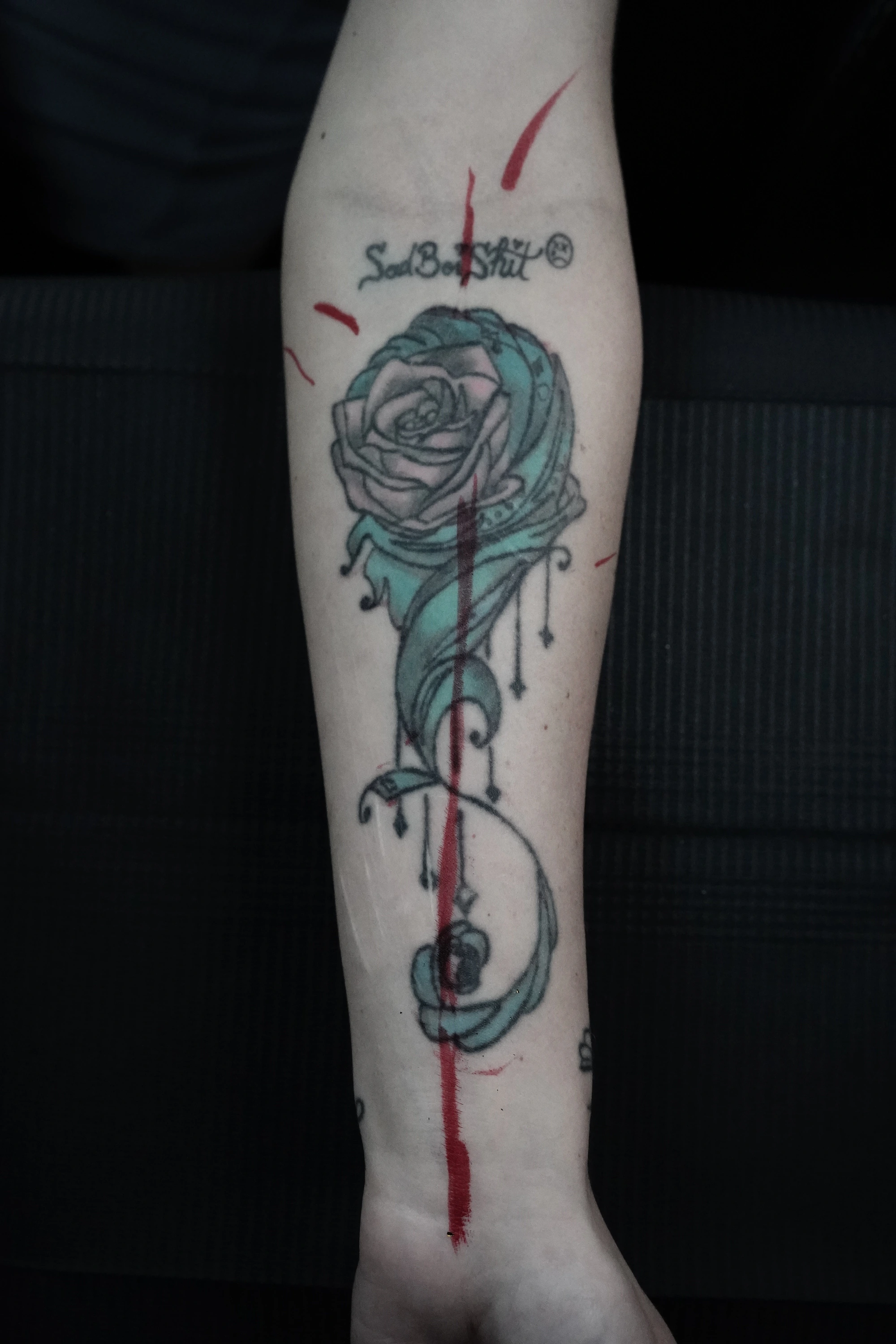
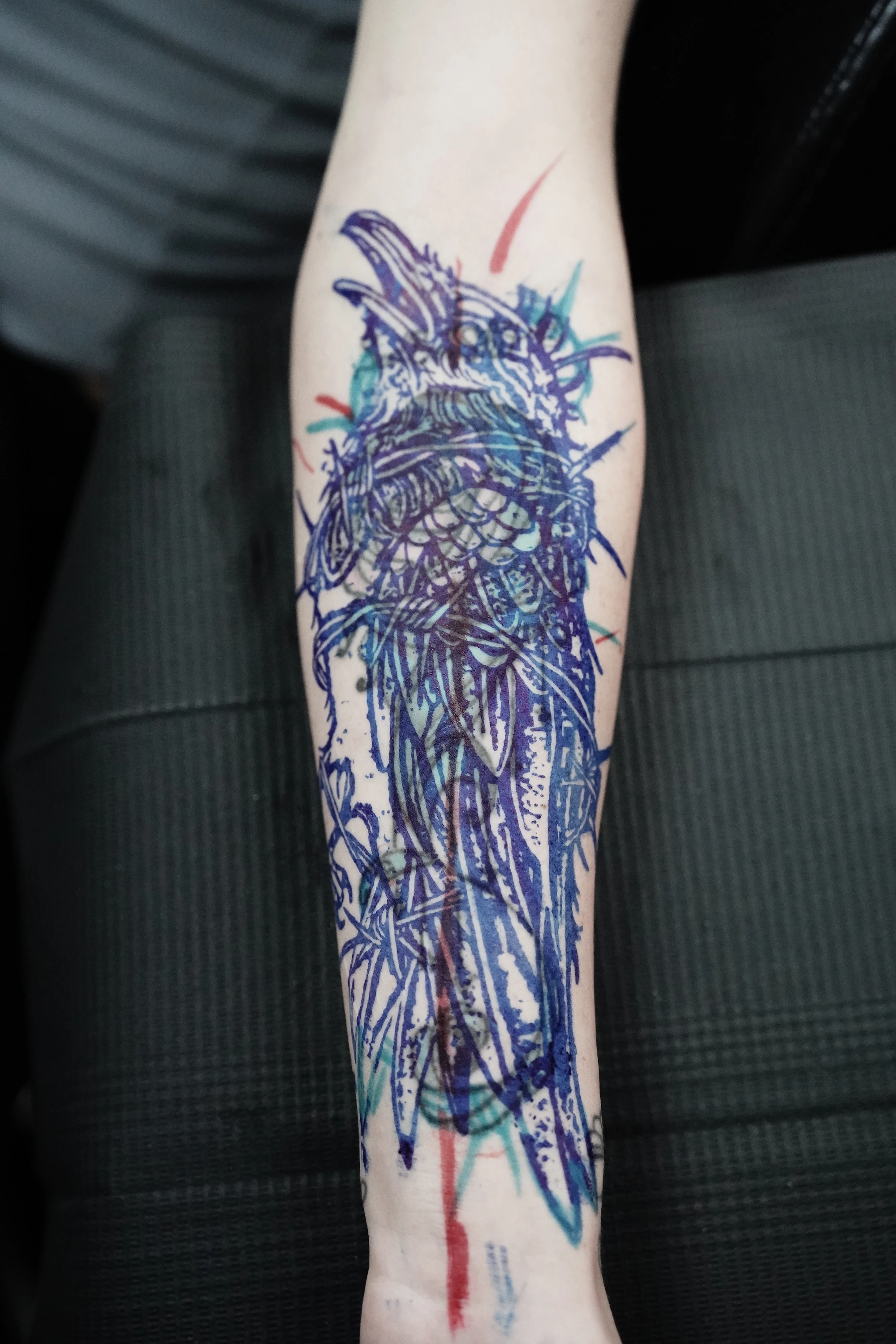
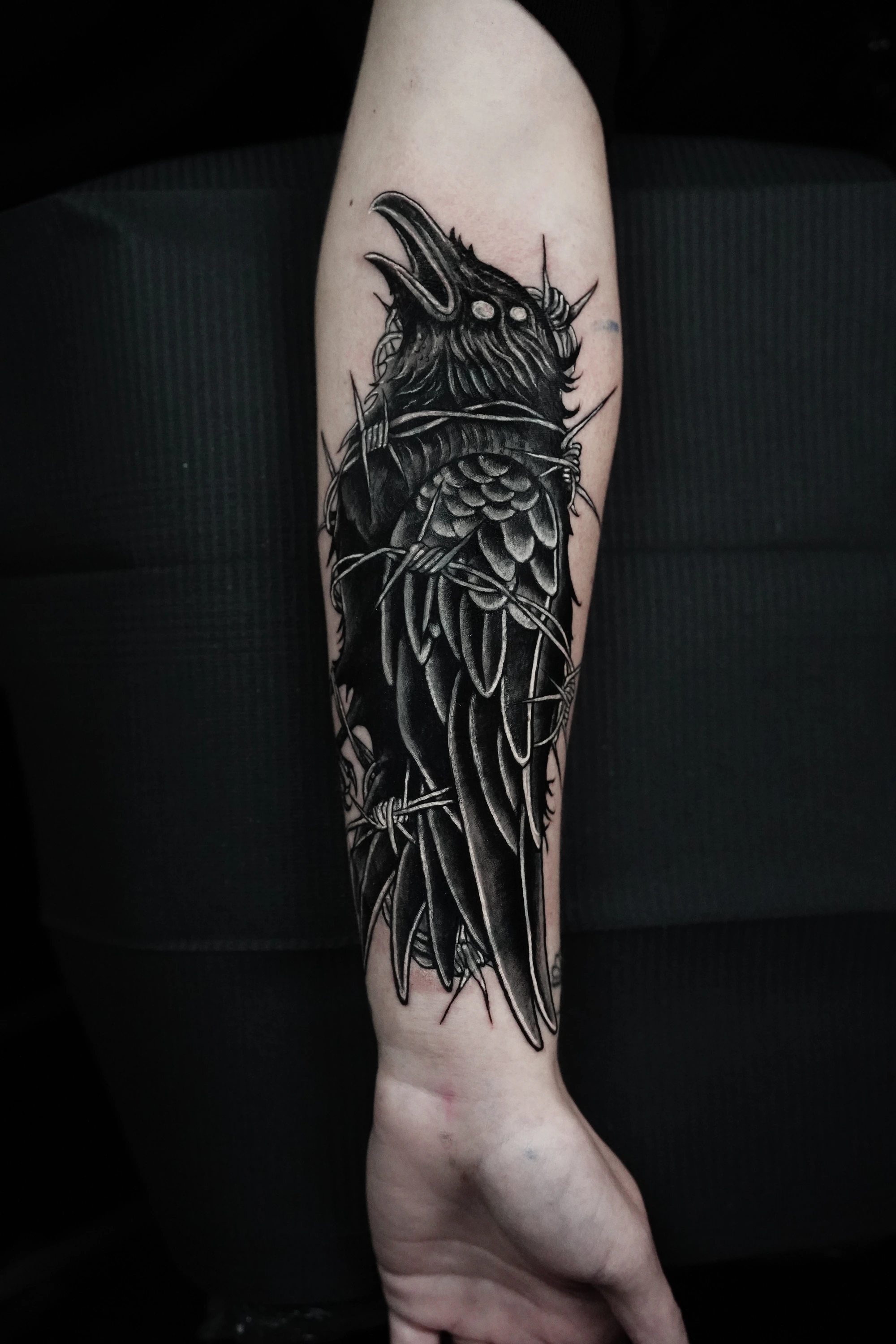
The rose, the stencil and the finished raven show the design at three different stages. Rounded wing feathers occupy one area, long pointed feathers another. The wire crosses both, while the head remains easy to recognize at the top.
The details are not spread evenly. Their differences help the bird stay readable. Saturating an image with marks is not the same as organizing those marks into a convincing new subject.
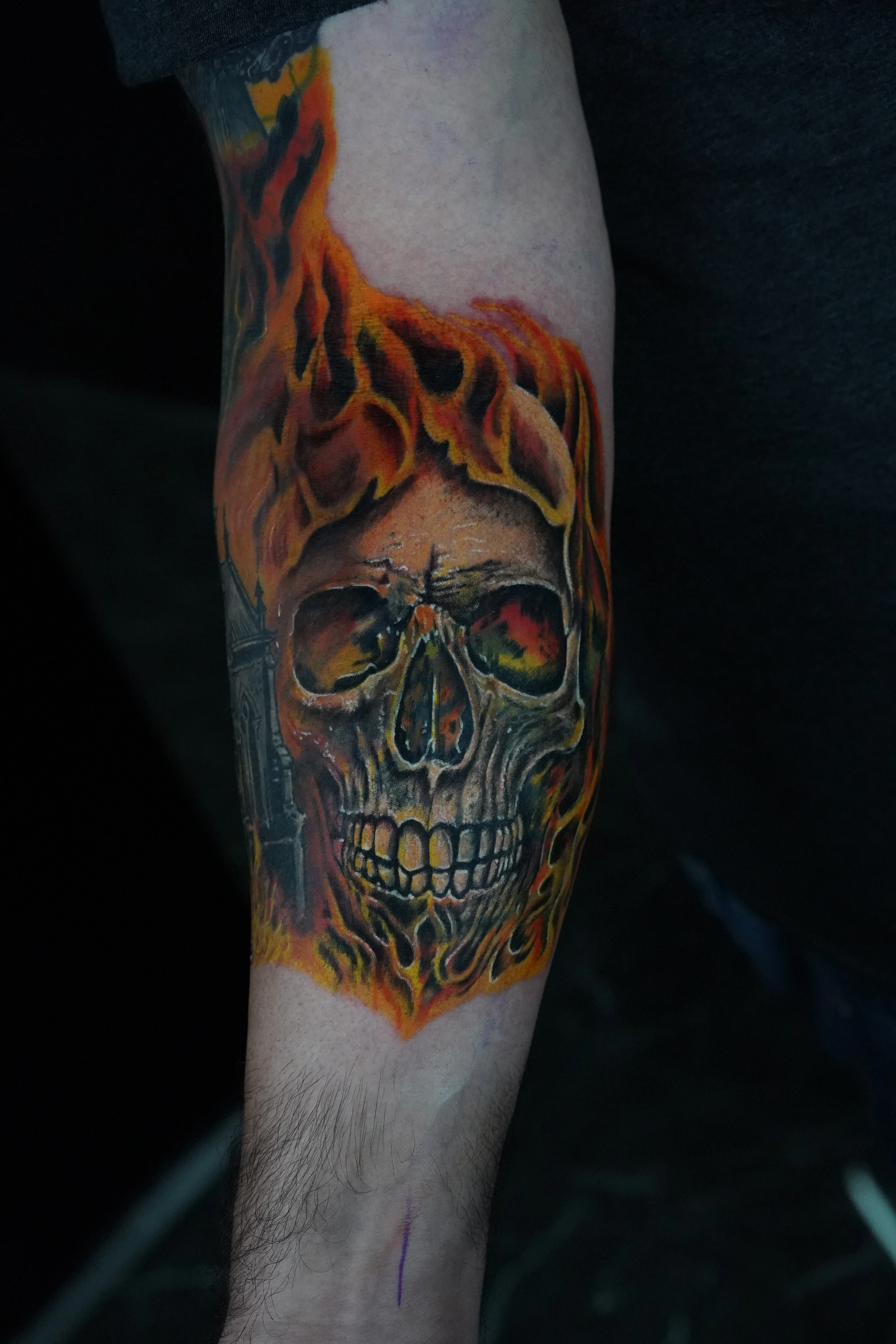
The skull finds texture in another subject
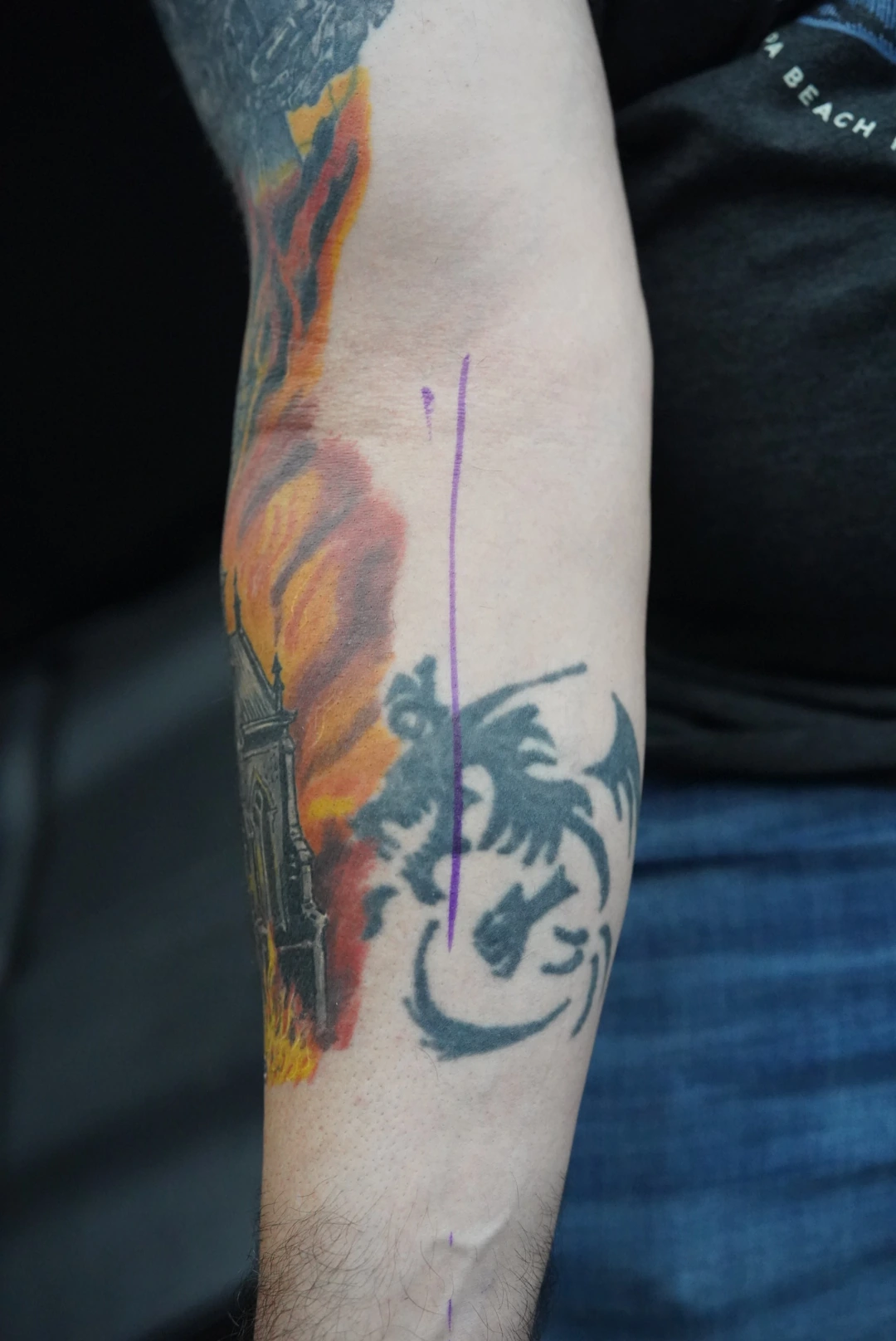
In the second case, the skull offers dark cavities, bone ridges, teeth and smaller surface changes. Flames surround it with a more fluid movement, connecting the new piece with nearby color.
Yellow and orange contribute to that composition, but their presence does not mean those colors alone conceal dark ink. The arrangement of bright passages, deep values and irregular boundaries is what the photographs make useful to study.
The whole image still has to hold together
These tattoos use different subjects and palettes, yet both have a clear focal point within a more complex surface. The raven is not lost in its feathers; the skull is not lost in the fire.
A successful design needs both scales of reading: enough local variation to work with the previous tattoo, and a larger structure that makes the new image worth looking at in its own right.