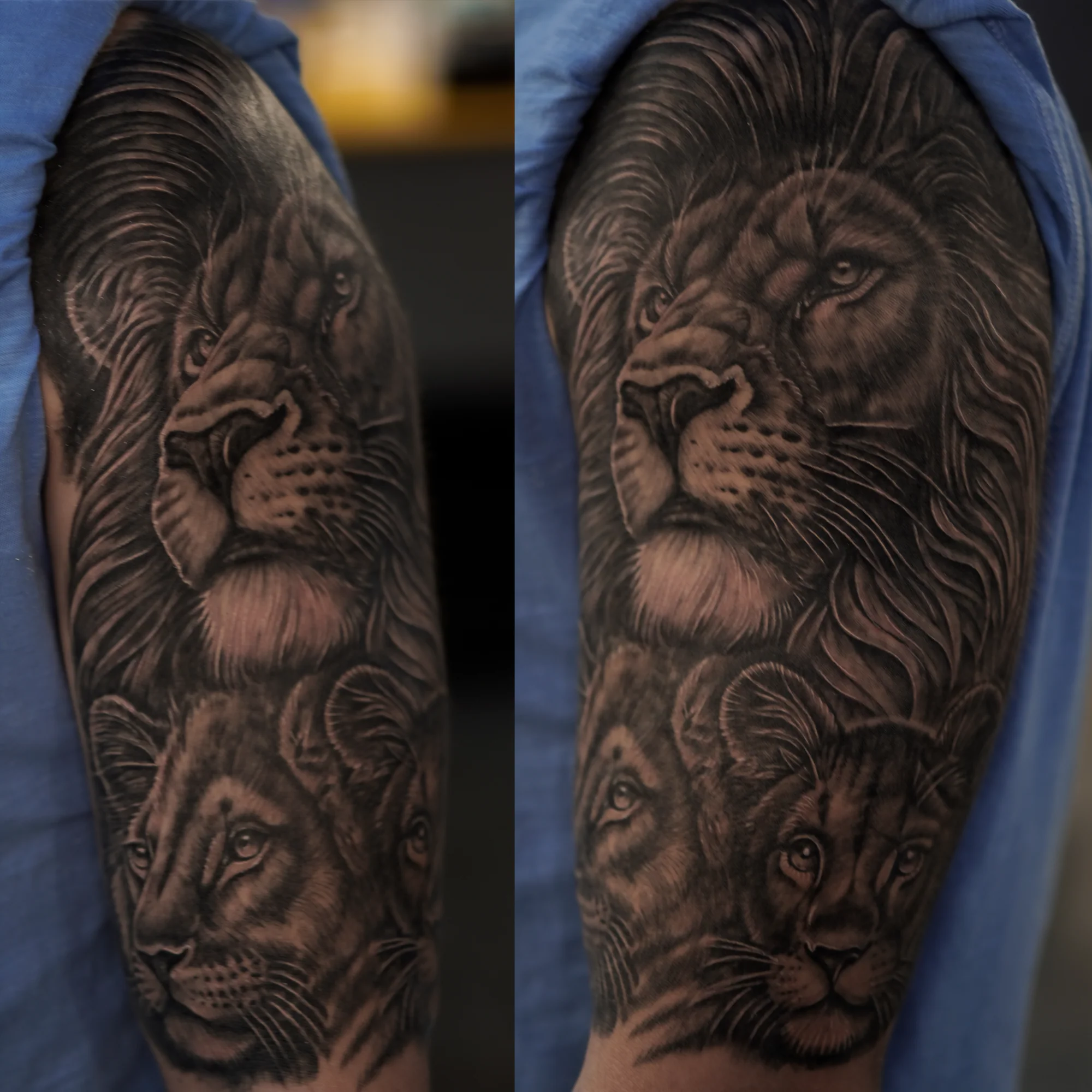
Recognition happens at more than one distance
From a distance, the lion-and-cub piece reads as two faces within one vertical composition. Closer inspection reveals the mane, whisker areas, eyes and smaller changes in the fur. Those details belong to an arrangement that is already recognizable.
Realism can be discussed in terms of tiny marks, but the large relationships come first: the relative size of the heads, the direction of the gaze, the shape of a muzzle and the separation between light and shadow.
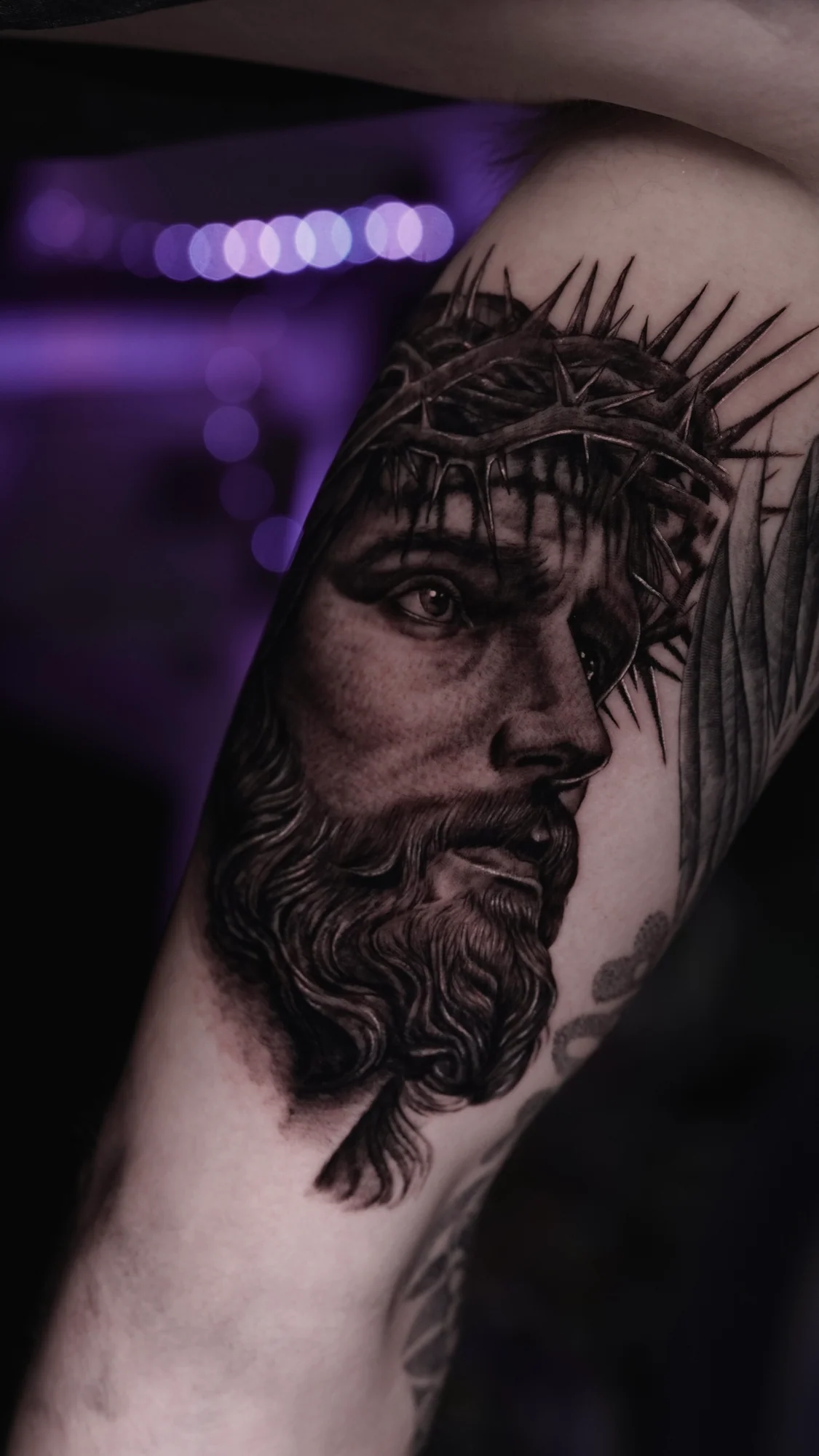
Different surfaces ask for different edges
Fur has interruptions and changes in direction. An eye needs a more concentrated structure. A nose has another kind of surface. Giving all of them the same edge treatment would make the image less convincing, even if it contained a great deal of detail.
Crown of thorns presents a related contrast between skin, beard and the hard points of the crown. The variety of surfaces helps explain the form.
Two subjects still need one composition
The lion and cub are not simply two isolated portraits placed together. Their scale and vertical relationship make them part of the same tattoo. The larger mane gives the upper face a frame, while the smaller face changes the rhythm below it.
The two photographic angles are useful because the tattoo sits on a curved surface. The composition is an object on the body, not only a flat reproduction of the original subject.