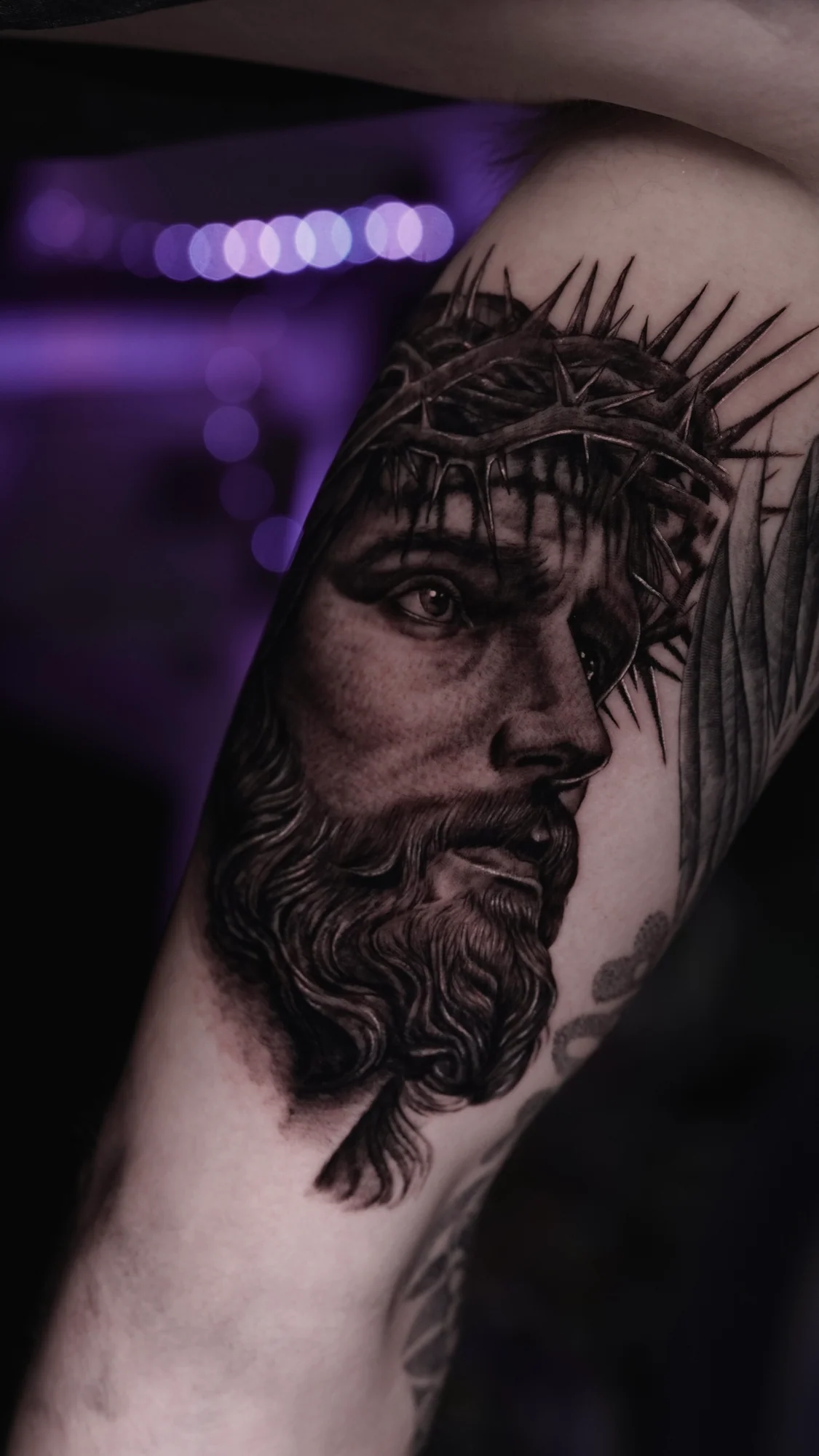
The gaze comes before the texture
In Crown of thorns, the eye holds attention within a face framed by a dense beard and the sharp interruptions of the crown. Each area contains detail, but it does not ask for attention in the same way. The eye is a focal point; the beard carries movement; the thorns break the upper contour.
That division of roles is one of the strengths of black and grey. A composition can create depth through differences in value and edge without assigning a separate color to every element.
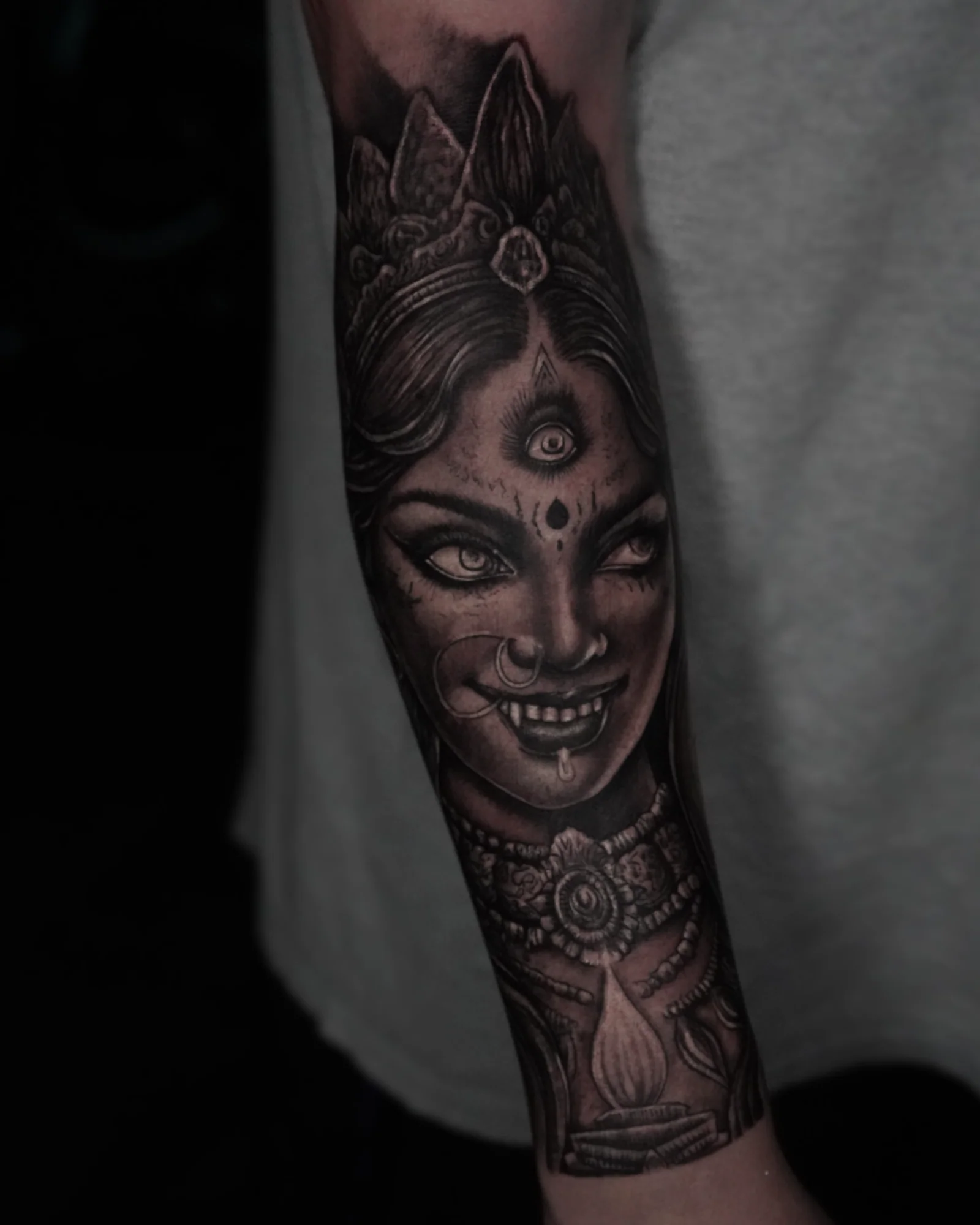
Darkness and detail are different decisions
A beard can contain many strands and still read as a larger mass. If every strand had equal emphasis, the texture could compete with the face. The broader shadow shapes allow smaller marks to belong together.
The same distinction appears in Third eye guardian. The crown, jewelry and facial features offer several kinds of detail. Their placement around a central face keeps the ornament connected to the portrait instead of turning it into a separate image.
The quiet passages hold the image together
A black-and-grey tattoo is not made only from its darkest areas. Quieter transitions give the eye space to move between sharp features and textured surroundings. A cheek does not need the same treatment as hair, metal or fabric.
The depth comes from those differences. Looking at the complete portrait reveals the larger value structure; looking closer reveals how distinct surfaces contribute to it. Neither view replaces the other.