A symbol can also become a frame
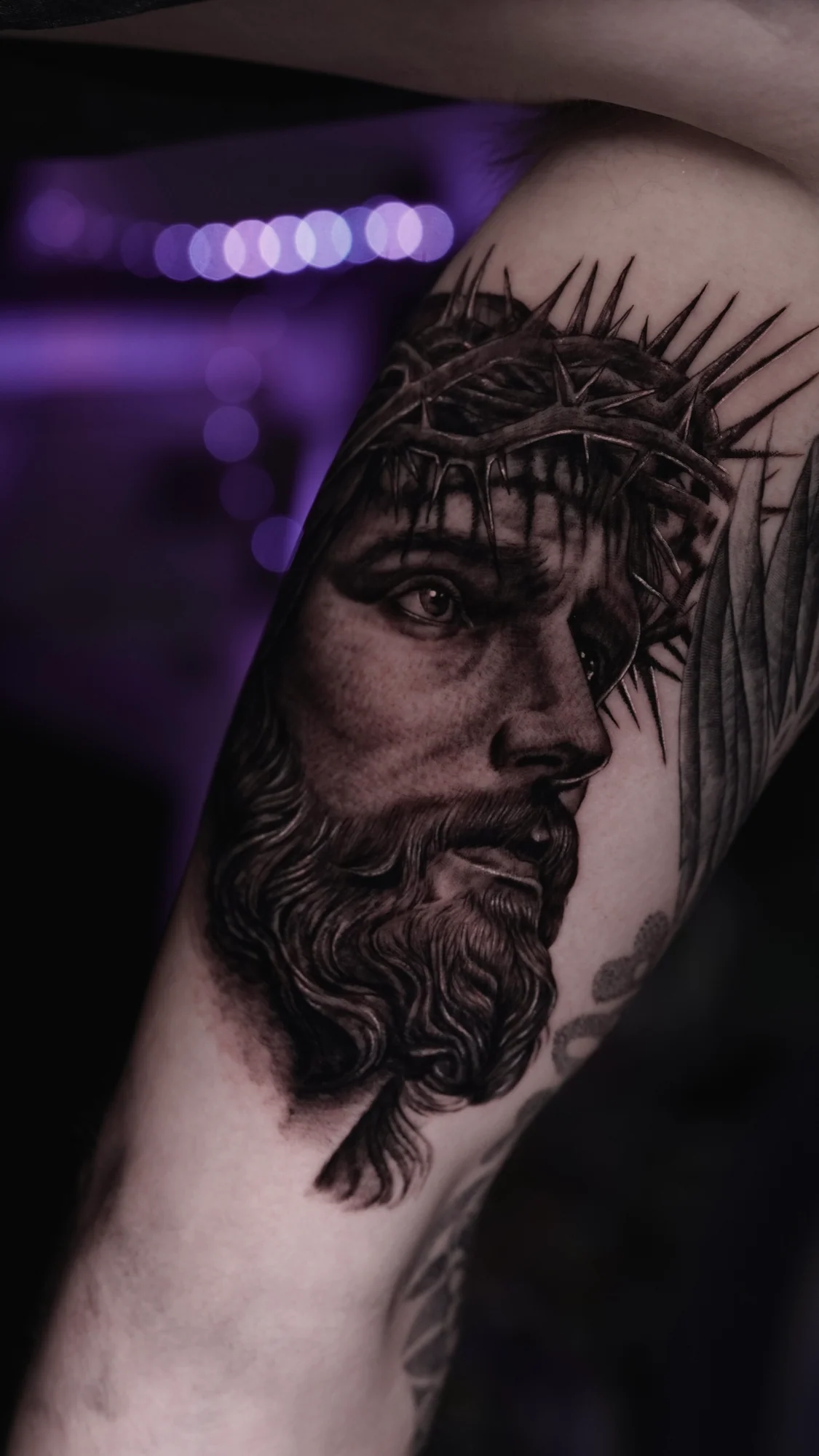
The crown of thorns identifies the subject while forming a sharp boundary above the face. Its projecting points interrupt the upper silhouette. The beard creates a different kind of frame below, with softer changes in direction.
Between those two textures, the eye becomes a concentrated point of attention. The image can carry recognizable religious imagery without placing every part of that imagery at the same visual level.
Expression gives the subject its presence
The relationship between the gaze, brow and nose establishes the orientation of the face. Shadow shapes help connect those features, while smaller marks describe the surface.
The portrait does not need a crowded background to have weight. Keeping the surrounding composition restrained allows the expression and crown to remain central. The balance is created through what receives emphasis and what stays quieter.
The image does not tell us the wearer’s private story
A recognizable religious subject may carry devotion, remembrance, cultural familiarity or an interest in the imagery itself. The photograph alone cannot tell us which personal meaning belongs to its wearer.
What it does show is the artistic treatment: a close portrait, contrasting textures, a defined gaze and a crown that shapes the silhouette. Those are the visible decisions through which this particular image takes form.