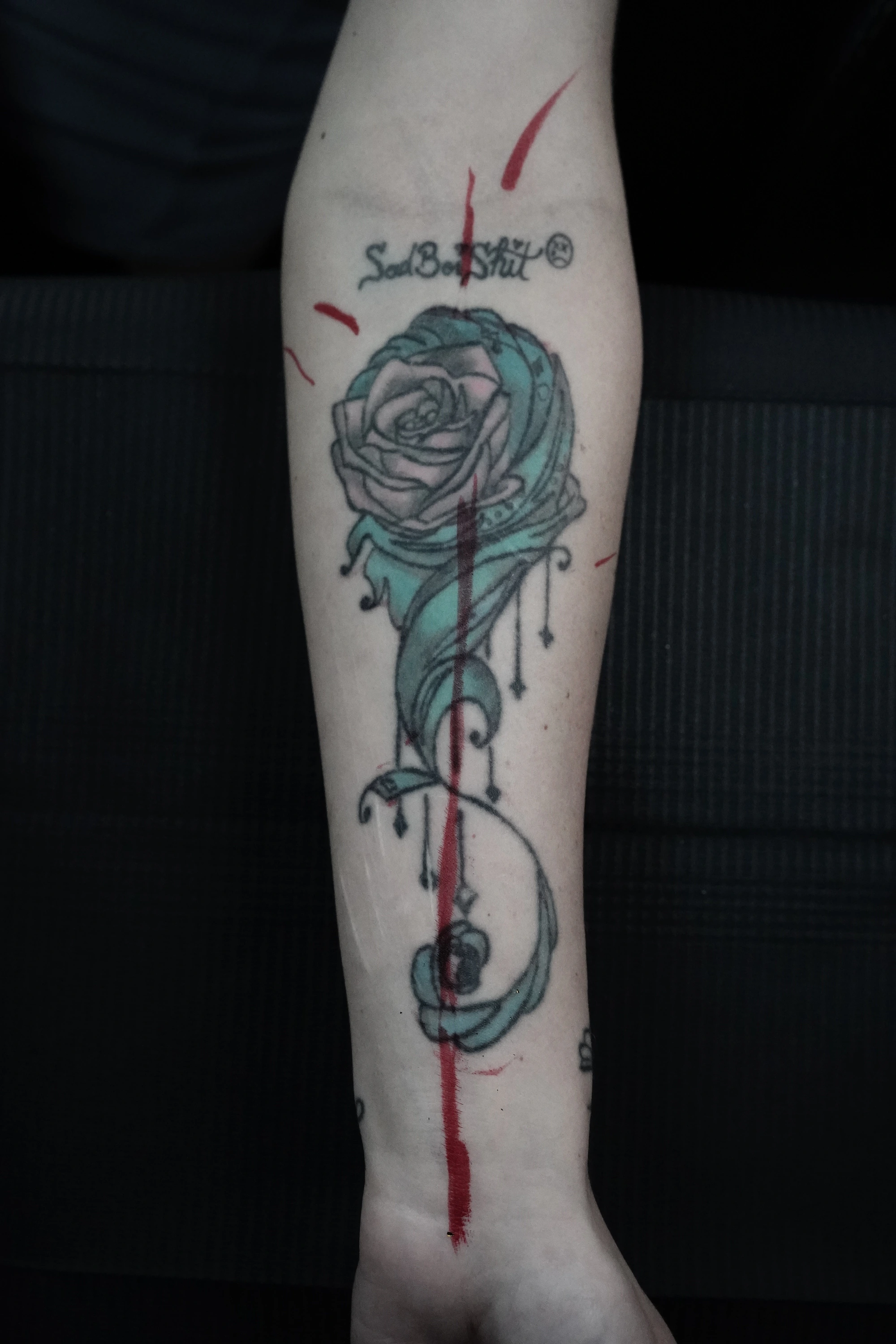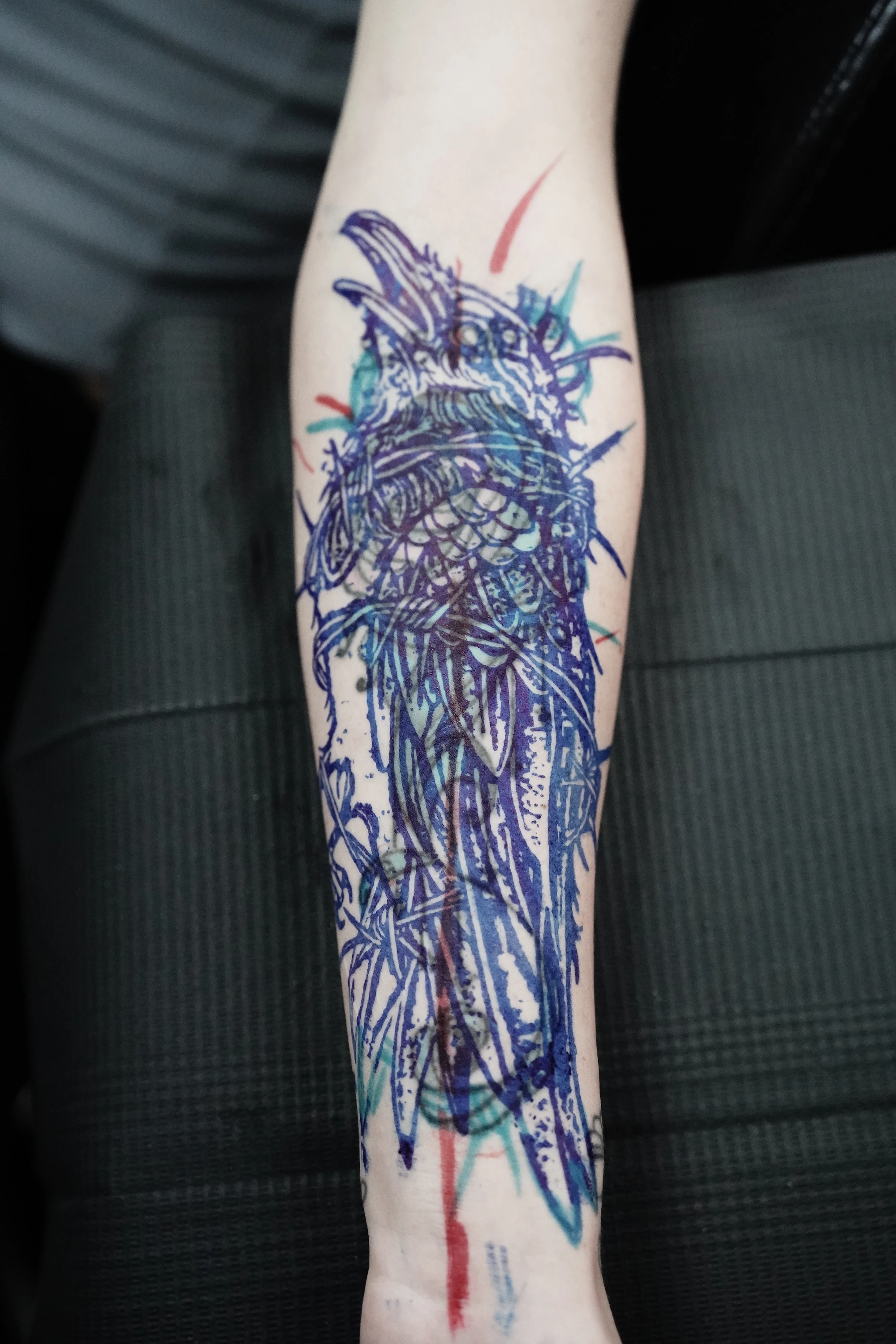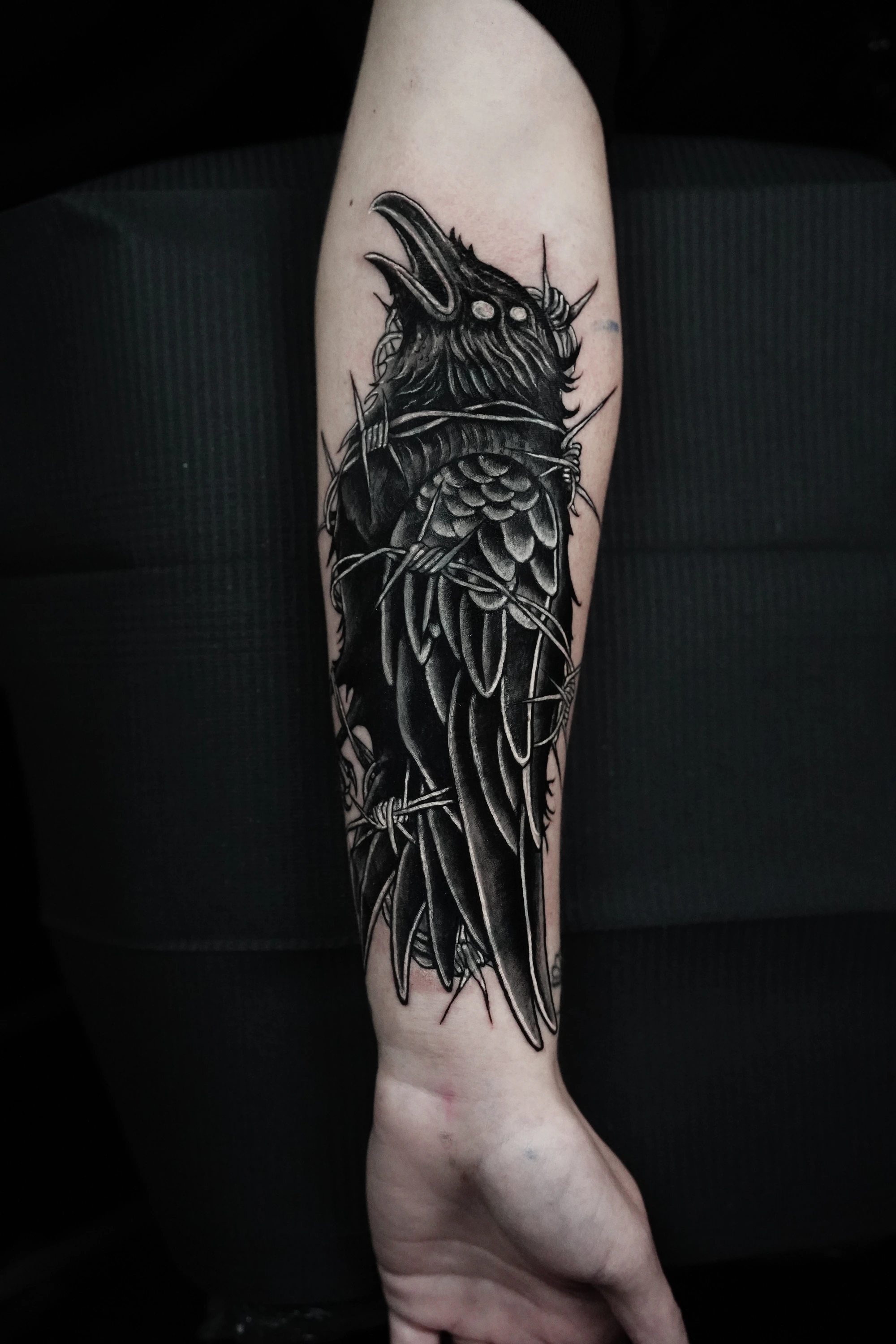
Two images occupy the same space
The stencil stage has its own visual language. Purple lines describe a bird while the blue-green rose and its old contours remain visible underneath. It can look crowded, because it contains information from two different compositions at once.
That overlap is useful. A finished photograph shows the new image taking priority. The stencil photograph shows the relationship that had to be resolved before that could happen.
Placement is part of drawing
On the forearm, the raven has a clear upper and lower direction: the open beak and head establish one end, and the long feather shapes travel toward the wrist. The wire crosses that movement rather than simply following it.
Moving or resizing this drawing would change where every feather falls in relation to the rose. Placement is therefore not a final administrative step after a design is complete. In a cover-up, it is part of the design itself.
The stencil does not contain the whole tattoo
Line placement describes boundaries, but the finished bird also depends on shadow, overlapping surfaces and the separation between feathers. Those value relationships are not fully visible in the transfer alone.
The three photographs record different kinds of information: the old tattoo establishes the problem, the stencil shows the arrangement, and the finished photograph shows the new hierarchy. Keeping that middle image makes the transformation easier to understand.