Why tattoos stay in skin even while cells change
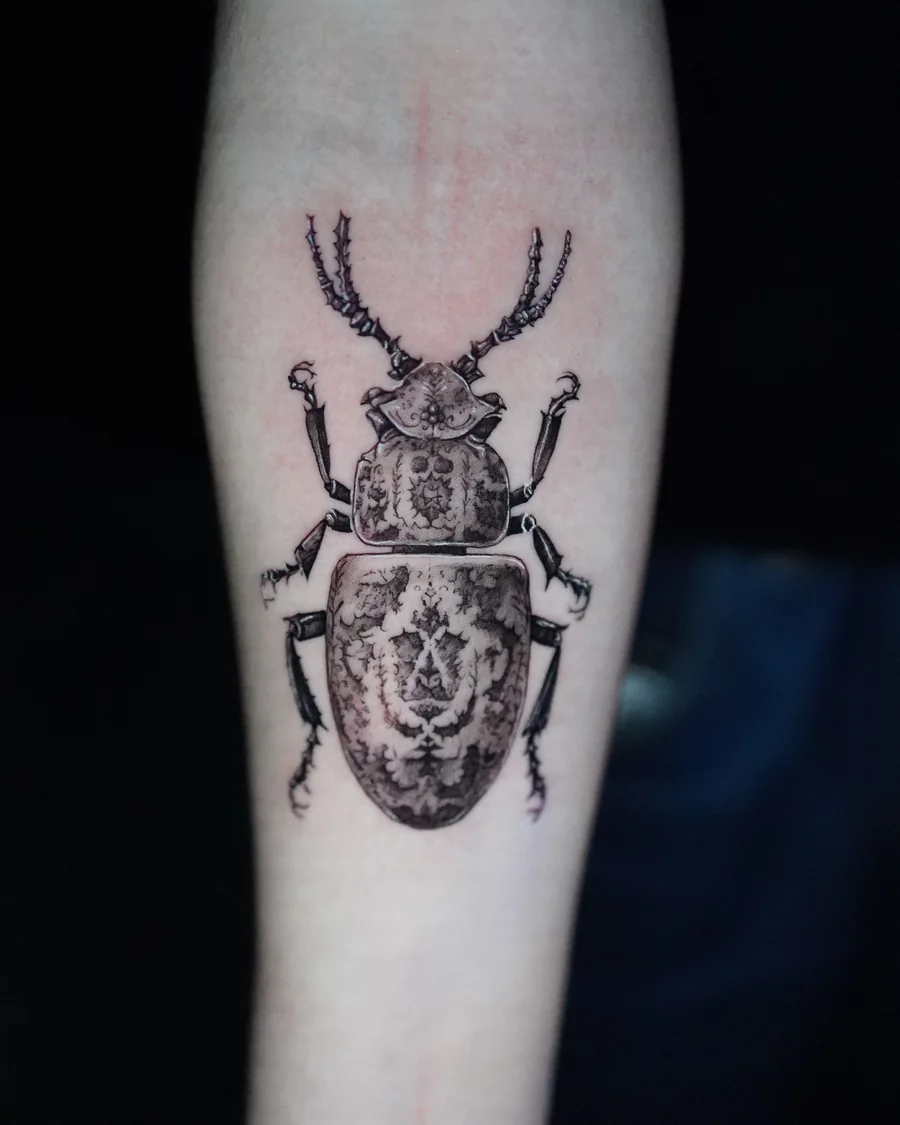
A tattoo remains visible because pigment is placed within skin tissue, where it can persist rather than simply washing off the surface. Research also suggests an important complication: the persistence of an image does not require every cell holding its pigment to survive for the lifetime of that image.
That distinction makes tattoo permanence more interesting than the familiar idea of ink being trapped forever in one place. A stable-looking drawing can coexist with activity on a microscopic scale. Understanding that activity requires keeping human anatomy, experimental findings and unanswered questions separate.
The image sits beneath the surface
The FDA describes tattooing as depositing ink in the dermis, beneath the epidermis. This helps explain why ordinary surface washing does not remove a permanent tattoo. It also distinguishes tattooing from applying a cosmetic drawing to the outside of the skin. FDA explanation of tattoo placement.
The word “skin” can make that arrangement sound simpler than it is. Skin is an organ with protective and temperature-regulating functions, and its layers contain different structures. MedlinePlus illustrates those layers and describes blood vessels in the dermis. The drawing is therefore carried by living tissue rather than by an inert sheet beneath the surface. MedlinePlus: skin layers.
What macrophage research actually showed
In a 2018 study, Anna Baranska and colleagues used a mouse model that allowed them to remove particular immune cells experimentally. They identified dermal macrophages as the pigment-capturing cells in that model. When those cells were removed, the tattoo did not simply disappear: released pigment could be captured again by replacement macrophages. The authors proposed a repeating capture, release and recapture process as an explanation for persistence. Baranska and colleagues, Journal of Experimental Medicine.
The experiment addressed how an image can remain while its cellular holders change. It did not establish a timetable for every human tattoo, test every commercial pigment, or demonstrate a treatment someone should try. The mouse model is central to the finding and should remain visible whenever the result is discussed.
Permanence and an unchanged appearance are different questions
An image can remain present without retaining exactly the same appearance. “Why does pigment persist?” asks about retention. “Why does this photograph look different years later?” adds questions about light, color, the skin and the conditions under which the photographs were made.
Those questions should not be collapsed into a single explanation. A popular account about immune cells cannot tell an individual how a particular shade will look in a decade. Equally, a visible change in one tattoo is not a measurement of how quickly its macrophages have turned over.
A useful model with clear limits
The research offers a more accurate way to imagine tattoo permanence: an enduring image can be maintained within a changing biological environment. It also shows why a scientific mechanism should not be converted into a promise about an artist's technique, a pigment brand or a removal result.
For the person wearing the work, the image is read at the scale of lines, shapes and color. Biology operates underneath that reading. Both matter, but they answer different questions about what it means for a tattoo to last.