Tattoo stencils and freehand drawing: different kinds of design guides
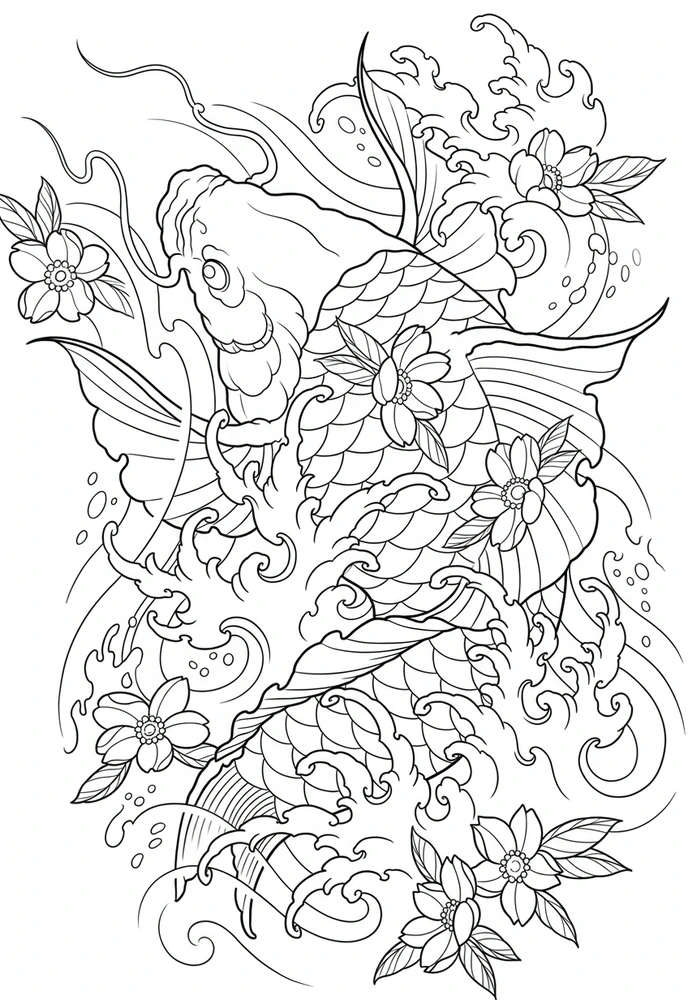
A tattoo stencil provides a visible guide for a drawing on the body. It can establish placement, proportions and selected details, while leaving much of the finished image still to be developed. A photograph of that guide records a stage of the work, rather than an early version of every final line and shadow.
“Stencil” and “freehand” are also less absolute categories than they can sound. A drawing can be made by hand on transfer paper, produced through a thermal workflow, or developed directly on the body. The important distinction is where the guide is created and what information it carries.
A transferred image can begin with a hand drawing
Spirit's Classic Freehand transfer paper is specifically described as material for hand-drawn stencils that does not require a printer. Its thermal paper belongs to a different product category intended for thermal printing. These manufacturer descriptions establish a simple point: the presence of a transferred guide does not tell you whether the original drawing was made by hand or digitally. Spirit Freehand paper and Spirit Thermal paper.
The wording on a supply product should also be read carefully. “Freehand” on transfer paper does not necessarily mean drawing directly on skin. It can describe how the stencil itself is produced before transfer.
The guide and the finished image carry different information
Imagine a shaded flower. A preparatory guide might identify the edges of major petals and the position of the center. The completed image could also contain soft tonal changes that are not represented by equivalent lines in that guide. This is a hypothetical example of how drawing information can be separated, rather than a claim about a particular artist's routine.
That distinction helps explain why a stencil can look sparse or crowded compared with a finished tattoo. Marks can function as reminders, boundaries or positions. Their purpose is not always to appear with the same visual weight in the result.
Drawing on the body changes the design question
Here, on-body freehand drawing means developing visible planning marks directly on the body's surface. Conceptually, it allows the drawing to respond to the place where it will be seen. A transferred design begins elsewhere and must be considered in that location after transfer. Neither description establishes the quality of the final tattoo.
The body adds questions that a flat page cannot fully answer: what is visible from one side, how a shape relates to a neighboring tattoo, and what happens when a limb turns. Those are compositional questions, whether the guide began on paper, on a screen or on the body itself.
Originality is not determined by the transfer method
An original drawing can be transferred, and a hand-drawn image can closely repeat another image. The method of placing the guide therefore does not settle authorship or artistic originality. It also does not prove that one approach is universally more difficult, spontaneous or appropriate.
What matters visually is how the eventual tattoo holds together. A stencil photograph can reveal useful decisions about scale and placement, but it cannot show the full range of decisions still ahead. Reading it as a working guide gives it a clearer role in the story of the image.