Liners, shaders and magnums: what tattoo needle names describe
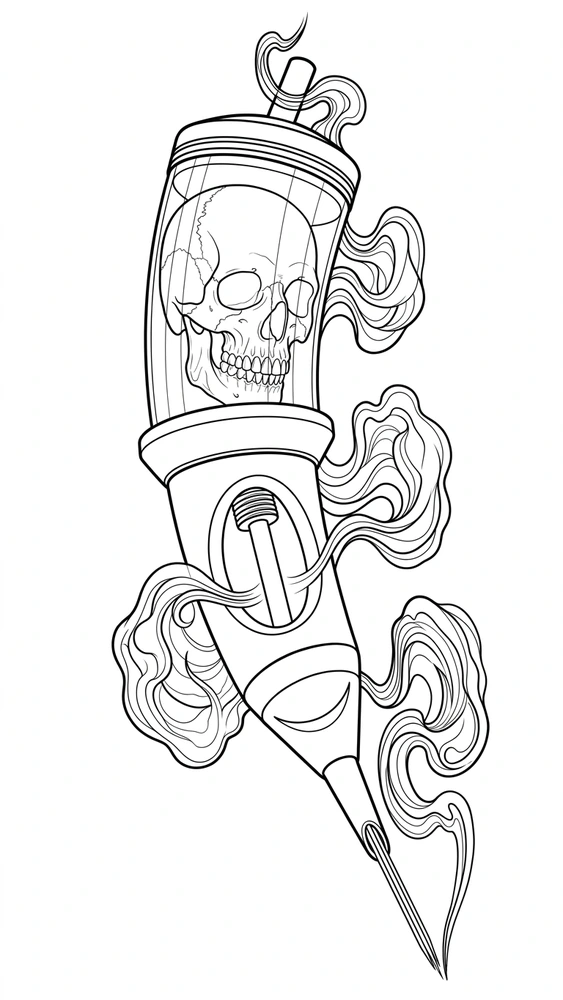
The word “needle” can suggest a single point, but tattoo equipment often uses several needles arranged as a group. Terms such as round liner, round shader and magnum describe differences in that arrangement and the kinds of marks the equipment is designed to support.
Those names help explain why an artist may change tools during a piece. They do not identify a complete style, guarantee a particular finish or tell a viewer exactly how a tattoo was made. Equipment terminology becomes more useful when its limits are understood alongside its definitions.
The grouping changes the working shape
Eikon's explanation of its cartridges describes round liners as tightly grouped needles and round shaders as a looser circular grouping. The distinction concerns the geometry of the group, not simply whether the finished tattoo contains an outline or a shadow. Manufacturers also offer variations within the liner category, so the word alone is not a complete specification. Eikon's cartridge configuration explanations.
In an image, line and shading have different visual roles. A contour can establish a boundary, while a gradual change in value can suggest volume. Naming the tool provides background to those roles, but the finished mark still belongs to a larger drawing.
A magnum has a different footprint
Kwadron describes its magnum configuration as needles arranged in two staggered rows, intended for shading and filling broader areas. That wider arrangement differs from a compact circular grouping. The manufacturer's description explains the physical distinction; its promotional claims about comfort or healing should not be treated as independent clinical findings. Kwadron's magnum specification.
A useful artistic comparison is the difference between a narrow drawing tool and a broader one. Each offers a different working shape. The analogy stops short of treating skin like paper, because tattooing is a procedure on living tissue rather than a dry mark on a page.
Needle count is only one part of the label
A count tells the reader how many points are grouped together; it does not describe all their dimensions. Diameter, spacing and configuration also matter. Kwadron's product explanation specifically notes that groups with the same number of needles can have different overall dimensions when the individual needle diameter and spacing differ.
This is why reading a package number as the exact eventual width of a tattoo line is misleading. A label describes equipment. It is not a scale drawing of every mark that equipment will produce, and it does not replace the artist's judgment about the particular work.
Equipment does not supply the composition
Two pieces can use similar categories of equipment and have completely different visual identities. One may rely on open space and a small number of edges. Another may organize many textured passages around a dominant shape. Those differences cannot be inferred from a cartridge name alone.
For someone looking at tattoo art, the vocabulary is most useful as a way to understand that different physical tools support different tasks. It is not an instruction for choosing settings, depth or technique. A coherent tattoo still depends on the relationship between the marks: their direction, separation, weight and purpose within the image.