Tattoo flash sheets: the artwork on the shop wall
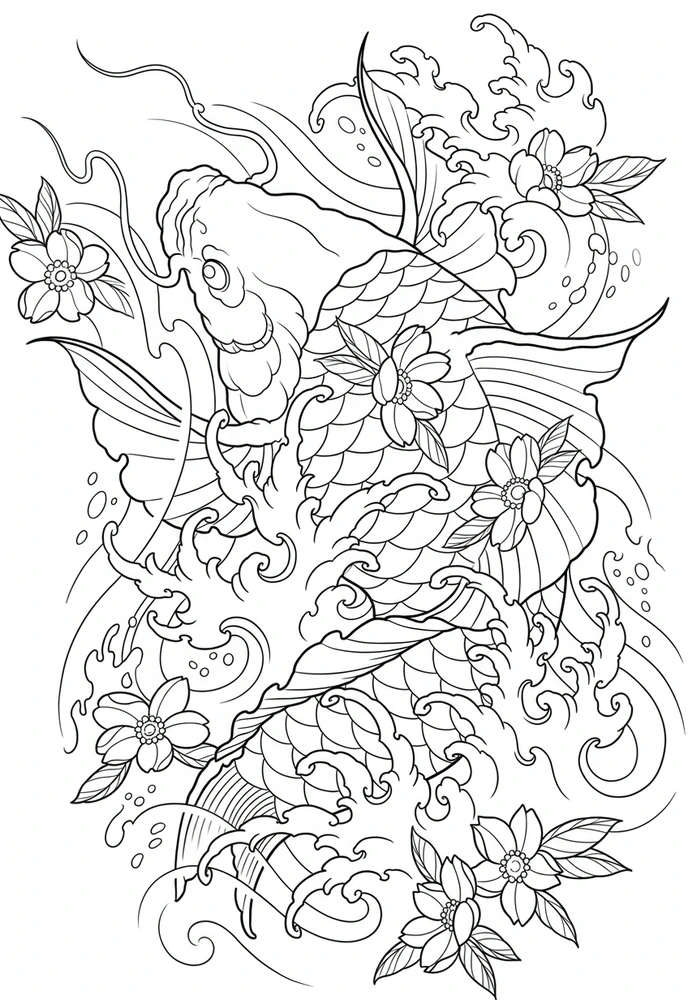
Before a tattoo becomes an image on someone's body, it may exist as a small drawing among many others on a sheet. That format, usually called flash, is one of tattooing's most recognizable forms of artwork. It gives a shop wall a particular character while letting a visitor encounter an artist's imagery before a conversation begins.
Historical flash is also a record of how designs moved. A sheet could present choices, demonstrate an artist's hand or circulate as a commercial object. Treating it only as a menu misses both its visual craft and its place in the working life of a studio.
Designs made to be seen together
Providence Public Library's collection guide describes flash as sheets of individual drawings displayed to provide tattoo ideas and show an artist's work. Its holdings include a Spaulding & Rogers sheet dated 1980 as well as Burmese design sample books. The collection demonstrates why design references should be studied in their particular context instead of folded into one universal tradition. Providence Public Library finding aid.
The sheet itself creates relationships. Different subjects share a page, but each needs enough visual independence to be understood. Scale, spacing and repeated colors help the page hold together. Looking at the arrangement can therefore reveal another layer of drawing beyond the individual designs.
A drawing could travel farther than its maker
The Henry Ford's Percy Waters collection contains sketchbooks and more polished flash portfolios. The museum describes artists refining drawings into sheets for customers and for sale to other tattooers. Its examples preserve familiar subjects alongside unusual ones, showing a working vocabulary that could be repeated and altered. The Henry Ford: Percy Waters collection.
This circulation complicates attribution. Finding a motif in one person's portfolio proves that it appeared there; it does not necessarily establish that the person invented every element of it. A careful history distinguishes the maker of a surviving sheet from the uncertain origins of a widely shared image.
Repetition also need not erase individuality. Two artists can organize similar subjects with different proportions, line rhythms and color relationships. The subject provides continuity, while the drawing records a particular interpretation.
Signed sheets and a shop-window figure
The Mariners' Museum preserves designs signed by Norfolk tattooer August “Cap” Coleman. Its collection also includes a painted figure used to advertise tattoos in his shop window, providing an example of designs shown on a body-shaped display rather than only on paper. The Mariners' Museum: The art of the tattoo.
The comparison is revealing. A flat sheet lets a viewer study an image in isolation. A figure suggests how several images can occupy a body. Both are forms of presentation, and neither should automatically be mistaken for a photograph documenting a completed tattoo.
Reading flash in a Tulsa studio today
Recognizing this history can change how someone looks at a studio wall. Instead of asking only which picture to choose, notice how the artist draws a curve, simplifies a face or makes neighboring colors distinct. The sheet can be an introduction to an artistic approach.
Historical circulation does not mean every contemporary drawing is free to copy or available to tattoo. Attribution, permission and the artist's current terms remain separate questions. Flash rewards attention as artwork even before those questions arise: it preserves the moment when an image is offered as a possibility, ready to move from paper into another person's life.