Memorial tattoos in Tulsa: choosing the detail that carries the memory
A memorial tattoo can begin with a face, a few words or an ordinary object that means something very specific to one person. The image does not need to explain an entire life. I think its strength can come from choosing the detail that makes the memory recognizable to the person carrying it.
For a memorial tattoo in Tulsa, the visual question is not how to make grief look a certain way. It is how to give a personal remembrance an appropriate form. A quiet symbol may feel right to one person; a prominent portrait may feel right to another. Neither choice needs to justify itself through size or complexity.
Recognition can be more personal than symbolism
A familiar expression, a particular outline or a small object may carry more meaning than a symbol with a widely understood definition. That does not make common symbols less useful. It simply leaves room for the private associations that make a tattoo personal.
When I think about this kind of composition, I am interested in what needs to stay specific. A face may depend on the relationship between the eyes and mouth. An object may depend on its worn shape. A word may matter because of its exact wording rather than the ornament around it.
Those priorities can guide the drawing without turning every memory into a separate element.
A portrait asks us to pay attention to character
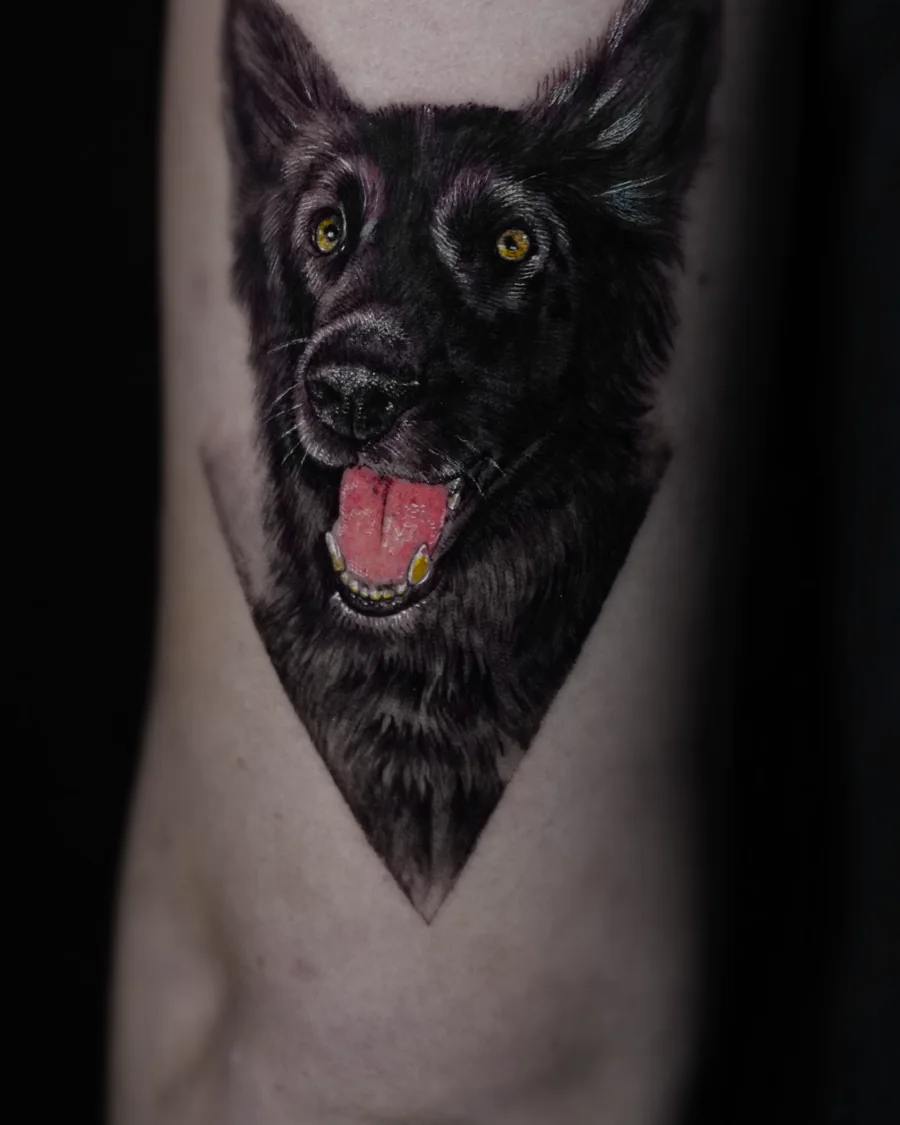
My Companion dog portrait offers a visible example of expression: upright ears, bright eyes and a tongue showing against dark fur. Small areas of color bring warmth to the eyes and mouth.
The portfolio does not identify that tattoo as a memorial. I would not assign that story to it. What it demonstrates here is a visual principle relevant to portrait design: recognition involves the relationship between features, not just an inventory of details.
For someone considering a memorial portrait, that distinction can help explain why a particular photograph feels meaningful. Its value as a reference may lie in the expression it captures rather than the amount of information in the background.
Words and objects create another kind of presence
A name, a phrase or a familiar object can place remembrance in a different register. It may be more private, more direct or simply closer to the way someone wants to hold the memory.
The lettering tattoo collection shows words treated as visual forms. The shape, spacing and direction of lettering affect how a phrase occupies the skin. In a remembrance, the wording remains important; the composition determines how that wording is encountered.
Hypothetically, an object associated with a shared activity could provide a central image, while a short line of text supplies another layer. That is one possibility among many, not a formula for a memorial tattoo. Adding more symbols is only useful if the resulting composition still feels connected.
Meaning does not have to be public
Some tattoos invite a conversation. Others keep their significance close to the wearer. I do not think an image becomes less meaningful because a stranger cannot identify its story.
That gives the design useful freedom. It can be beautiful or unusual on its own terms, while the personal meaning remains private. A viewer might see a flower, an animal or an abstract arrangement without knowing why it was chosen.
A tattoo also does not need to carry a promise about how someone will feel afterward. My part is the visual work: helping the chosen image have clarity, presence and a thoughtful relationship to the body. The meaning belongs to the person who wears it.
You can explore my portrait tattoos and read about William Martz for more context on my work in Tulsa.