Medusa Tattoos: Decide Whether the Face or the Snakes Lead
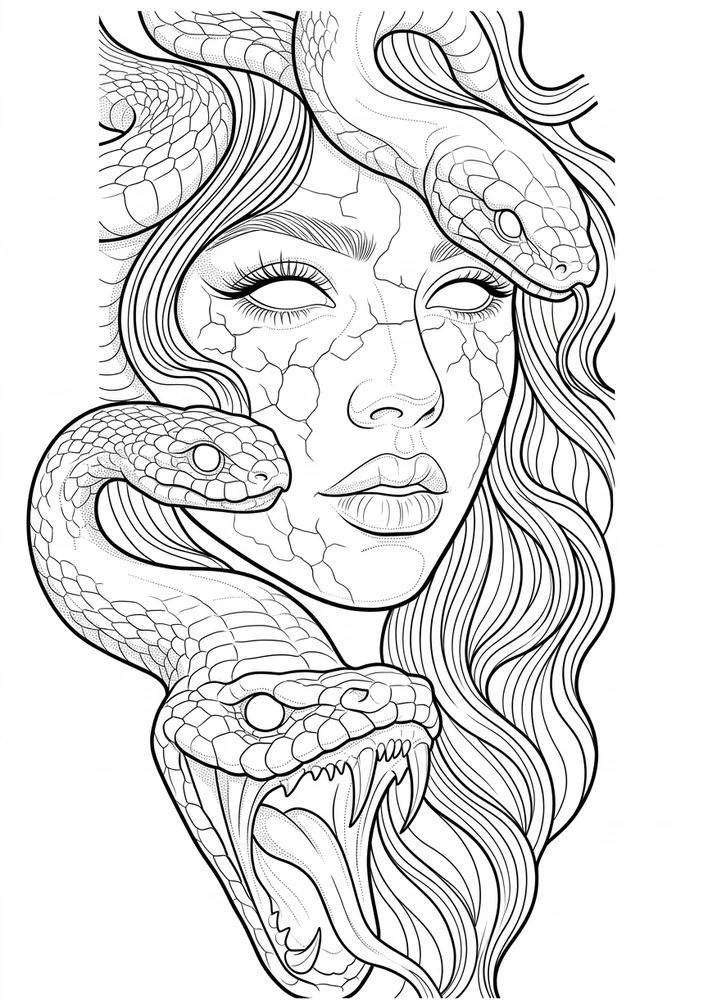
In a Medusa tattoo, a snake crossing the eye creates a different portrait from snakes framing the face. Decide how much of the expression you want to see. That choice helps determine where the bodies can overlap and which parts of the face should stay clear.
Which features should remain unobstructed?
Start with the eyes and the main contour of the face. Decide which areas can be crossed by snakes and which should stay clear. A snake passing near an eye creates a different effect from one forming the outer frame, even when the same number of snakes is used.
In William's Medusa and serpents study, curved snake bodies surround a central face. The drawing lets you follow their overlaps before shading enters the discussion. Notice which parts frame the expression and which cross closer to it.
Choose an expression reference
Use references for expression rather than relying on a word such as powerful or mysterious alone. A direct gaze, lowered eyes and an open mouth would lead to different portraits. Identify the emotional tone you want without demanding that every reference feature appear in one face.
Medusa imagery can carry different personal meanings. The design does not disclose a wearer's experiences, and an artist should not attach a private history to a client based on the subject alone. Share only the context you want used in the project.
How much snake detail is useful?
The overall bodies and their path through the image should read before tiny scales. Ask which snakes are essential to the outline and which can be simplified when adapting the drawing to your placement.
Bring an expression reference to your Medusa consultation with William, even if you are still undecided about the snakes.