A different tattoo, or a different relationship with the ink?
Wanting to change a tattoo can mean several things. Perhaps the subject no longer feels right. Perhaps the image still matters, but its placement or execution bothers you. Or perhaps you want the area to have as little visible tattooing as possible. Those wishes lead toward different conversations.
Before comparing a cover-up with tattoo removal in Tulsa, describe the result you actually want to live with. “I want this name gone” and “I would love a bird across my forearm” can belong to the same project, but they are not identical goals. A replacement introduces another image, with its own size, contrast and presence.
A cover-up is a new composition
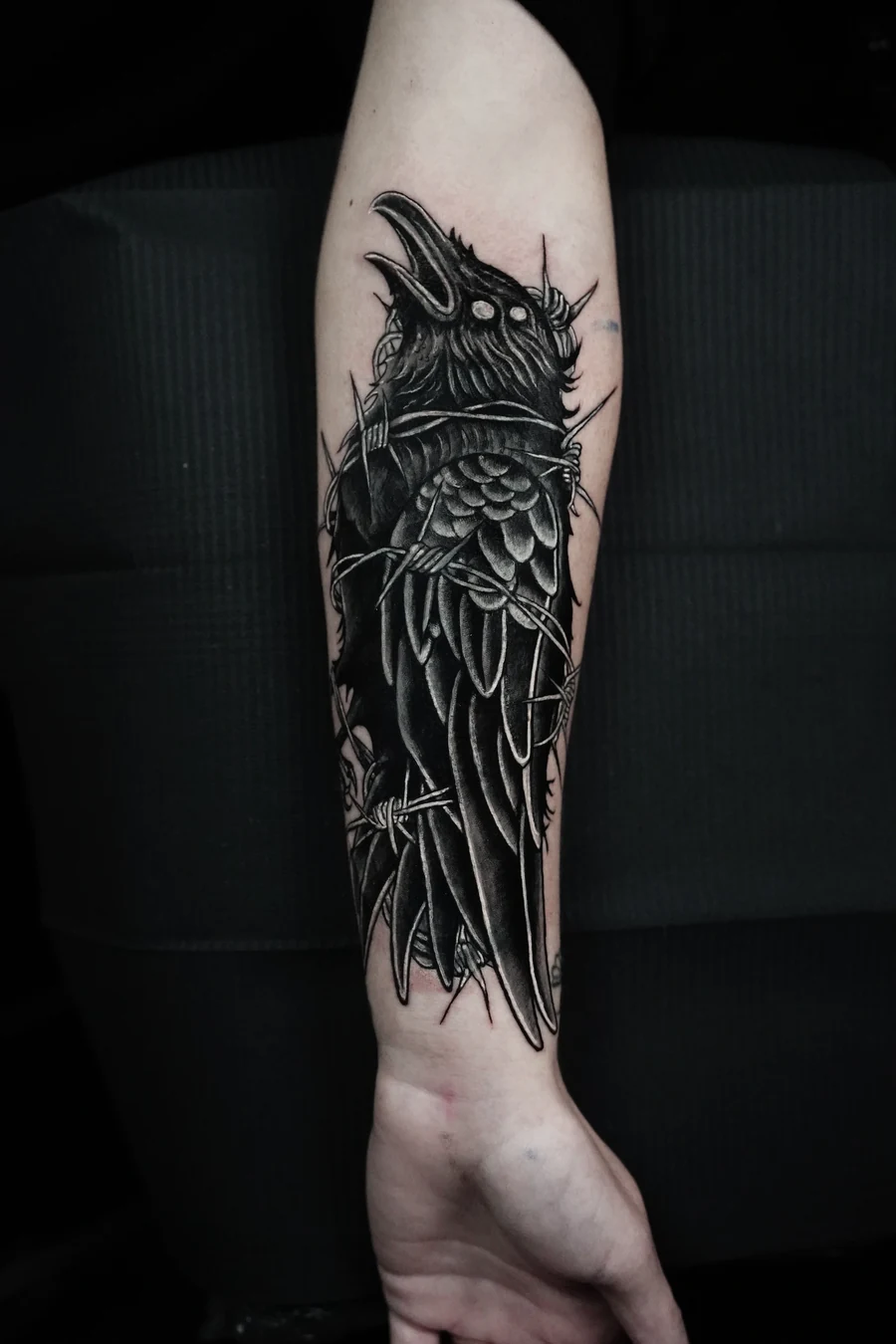
William Martz’s raven cover-up provides a visible example. The photographs move from a rose and surrounding marks, through a stencil, to a raven with layered feathers and crossing wire. The result changes the silhouette and the way the forearm reads. It does more than repeat the footprint of the original motif.
That distinction matters if you are considering a cover-up but feel reluctant to wear a larger or more elaborate tattoo. The artistic solution should interest you in its own right. Accepting a subject you dislike simply because it might help conceal another one leaves the central problem unresolved.
Removal needs a medical conversation
The FDA describes laser removal as a process that breaks tattoo pigment into smaller particles for the body to clear over time. Treatment generally involves multiple appointments with healing time between them. Colors and other features affect the process, and complete removal is not always possible. Possible risks include scarring, infection and changes in skin color. These are reasons to discuss expectations with a qualified health care professional, rather than judge suitability from an online photograph. FDA: tattoo removal options and results.
The American Academy of Dermatology recommends consulting a board-certified dermatologist. Its guidance explains that assessment includes the tattoo’s age, colors and location, alongside health, medicines and any history of raised scars. Those considerations belong to medical assessment. A tattoo artist’s evaluation of a new composition does not replace it. AAD: laser tattoo removal.
Sometimes the conversations meet
A person may ask a medical professional about lightening an existing tattoo while discussing a future design with an artist. That is a possibility to assess individually, not a required preliminary step for every cover-up. It is also not a promise that a particular number of treatments will make a chosen drawing feasible.
Keep the responsibilities clear: the medical professional assesses treatment and recovery; the artist considers the composition when the skin is ready for that evaluation. This article does not describe a laser service offered by William Martz. His cover-up work documents tattoo design and transformation.
Compare futures, not just procedures
A useful comparison includes how much tattoo you want afterward, which subjects you would enjoy wearing, how flexible you are about size, and whether your priority is changing the image or reducing its visibility. There is no need to force all four answers into one direction immediately.
Bring that distinction to a discussion with William Martz in Tulsa. A clear artistic goal makes a cover-up conversation more useful. A separate medical assessment makes removal questions more concrete. The strongest decision is one in which the desired result, the available options and their limits all remain visible.