Pet Portrait Tattoo Size: Compare the Face and the Full Layout
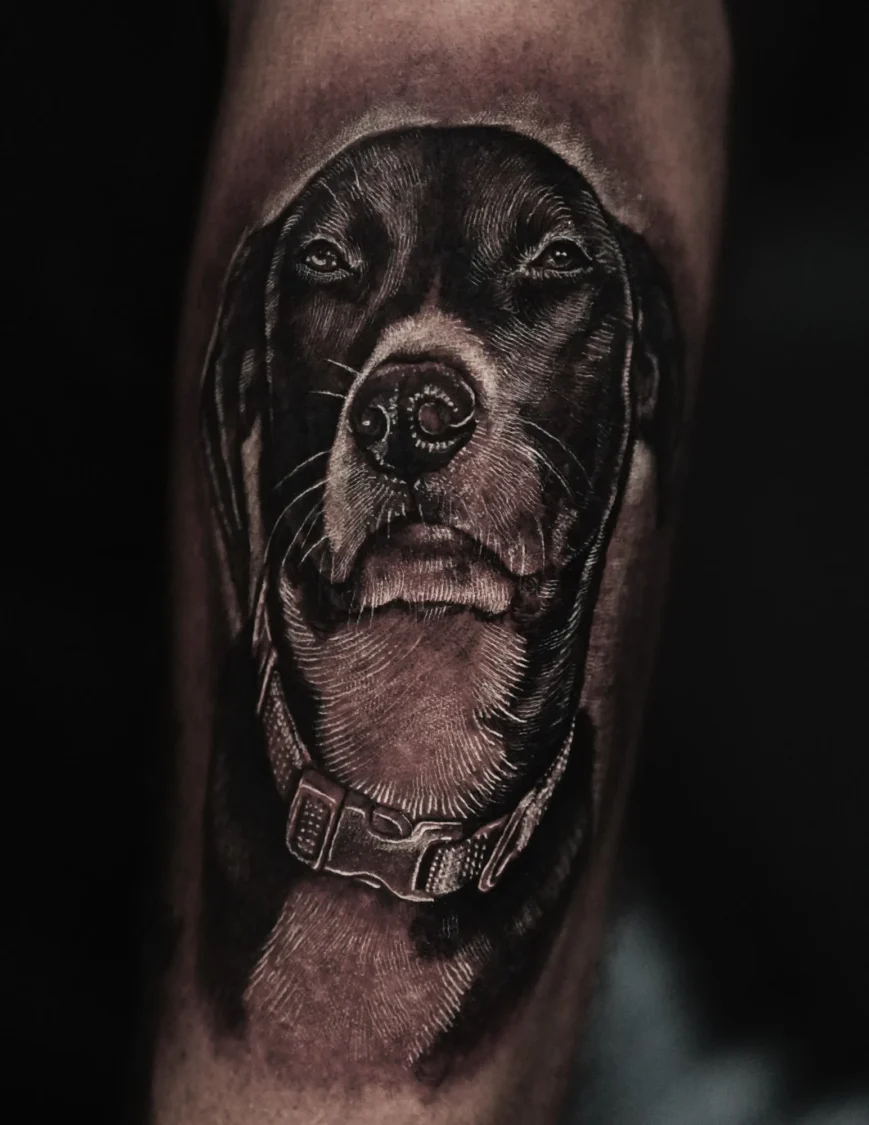
A pet portrait needs enough room for its essential features to stay separate. The useful size depends on the reference, the style and any lettering or objects around the face. There is no single measurement that fits every pet.
Begin with the eyes, nose, muzzle and outer shape. A collar tag, a flower or two portraits adds another demand on the available space. If the design becomes crowded, reducing the supporting detail may serve the portrait better than shrinking every element equally.
Ask to see the proposed layout at actual size on the intended area. A large image on a phone can make tiny features appear more practical than they are. The final decision should come from reviewing the specific drawing with the artist, including the space left between small features.
View A familiar gaze — black & grey dog portrait
Share your approximate size and which details you would be willing to simplify.
Does your measurement describe the face or the whole tattoo?
A height you give for a portrait can mean the head alone or the complete design, including ears, collar, tag and flowers. Say which you mean. If the whole tattoo must fit a fixed area, supporting elements compete with the face for that same space.
Ask to compare two arrangements within the same outer dimensions: a focused head portrait and a portrait with the decoration you want. Keep the scale consistent during the comparison. This reveals the room each option leaves for the muzzle, ears and any lettering, instead of letting a zoomed screen make both seem equally spacious.
List what is essential and what can change. You might keep the expression and ear shape while removing a background, or move an optional name outside the portrait. If the overall size limit is firm, make it part of the brief before refining small details. The goal is a clear choice about scope, not pressure to accept a larger tattoo.