Samurai and Hannya Tattoos: Two Different Subjects
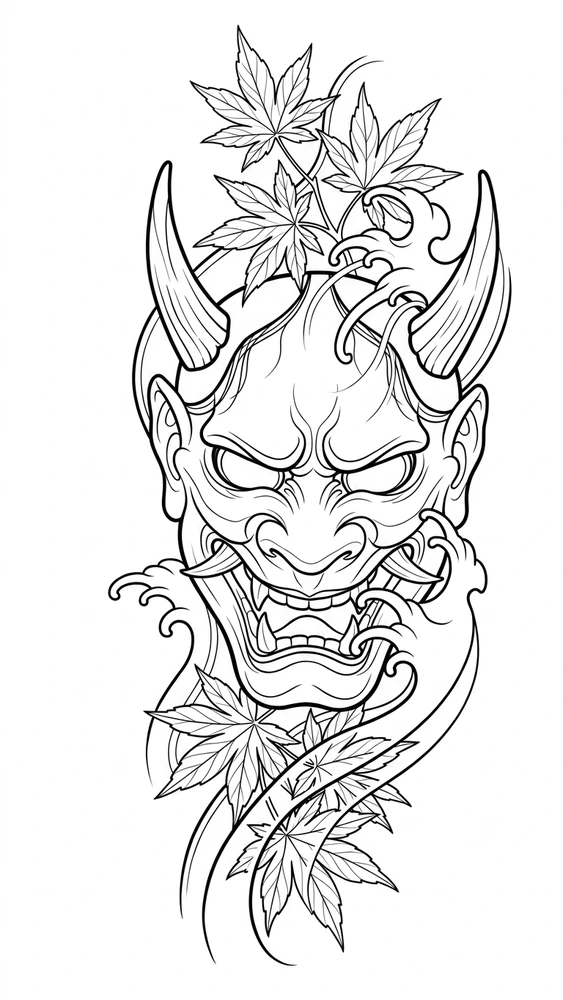
Hannya is a Noh theater mask; a samurai reference concerns a warrior and military equipment. They are different subjects, even when tattoo references group them together. Name the image you want before choosing the foliage or other details around it.
What does a Hannya mask represent?
The Ohtsuki Noh Theatre's mask guide describes Hannya through jealousy, anger and sadness. Its horns and intense expression are part of a dramatic character, not simply a generic warrior helmet. That theatrical context should remain distinct from whatever personal meaning you later give a tattoo.
William's Hannya mask with maple leaves study is a drawing that places foliage around the face. Look at the mask first, then at the space the leaves occupy. Keeping the expression clear is a separate decision from how much framing you want.
What should you check in a samurai reference?
Look at the helmet, armor and weapon before deciding which parts are essential. William's Armored samurai holding a sword study provides a different subject from Hannya: an equipped figure with visible posture and hand placement.
If you want historically specific armor, identify a period or an actual source object. If you prefer a fantasy interpretation, say so. Both are clearer briefs than assuming all dramatic masks or Japanese-inspired details belong to the same tradition.
Combining the subjects deliberately
A contemporary composition can include both, with a clear role for each. Explain which image should dominate and why you want the second one. More cultural references do not automatically produce a more meaningful tattoo.
Bring William your samurai or Hannya reference with its source if you have it. Identifying the subject comes before adapting its scale and frame.