Koi, Lotus and Waves: Simplifying a Tattoo with Three Moving Parts
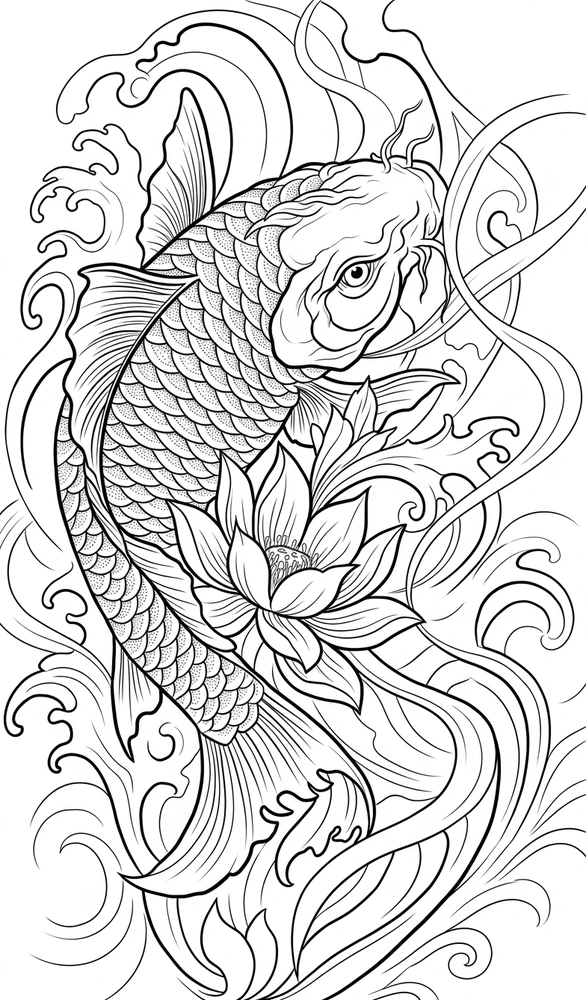
Follow the koi from its head to its tail. When flowers and waves cross that path, you should still be able to understand the fish's shape. That is the first check for a koi-and-lotus composition, before selecting every petal or ripple.
Where should the fish lead the eye?
Trace the head, body and tail as one movement. If the body turns behind a flower, its continuation should still be understandable. A crowded overlap can make it difficult to distinguish a fin from a petal or a wave edge.
William's Koi with lotus and waves study is a drawing of a curved fish among flower and water forms. Follow the body through the overlaps. The same check will help when deciding which lines to keep in a smaller version of the idea.
What can be reduced without losing the idea?
Begin with secondary ripples, repeated small petals and fine internal detail. Preserve the fish's main outline and the flower's recognizable structure. Simplifying the smallest marks is different from removing the movement that gives the whole piece its shape.
If color is important, choose which subject should receive the strongest emphasis. A colored fish against quieter surrounding forms creates a different image from a design where every petal and wave competes equally. Discuss the relationship rather than selecting each color in isolation.
Bring the context that matters to you
If a particular cultural story or personal association matters, bring that context with the reference. It may affect which fish, flower or movement you want to keep. You can also choose the pairing for its visual form.
Bring William the koi reference you prefer and identify how much of the design you want to give to the flower and water.