Paired Chest Tattoos: Balance Without Making Both Sides Identical
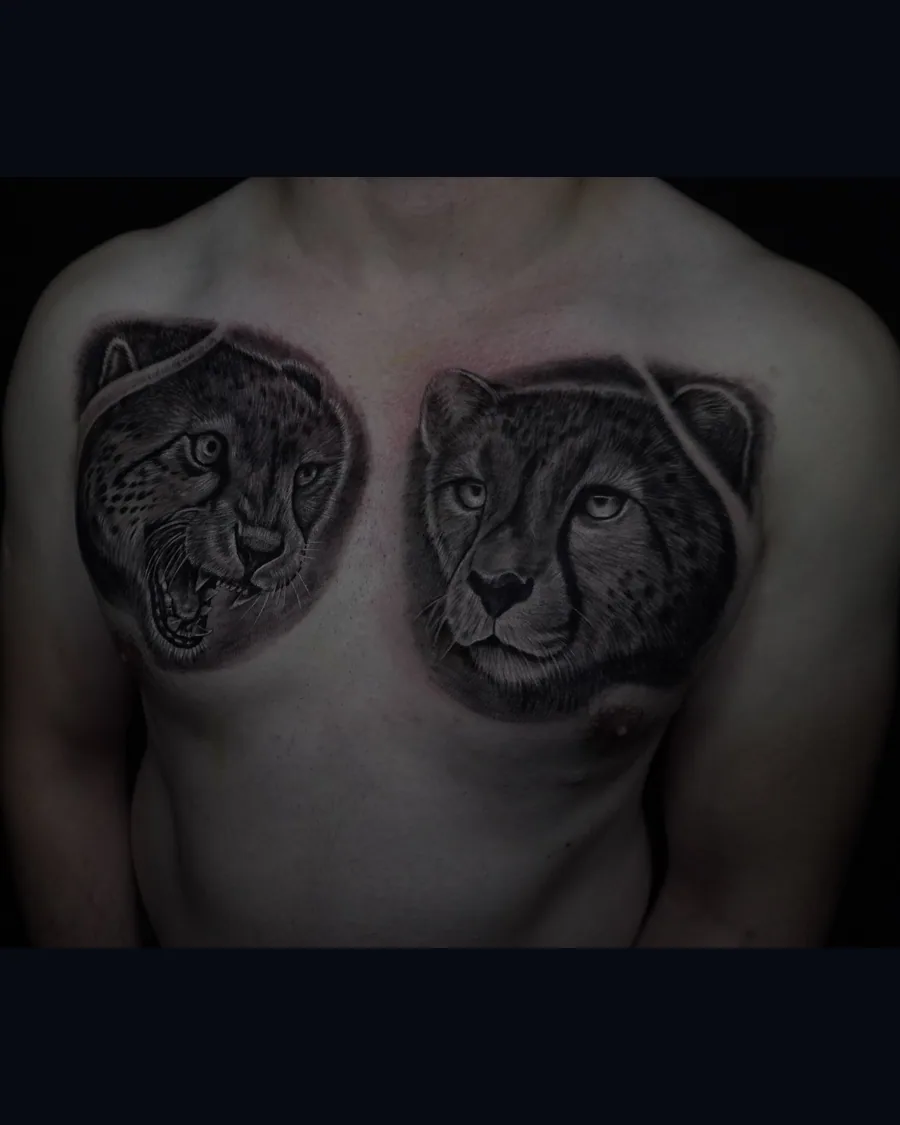
Two animal portraits can sit across the chest without being identical. In William's Twin predators, the expressions differ; their position makes them a pair. Planning that relationship means looking at both faces together, including the skin between them.
What should match across the chest?
Choose the shared element first. It could be portrait scale, a rounded outline, similar shading or the height of the eyes. Then decide where variation belongs. If everything differs at once, the pair may feel accidental; if everything repeats exactly, the result may be more formal than you intended.
In Twin predators, the large-cat portraits occupy opposite sides of the chest. Compare the height of the faces and the area each takes up. Their different expressions give you a way to discuss variation while keeping the pair together.
How important is the center gap?
The space over the center of the chest helps determine whether the portraits read as separate pieces or one larger arrangement. Connecting them with background would change that relationship. Ask to compare the outside boundaries and the center before deciding whether more ink is needed between the subjects.
Also consider existing work above or below the proposed pair. A nearby tattoo can add visual weight to one side even when the new portraits are similar in size. The whole area matters more than two isolated reference pictures.
Should both animals face inward?
That is one option, not a requirement. Inward-facing subjects can direct attention toward the center; outward-facing or frontal portraits create different effects. Choose direction alongside expression and placement, rather than as a last-minute adjustment.
For your consultation with William, choose a reference for each expression and point out what should connect the pair.