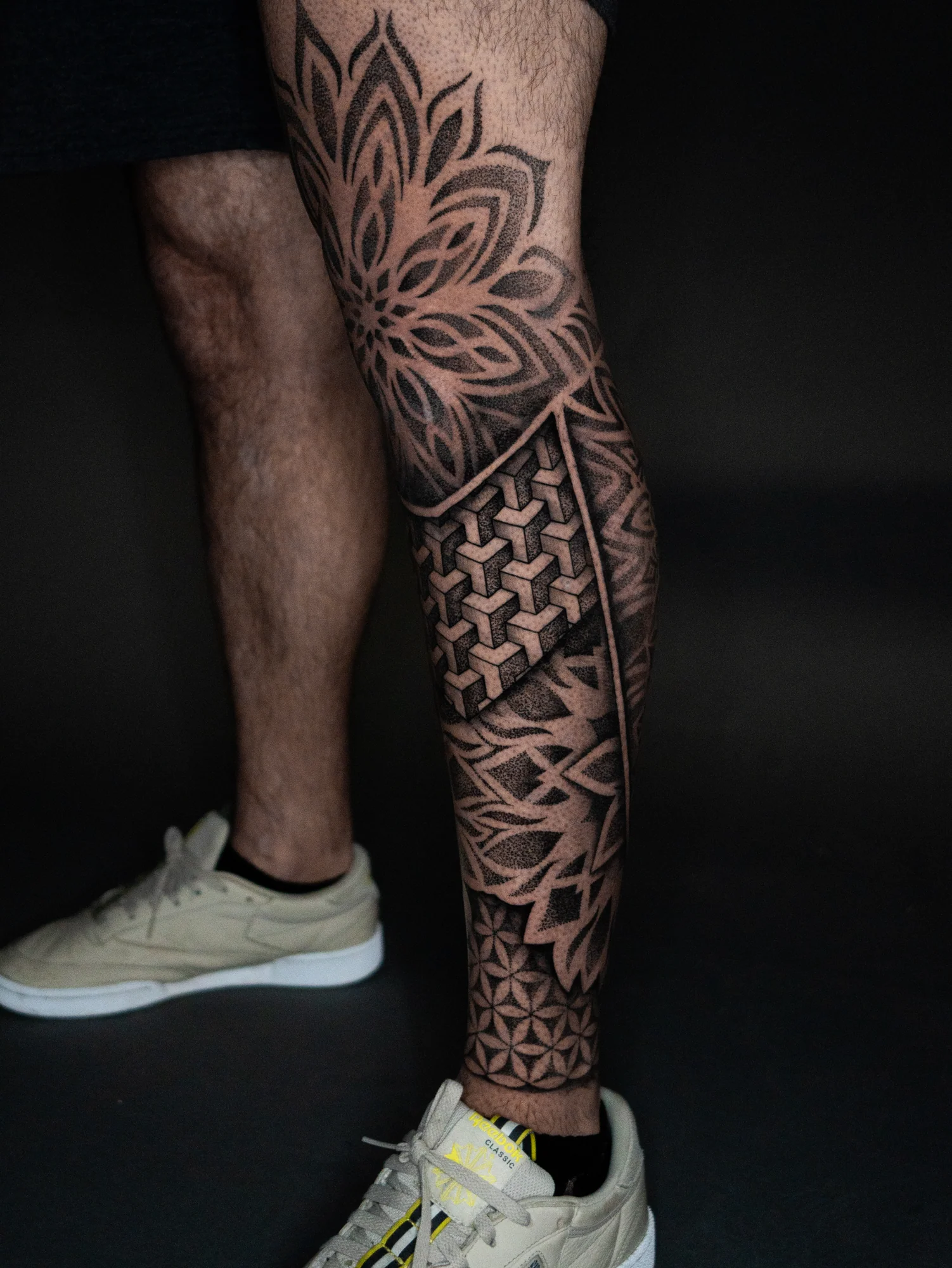
One composition, several pattern languages
The upper part of Pattern in motion opens into pointed petal forms. Below, an inset area of interlocking cubes introduces an optical construction. Near the ankle, repeating star geometry changes the rhythm again.
These areas do not need to use the same motif to belong together. Shared values, spacing and transitions allow each pattern to retain its character while contributing to the larger piece.
The cube is made by its neighbors
An optical pattern depends on relationships between adjacent faces and edges. A single shape might be read one way in isolation and another way when it repeats. Changes in value help separate those faces and suggest depth.
The surrounding petal forms provide a different kind of movement. Their curves and tapering points contrast with the repeated angular structure. The meeting between the two makes the geometric panel more noticeable.
Geometry can frame another subject
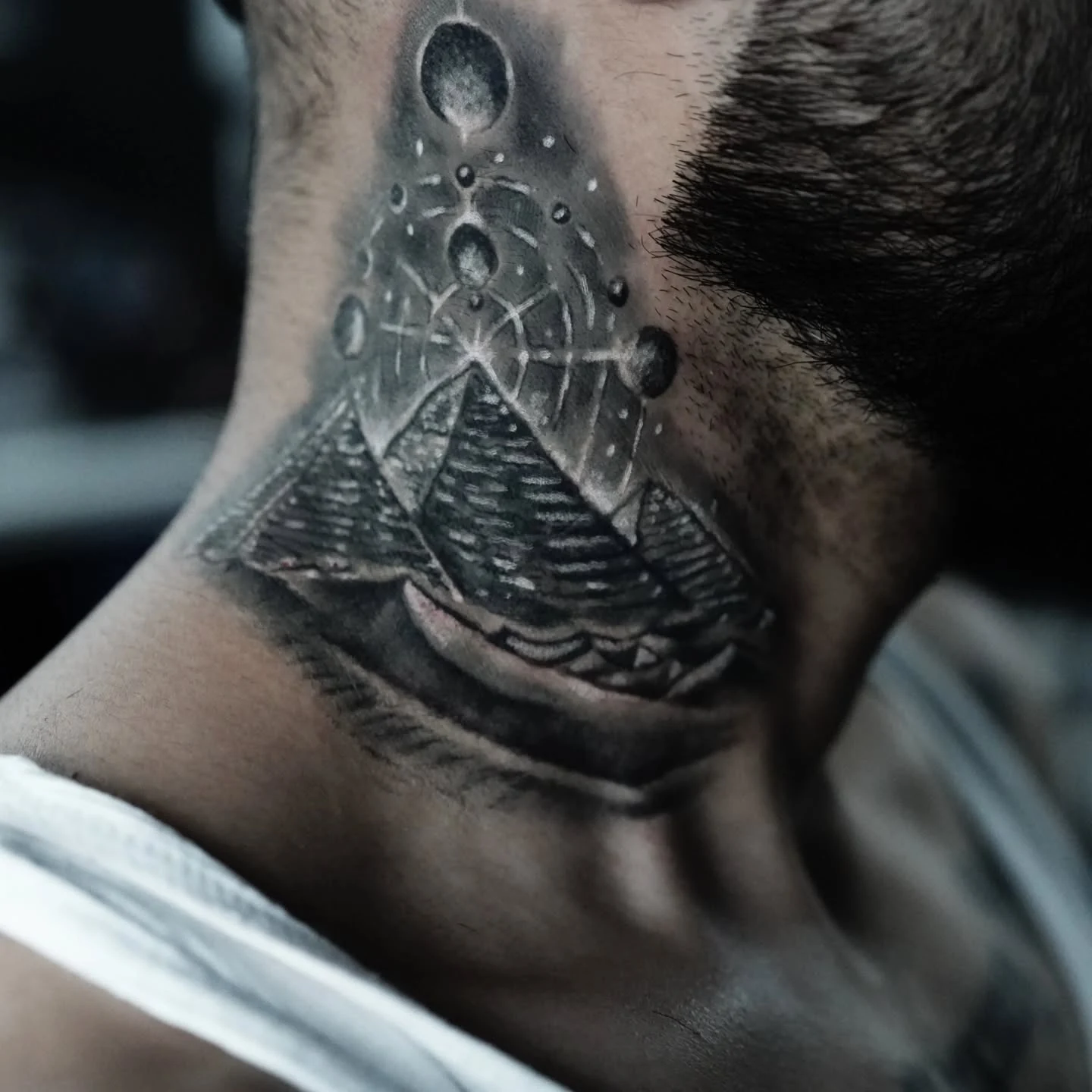
Pyramid & geometry takes a different approach. Triangular forms and intersecting lines sit with circular shapes in a curved composition on the neck. Here geometry helps arrange recognizable objects, rather than becoming an uninterrupted pattern.
The connection between these tattoos is not a single symbol. It is the use of measured relationships to organize space. Repetition, framing and optical depth are different ways to make those relationships visible.