Why tattoos fade: pigment, light and the limits of a photograph
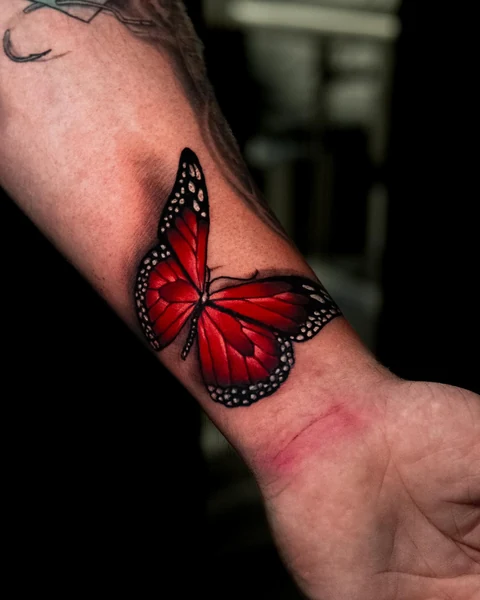
A tattoo can remain clearly present while its colors or contrast change. Fading is therefore a different question from complete disappearance. Light exposure is one documented influence, but there is no reliable universal calendar that assigns every tattoo a date when it will lose a certain amount of color.
The evidence also comes from different settings. Advice for tattooed people, laboratory experiments on pigments and photographs of an individual tattoo describe different parts of the problem. Treating them as interchangeable can make a precise-looking claim less accurate.
Sunlight can affect tattoo color
The American Academy of Dermatology states that ultraviolet light can fade some tattoo inks. Its wording matters: it does not say that all colors change at the same rate or that exposure produces an identical result in everyone. Its recommendations for protecting tattooed skin are practical guidance, not a prediction of the lifespan of a particular drawing. AAD: caring for tattooed skin.
For an image, a change in one area can alter the relationship between several areas. If a lighter passage becomes less distinct from its surroundings, the composition may feel different even when the outline remains recognizable. That is a way of reading the image, not a measurement of how much pigment has left the skin.
Laboratory aging is not a human calendar
A study published in Scientific Reports examined the orange pigment PO13 under accelerated aging conditions, using simulated sunlight and controlled laboratory conditions. It investigated changes in the pigment and its toxicological properties. This is useful evidence that researchers can study alterations in a defined material rather than relying only on before-and-after photographs. Primary study of accelerated aging of PO13.
The experiment should not be translated into a claim that a certain number of laboratory hours equals a certain number of summers on a person's arm. A pigment suspension is not a complete living tattoo, and one studied pigment does not represent every formula sold under the same everyday color name.
That limit also applies to safety claims. Evidence that a material changes under experimental conditions does not, by itself, establish the medical outcome of an individual tattoo.
Two photographs may record more than aging
Lighting can change the apparent warmth, saturation and contrast of an image. Nikon's explanation of white balance shows how the color of the light and the camera's interpretation affect a photograph. A tattoo photographed beneath warm indoor lighting may therefore look different from the same tattoo photographed in daylight. Nikon: setting white balance.
Comparable photographs are more useful than dramatic comparisons made under unrelated conditions. A change deserves attention, but its cause cannot always be identified from two small images on a screen.
A changing image is not a diagnosis
Fading is often discussed as an aesthetic matter. A new skin reaction is a different issue. The AAD advises dermatological assessment when tattooed skin changes or develops a reaction; a color discussion should not substitute for that evaluation.
The sound conclusion is limited but useful: tattoo color can change, light is one documented influence, and research continues to examine the materials involved. Exact predictions require more evidence than a color chart, an age label or an attractive photograph can supply.