Cover-up color and optics: changing what the eye recognizes
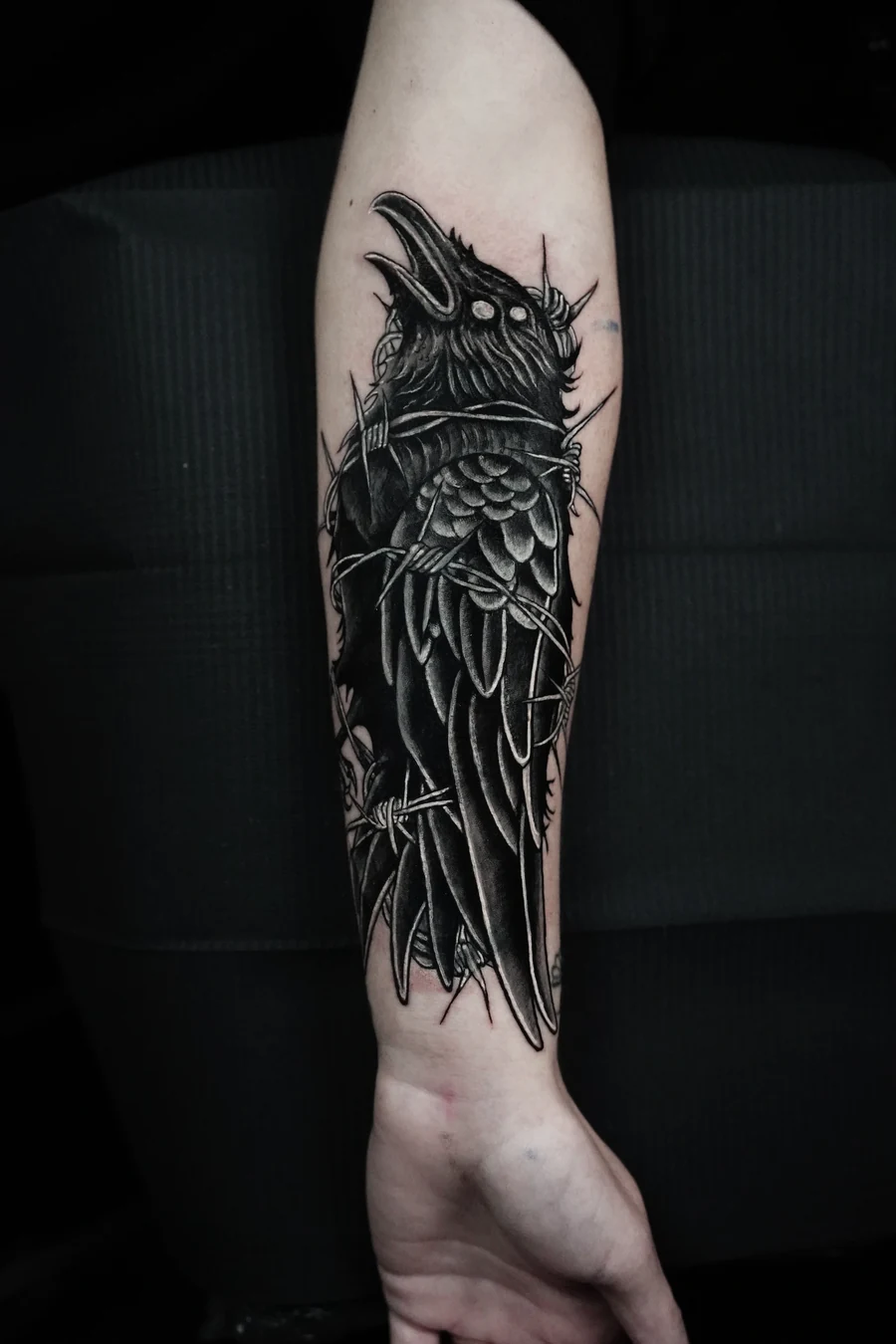
A cover-up asks an image to do two jobs: become a convincing new composition and change how the previous tattoo is perceived. It is tempting to imagine the process as putting a fresh coat of paint over a wall. That comparison leaves out both the skin and the way a viewer recognizes a drawing.
The useful distinction is between changing the visible image and removing the material already present. A new design may redirect attention, integrate a dark shape or interrupt an old outline. Those artistic possibilities do not prove that the earlier pigment has disappeared.
Pigment is inside skin, not on a blank sheet
The FDA describes tattooing as placing ink in the dermis, beneath the outer skin layer. Its explanation of laser removal involves breaking down pigment particles so the body can clear them, with results and treatment requirements that vary. Adding another tattoo is a different process from removing those particles. FDA: tattoo removal options and results.
A color chart printed on white paper therefore cannot establish what a particular pigment will look like in an existing tattoo. The original image, the skin and the new work are part of the situation. A bright swatch is evidence of how that swatch looks, not a promise that the same color will erase a dark shape underneath.
Optical measurements are not a cover-up recipe
A human imaging study measured absorption and reduced scattering in multicolored tattooed skin and adjacent untattooed skin at wavelengths from 650 to 970 nanometers. It investigated a way to characterize optical properties relevant to tattoo removal. It did not test which new tattoo colors can conceal particular old ones. Ayers and colleagues: optical properties of tattooed skin.
That boundary matters. Scientific language about light absorption should not be used to dress up an unsupported recipe. The study does not establish that a complementary color “cancels” another tattoo or that white ink restores untreated skin. A measurement method and a successful cover-up design answer different questions.
Surrounding shapes change an image's reading
Color appearance is also relational. The Exploratorium demonstrates that an unchanged patch can look different when its background changes. The surrounding image affects what the viewer perceives even though the patch itself has not changed. Exploratorium: Mix & Match.
As an artistic example, imagine an isolated dark curve on paper. It dominates an otherwise open field. Within a larger drawing, that same curve might become part of a feather, a fold or an area of shadow. This hypothetical example illustrates compositional integration; it is not evidence that a specific tattoo can be covered with any chosen subject.
Texture can contribute to that integration, but detail alone is not a solution. A crowded image can still leave the old outline easy to follow. The new work needs a readable structure of its own, with deliberate relationships between its larger dark and light areas.
A convincing result is more than an immediate photograph
A mockup can explore those relationships without proving how additional pigment will appear after healing. Likewise, a dramatic fresh photograph documents one stage under one set of viewing conditions. Neither should be treated as a universal demonstration of color behavior in skin.
The artistic goal is a new image that makes sense as an image, rather than a collection of distractions around an unwanted mark. Optics helps explain why simple paint-over language falls short. Composition explains another part of the challenge: changing what the eye recognizes while working honestly with what is already there.