Japanese tattoo history: when printed heroes carried images on their skin
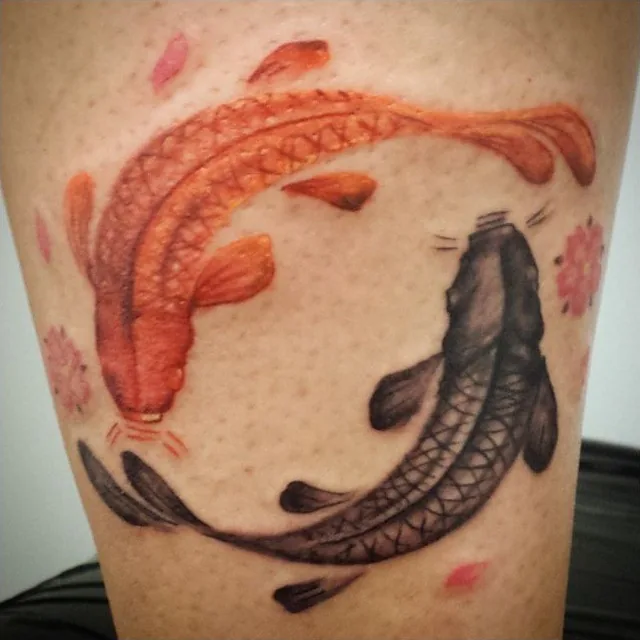
A tattoo can appear inside another artwork. In Japanese woodblock prints, a figure's skin may carry flowers, animals or a complete moving composition. The print presents both the person and the tattoo, letting the two images interact across the same body.
This relationship provides one of the clearest documented routes into Japanese tattoo history. It does not explain every period or community, but it shows how literature, printed imagery and body art could become part of the same visual conversation.
Edo and the circulation of images
The Museum of Fine Arts, Boston connects early nineteenth-century tattoo imagery in Edo, now Tokyo, with color woodblock prints known as ukiyo-e. Its exhibition account traces the circulation of tattoo motifs through printed media and identifies Kuniyoshi, Kunisada and Yoshitoshi among the artists whose works preserve that connection. MFA: Tattoos in Japanese Prints.
Printed images make a different kind of historical record from a photograph of a tattooed person. They preserve what an artist represented and what an audience could see on paper. They may combine observed practices with invention, storytelling and theatrical emphasis. Reading them as straightforward documentary snapshots would overlook their purpose as artworks.
The tattooed heroes of the Water Margin
Kuniyoshi's series based on the Chinese story commonly known in English as the Water Margin dates to approximately 1827–1830. The MFA notes that tattoo artists' oral traditions credit these prints with helping inspire a fashion for extensive pictorial tattoos. The attribution to oral tradition matters: it is more precise than claiming the prints single-handedly invented Japanese tattooing. MFA's account of the series.
The British Museum's record of the wrestler Yan Qing, also known as Roshi Ensei, offers a specific work to study. It identifies Kuniyoshi as the print artist, dates the sheet to 1827–1830 and connects it to the larger series. An accession number makes that particular object traceable. British Museum collection record.
A body inside a composition
Looking at such an image involves more than identifying a dragon or flower. A printed figure bends, turns or extends an arm; the tattooed forms participate in that movement. The viewer sees an image placed on another form, rather than a separate emblem floating on blank paper.
This offers a useful way to study pictorial tattooing today. Notice how a subject follows a larger shape and how neighboring forms affect its direction. A familiar motif can behave very differently when it occupies a whole torso rather than a small isolated space. The historical print makes those relationships visible without requiring a simplified dictionary of meanings.
A chapter of history, not a universal explanation
Japanese tattoo history includes changing social meanings and practices beyond this particular body of prints. One set of heroic images should not be used to explain every Japanese person's relationship to tattoos, nor to assume that a contemporary wearer is making a claim about criminality, religion or status.
For Tulsa readers interested in Japanese tattoo art, museum collections provide a way to begin with named works and documented contexts. Start with the artist, the story and the image itself. That approach reveals a history of exchange between artistic forms while leaving room for the larger tradition to remain more complex than any single motif or origin story.