Black and grey tattoo history: the communities behind a global style
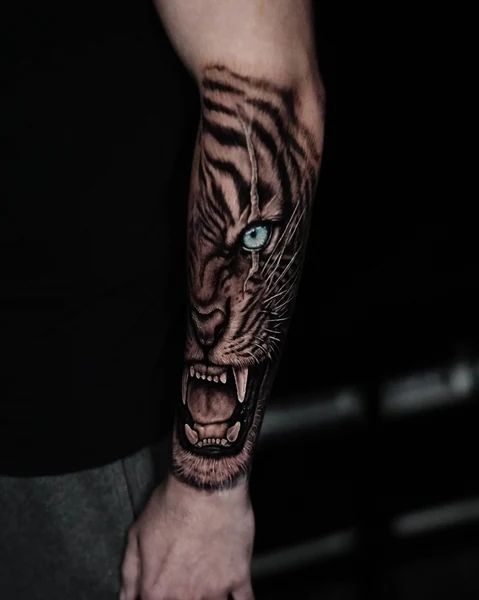
Black and grey can describe the appearance of a tattoo, but it can also name a particular modern artistic lineage. Those uses are related without being identical. The history of a Southern California style should not become a claim that nobody elsewhere used dark pigment or tonal shading before it.
Making that distinction gives the modern story more precision. It allows the people and communities involved to receive credit for their contributions without turning a broad visual category into a single invention by one person.
A Southern California history
The Natural History Museum of Los Angeles County's 2017–2018 tattoo exhibition traced black-and-gray tattooing through Pachuco and Chicano imagery, correctional settings and East Los Angeles. Its account included interviews with Freddy Negrete and Jack Rudy alongside later practitioners, presenting development across people and generations. NHM exhibition research.
The museum's framing is useful because it preserves a social setting. A style emerges through people seeing work, learning from one another and finding new audiences. Describing only a technical effect can remove those relationships from the story.
It is equally important not to turn historical circumstances into stereotypes. A lineage involving incarceration does not tell us that every artist or wearer has that experience. Chicano cultural identity cannot be reduced to a prison narrative, and a tattoo's appearance does not establish its owner's biography.
An artist's account adds another perspective
Freddy Negrete's official website presents his memoir, Smile Now, Cry Later, and describes his early fascination with tattooing while in juvenile detention. It places his development within the black-and-gray culture of the 1970s and his later work with a wider range of clients. This is an account tied to a named participant, rather than an anonymous origin story. Freddy Negrete's memoir information.
Personal testimony can make artistic development vivid. It can also select the events most important to the speaker. Reading it beside museum research helps preserve both qualities: the individual's voice and the broader context. Neither needs to erase the other.
The visual language reaches beyond a color label
Tonal work asks the eye to distinguish edges, shadows and open areas without relying on differences between many colors. A face may emerge through a change from dark to light; a background can recede through quieter contrast. These are visual relationships a viewer can examine directly.
That does not mean every black-and-grey tattoo belongs to the same stylistic family. A highly graphic ornament and a softly modeled portrait may share a limited palette while organizing their images very differently. Historical lineage, technique and visual appearance are three useful questions rather than three interchangeable labels.
Looking at the style in Tulsa
For a Tulsa reader, learning this history adds context to a style that is now encountered far beyond Southern California. It encourages attention to the actual image while retaining the names and communities associated with its development.
A responsible account does not need an absolute first artist, an exact birthday for the style or a claim that every later practitioner learned through the same chain. The evidence supports a network of influential artists and settings. Recognizing that network makes the history more human and the work more interesting: the shading is visible on skin, while the ideas and relationships behind it have traveled much farther.