Small tattoos in Tulsa: deciding which details deserve the space
A small tattoo benefits from a clear decision about what matters most in the image. Reducing a large drawing evenly is only one way to make it smaller, and often an unhelpful one. I prefer to think of scale as a design decision: which shapes carry the subject, which details give it character, and which can be simplified without losing that character?
When people look at small tattoos in Tulsa, they may be drawn to their quietness or the way a compact image sits on the body. Small does not necessarily mean minimal, and fine line does not necessarily mean small. Those are different qualities. A design can use a bold silhouette in a limited area, or fine lines across a much larger composition.
The outside shape does a great deal of work
Before a viewer notices an internal pattern, they often recognize an outline. That first impression can give a small composition a clear identity.
In my Butterfly study tattoo, the spread wings establish the overall shape. Fine vein-like details and soft shading develop the image inside it. Despite its title, this portfolio piece is a tattoo, rather than one of the separate drawing studies.
I am not assigning an exact size to that photograph. It is useful here because the relationship between silhouette and internal detail is visible. The subject has an overall shape to carry it before the eye begins exploring its smaller marks.
Space between details is also a choice
Two lines placed close together create a different visual effect from two lines with more open space between them. The same is true of petals, feathers and small areas of shading. A compact design asks those relationships to do a lot with a limited area.
I think simplification works best when it preserves the subject's distinguishing features. A generic reduction can remove exactly what made the image interesting. A more deliberate drawing keeps the important curve, marking or expression and lets less important information become quieter.
This discussion is about composition, not a promise about how a particular tattoo will look years later. A photograph alone cannot establish that outcome.
Color can organize a compact image
Detail is not limited to linework. A clear change in color can distinguish parts of an image without requiring each part to contain an elaborate pattern.
In this autumn leaf tattoo, red, orange and golden areas fill a pointed maple leaf shape. Dark veins divide the surface, while two shaded water droplets create another focal detail. The recognizable outline and the warm color relationships give the composition an immediate identity.
Again, the portfolio does not provide a measurement, so I would not describe it as a specific number of inches. The example illustrates how subject and color can work together when considering a compact design, rather than establishing a universal minimum size.
A detail can matter more than the number of details
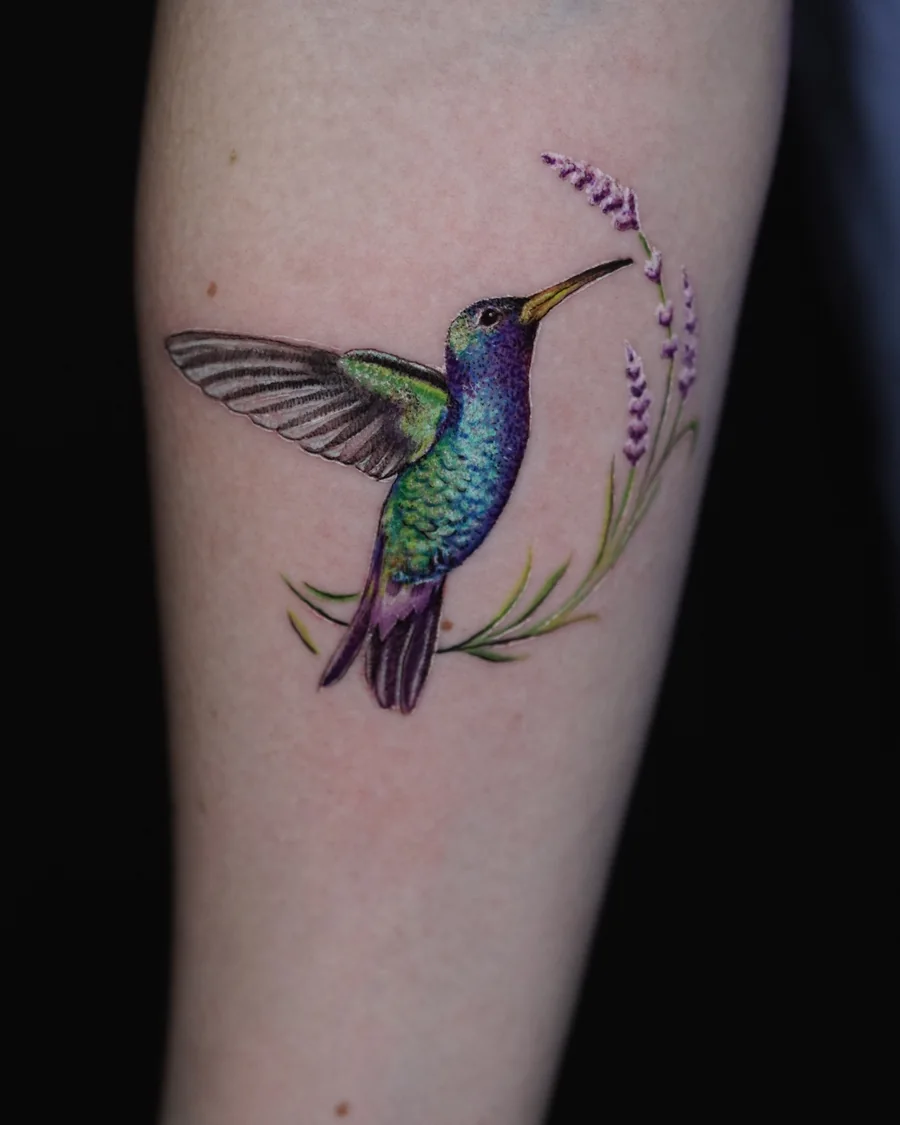
The Hummingbird tattoo combines blue, green and purple feathers with a spread wing and a slender flowering stem. The bird's reach toward the stem creates a relationship between the elements. That gesture gives the picture something to do.
For me, that is a more interesting aim than trying to fit the maximum possible information into an image. A recognizable gesture or well-chosen outline can give a tattoo more character than a crowded collection of small marks.
The right scale depends on the particular drawing and what someone wants to preserve in it. Sometimes that means simplifying. Sometimes it means allowing more room. Both are ways of respecting the idea.
Explore my fine line tattoo work and read about William Martz for more of the visual decisions behind my Tulsa portfolio.